
Livraison le jour même ou le lendemain

Qualité garantie

Débloquez vos offres de bienvenue: Livraison GRATUITE | Jusqu'à -80 % | 30 jours d'essai gratuits à JoyPlus
Téléchargez l'application
That little red battery icon?is the nightmare of every smartphone user. To fix this, a power bank is the obvious solution. However, the market is a jungle of marketing promises where it's easy to get lost and end up with a disappointing purchase. An ineffective portable charger is money down the drain and a smartphone that dies on you at the worst possible moment.
To avoid getting tricked, let's break down the most common traps and the criteria that truly matter.
To navigate the jungle of spec sheets, here are the key points that make all the difference between a useless gadget and a truly high-performance portable battery.
Capacity is the first number that catches your eye. A 10,000?mAh power bank is an excellent baseline for daily use, capable of providing 1.5 to 2 full charges for a modern smartphone. If you need to power multiple devices or a laptop, a 25,000?mAh power bank will be more suitable.
But the true performance indicator is the watt-hour (Wh). It represents the total energy the battery can store and deliver. In fact, this is the unit airlines use for their regulations, with a limit typically set at 100?Wh for carry-on luggage. For reference, a 25,000?mAh battery (at 3.7?V) is equivalent to about 92.5?Wh, making it perfectly compliant for air travel.
A large energy reserve is useless if it's delivered at a snail's pace. The output power, measured in watts (W), is the most critical criterion for your user experience.
The ports, form factor, weight... these practical aspects determine how you'll use your power bank. A model with a built-in USB-C cable frees you from the mental load of remembering to bring one. Multiple ports (USB-C and USB-A) are a real bonus for charging several devices simultaneously. Finally, weight and size are crucial: the best power bank is the one you won't hesitate to take with you, whether in a pocket or a backpack.
Here are a few options that cater to distinct user profiles, based on the performance and convenience criteria we've discussed.
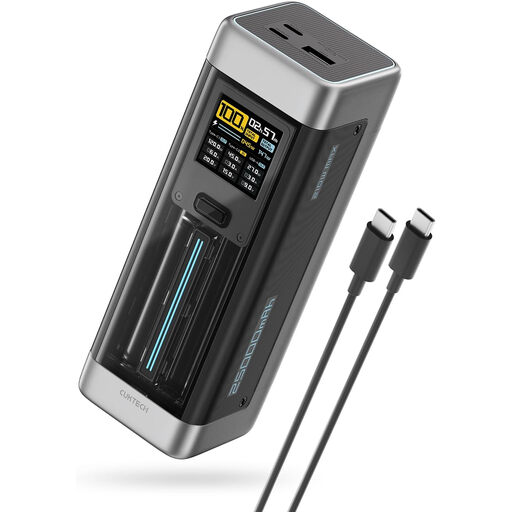
Why this model stands out: This is the ultimate tool for the well-equipped digital nomad or tech enthusiast. With 25,000 mAh and a massive 140 W output, it can simultaneously fast-charge a laptop (like a MacBook Pro), a tablet, and a smartphone.
No more trickle charging. Here, the 140 W (PD 3.1) power is real and verifiable. Its TFT screen displays the delivered power, voltage, and current in real time. This is total transparency, a world away from misleading spec sheets.
A 140 W output to power the most demanding laptops, and a 25,000 mAh (92.5 Wh) capacity that's tailor-made for air travel.
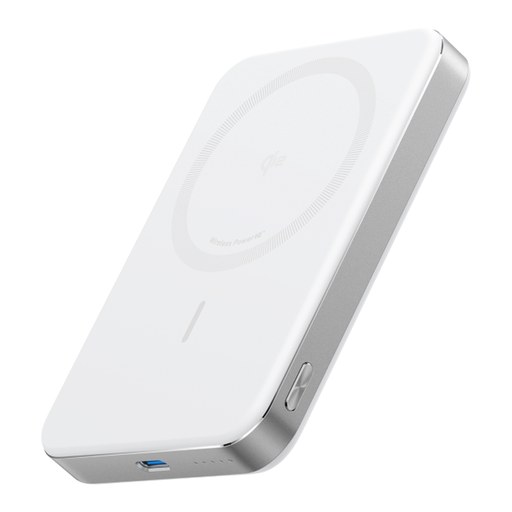
Why this model stands out: Designed for the Apple ecosystem (from iPhone 12 to the latest models), this power bank offers a seamless, wireless experience. Its slim, magnetic design snaps onto the back of the phone, making it the perfect travel companion for those who value convenience and a sleek look.
It shatters the illusion of slow wireless charging. Thanks to its Qi2 certification, it delivers a true 15 W of power, where many magnetic competitors crawl along. Its ultra-slim form factor avoids the "brick-like" feel of traditional batteries with the same capacity.
Qi2-certified 15 W wireless charging for optimal efficiency and MagSafe compatibility for portability so seamless you'll forget it's there.
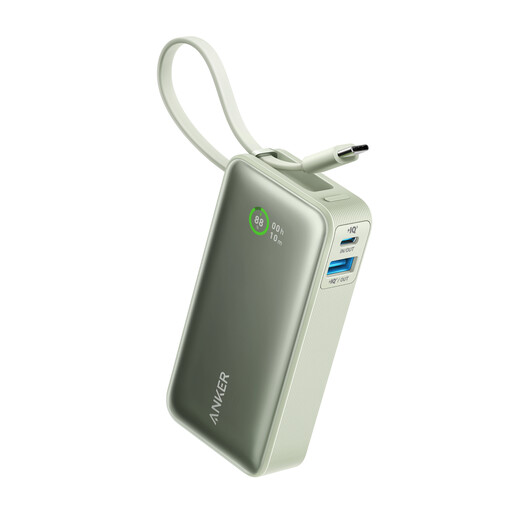
Why this model stands out: This is the "all-in-one" solution for those who appreciate simplicity, reliability, and a compact design. No more hunting for a cable—it's built right in! It's the perfect emergency power bank to keep in your bag for any situation, completely hassle-free.
It eliminates the simplest trap of all: forgetting your cable. Its 30 W power for both input and output ensures fast charging for your devices and for the power bank itself. Say goodbye to the long waiting times of entry-level models.
Integrated USB-C cable for absolute peace of mind. Fast 30 W charging and recharging in a pocket-sized format.
Discover our complete selection of power banks, all tested and approved by our editors for their performance, reliability, and compliance with European safety standards.
To charge a laptop effectively, you should aim for a power bank with at least 20,000?mAh and an output of at least 65?W. The easiest way is to check the wattage of your laptop's original charger and choose a power bank with an equal or higher Power Delivery (PD) output. A 25,000?mAh model with 100?W or more is an excellent, highly versatile choice.
Absolutely not, as long as you choose a quality model. A power bank from a reputable brand that clearly displays the CE mark is designed to protect your smartphone. It includes multiple safety features (against overcharging, overheating, short circuits, etc.). The real danger comes from counterfeit or uncertified products that skip these vital protections.
Lifespan is measured in charge cycles (one full charge and discharge). A standard model will last for 300 to 500 cycles before its capacity noticeably decreases. Higher-end batteries with superior cells can exceed 1,000 cycles. To preserve its life, avoid exposing it to extreme temperatures and don't store it completely empty for long periods.