
Livraison le jour même ou le lendemain

Qualité garantie

Débloquez vos offres de bienvenue: Livraison GRATUITE | Jusqu'à -80 % | 30 jours d'essai gratuits à JoyPlus
Téléchargez l'application
In our hyper-connected era, a dead battery is our worst nightmare. The power bank has become the obvious saviour. The problem? The market is a jungle of models with tempting promises that often turn into a nightmare: capacity that drains in no time, so-called "fast" charging, or a battery that dies after just a few months.
As a product expert at Joybuy, my mission is to help you navigate the marketing traps. Let's skip the technical jargon and get straight to the point. Here are the most common scams to watch out for and the real criteria for a successful purchase.
For a purchase you won't regret, focus on these three pillars. They define the performance, compatibility, and usability of your future portable charger.
Capacity, expressed in milliamp-hours (mAh), is your power bank's energy tank.
The simple formula to get a clear estimate?: To estimate the number of recharges, use this formula: (Power Bank Capacity × 0.65) / Your Device's Battery Capacity.
Power output in watts (W) is the crucial factor: it dictates charging speed. The USB-C port, combined with Power Delivery (PD) technology, has become the go-to standard for fast and safe charging.
Also, check for compatibility with more specific protocols like PPS (Programmable Power Supply), which is required by some Samsung smartphones for their "Super Fast Charging."
In day-to-day use, it's the details that make the difference.
Rather than an endless list, we've selected models that perfectly meet specific needs.
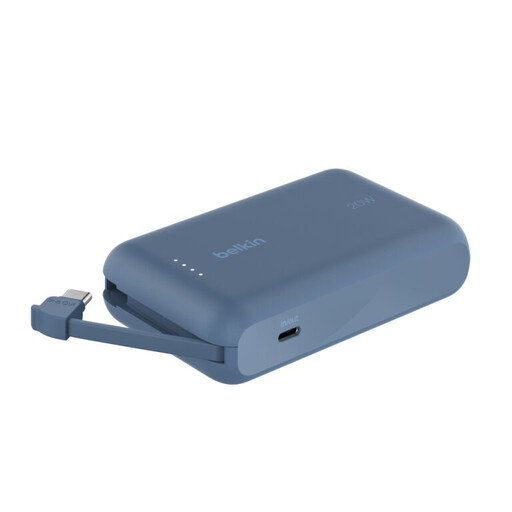
Why we chose it : It's the perfect daily companion. Its pocket-friendly size and built-in USB-C cable mean you don't have to carry extra accessories. Perfect for slipping into a pocket or bag to guarantee an extra day of battery life.
This Belkin is upfront about its specs: 20W Power Delivery. That's a clear, precise figure that ensures truly fast charging for compatible smartphones, a far cry from empty promises.
Its built-in USB-C cable and pass-through charging feature (which charges the power bank and a device simultaneously) make it a model of practicality.
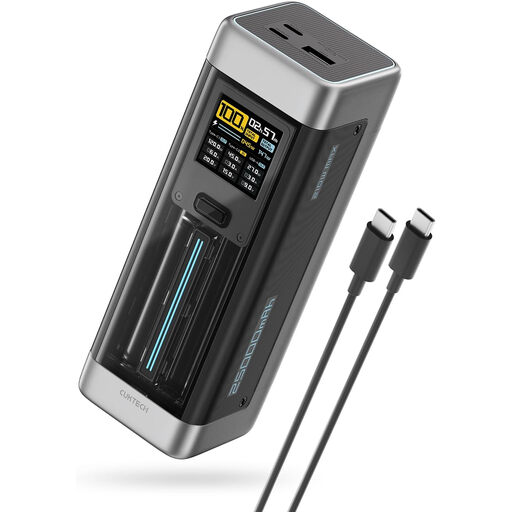
Why we chose it : For those who live on their laptops, this power bank is a true pocket-sized power station. Its colossal capacity and serious firepower can recharge a MacBook Pro or a power-hungry PC laptop at full speed.
More than just a power bank for laptops, it features the cutting-edge PD 3.1 protocol and delivers up to 140W. This guarantees maximum compatibility and speed with the latest machines.
Its TFT colour screen displays power, voltage, and current in real time. It offers total transparency and cockpit-level control, a rarity in the market.
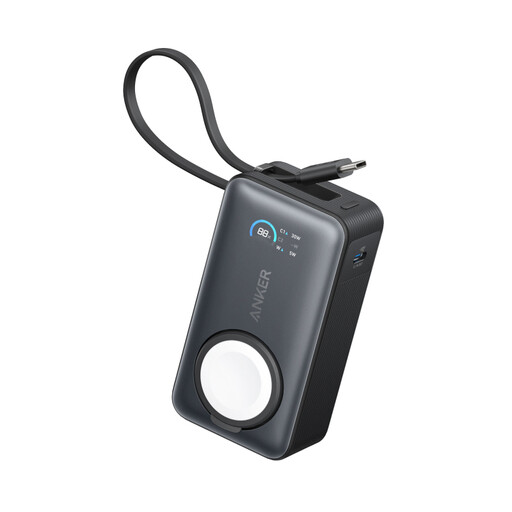
Why we chose it : Tailor-made for the Apple ecosystem, this Anker integrates a certified charging puck for Apple Watch and a USB-C port to revive an iPhone or iPad. It's the all-in-one holy grail for Apple aficionados.
Its official "Made for Apple Watch" certification is a guarantee of safety and efficiency. Say goodbye to the compatibility and overheating issues so common with uncertified accessories.
Its 2-in-1 design (Apple Watch charger + USB-C power bank) and compact form factor make it the ultimate travel accessory for packing light.
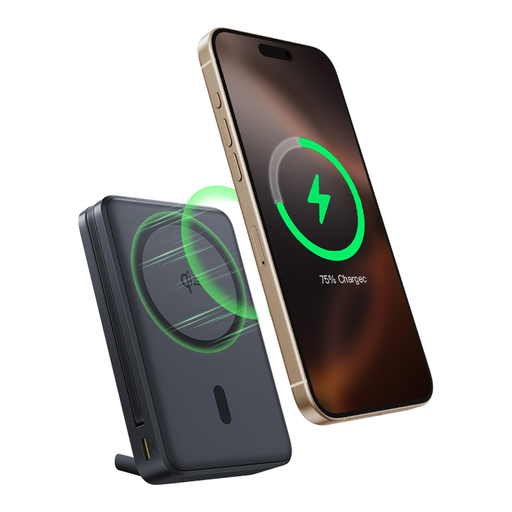
Why we chose it : This is the ultimate Swiss Army knife. It combines 30W fast wired charging, 15W magnetic Qi2 wireless charging, a built-in USB-C cable, and a fold-out kickstand for viewing content. The perfect tool for geeks who want to have their cake and eat it too.
By adopting the new Qi2 standard, it provides magnetic wireless charging that's as efficient as Apple's MagSafe, while also opening up broader compatibility with future Android devices. A smart bet on the future.
Its 4-in-1 versatility (power bank, wireless charger, built-in cable, stand) makes it a unique device that replaces half a dozen accessories on its own.
We've put together a complete selection of power banks that meet our strict requirements for performance and safety.
Generally, a quality power bank can handle 300 to 500 full charge cycles while retaining at least 80% of its original capacity. To take good care of it, avoid fully draining it too often and keep it away from extreme temperatures (like the scorching sun on a beach or freezing cold in the mountains).
Yes, but it must be in your carry-on luggage. Lithium batteries are strictly forbidden in checked baggage. Most airlines set the limit at 100 watt-hours (Wh) per battery.
The risk is virtually zero if you choose a power bank from a reputable brand like Anker, Belkin, Cuktech, or Baseus. These manufacturers integrate multiple safety features (often called MultiProtect, etc.) that control voltage, current, and temperature for risk-free charging. The real danger comes from "no-name" and uncertified models, which can deliver unstable power and skimp on these vital protections.