
Livraison le jour même ou le lendemain

Qualité garantie

Débloquez vos offres de bienvenue: Livraison GRATUITE | Jusqu'à -80 % | 30 jours d'essai gratuits à JoyPlus
Téléchargez l'application
In an age where staying connected is vital, low-battery anxiety is a universal fear. Whether for work, travel, or keeping in touch with loved ones, the power bank (or portable charger) has become the go-to solution. The problem? The market is flooded with models making alluring but often misleading marketing claims. To avoid buyer's remorse, it's crucial to know how to navigate the most common pitfalls.
As a product expert at Joybuy, my mission is to help you separate fact from fiction. Here are the key things to watch out for to make an informed decision when choosing your next portable charger.
To avoid being misled, focus on objective technical specifications. They are the only way to fairly compare products and find the model that truly meets your needs.
Instead of being mesmerised by mAh, look at the power output in Watts (W). This figure, not the capacity, determines the actual charging speed for your devices.
The available ports are a crucial factor: they define your power bank's versatility and longevity.
Some power banks go far beyond simply charging a phone.
To help you see how these criteria apply in practice, here are a few options that cater to distinct user profiles.
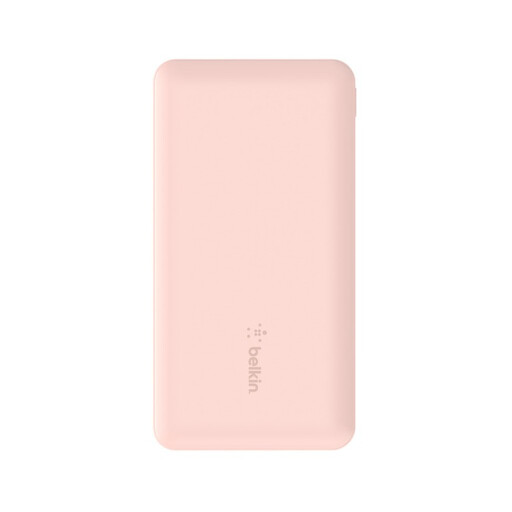
Why we recommend it: Perfect for marathon days, this compact model packs enough energy to revive a smartphone more than twice. Its strength? Versatility, with the ability to simultaneously charge a phone, earbuds, and a tablet. A reliable ally for commuting and the office.
This model clearly states a 15 W power output, cutting through the vague "fast charging" claims. It relies on standard ports (USB-C and USB-A), which are far more durable than fragile integrated cables.
Versatility and reliability: 3 ports for simultaneous charging (1 USB-C, 2 USB-A) and the peace of mind from Belkin's Connected Equipment Warranty.
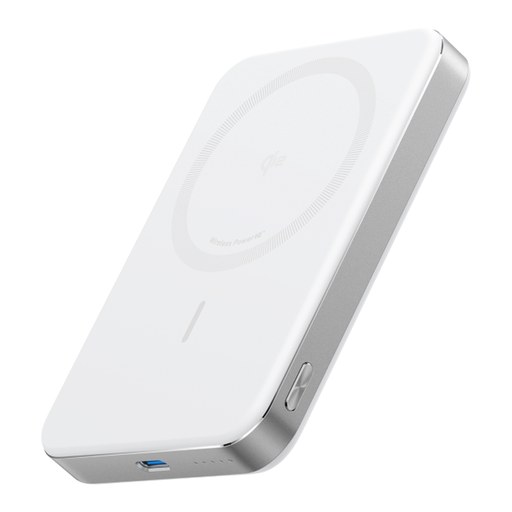
Why we recommend it: Tailor-made for the Apple ecosystem, this charger magnetically attaches perfectly to the back of MagSafe-compatible iPhones. Its ultra-slim design and Qi2 certification make it the ultimate accessory for fans of wireless charging, combining performance and discretion.
The Qi2 certification guarantees fast and efficient 15 W wireless charging—an objective metric that cuts through vague promises. Its premium design is a hallmark of durability.
Seamless iPhone integration: 15 W magnetic wireless charging and an ultra-slim design for maximum portability.
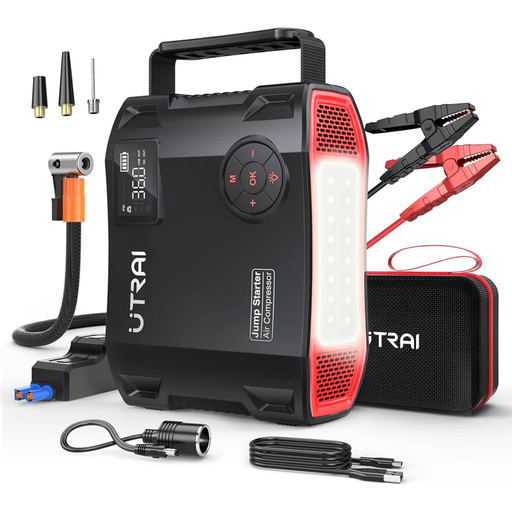
Why we recommend it: Far more than just a power bank, this is a true survival toolkit for the road. Capable of jump-starting most vehicles (petrol and diesel up to 10L), reinflating a flat tyre, and charging your devices, it's the essential accessory to keep in your boot.
Its specifications are clear and function-focused: a 6000 A peak current for jump-starting and a 150 PSI compressor. It doesn't just pretend to be a simple charger; it addresses a specific emergency need with verifiable data.
All-in-one emergency solution: battery jump starter, digital air compressor, LED light, and a 27,000 mAh power bank.
We have curated a complete range of products that meet our quality criteria and the strictest safety standards.
A power bank's lifespan is measured in charge cycles (one cycle = a full charge from 0 to 100%). Good models typically last for 300 to 500 cycles. In practice, with regular use, this equates to 2 to 4 years before its capacity begins to noticeably decline. To preserve it, avoid complete discharges and never expose it to extreme temperatures (neither freezing cold nor scorching heat).
Yes, but under strict conditions. Lithium batteries are prohibited in checked luggage and must be carried with you in your carry-on luggage. Most airlines permit batteries with a capacity below 100?Wh (watt-hours) without special authorisation. For reference, a 20,000?mAh battery (at 5V) is right at this 100?Wh limit. When in doubt, always check your airline's policy before you fly.
For the vast majority of users, a 10,000?mAh power bank is the ideal compromise. It offers the best balance of size, weight, and capacity. It's enough to charge a modern smartphone 2 to 3 times, which easily covers your needs for a day, a weekend, or a long journey. However, if you plan to charge a tablet or a laptop, a 20,000?mAh model (or larger) will be essential.