
Livraison le jour même ou le lendemain

Qualité garantie

Débloquez vos offres de bienvenue: Livraison GRATUITE | Jusqu'à -80 % | 30 jours d'essai gratuits à JoyPlus
Téléchargez l'application
That sinking feeling when your battery icon turns red at the worst possible moment? We've all been there. The external battery, or power bank, has become the essential survival tool for our connected lives. The problem is, the market is a veritable jungle, saturated with models making often misleading claims. Choosing the right portable charger can quickly become a headache. To avoid the disappointment of a bad purchase, here's how to sidestep the most common pitfalls.
Here are the 3 pitfalls to avoid at all costs?:
Don't panic when navigating the power bank jungle. You just need to understand a few key technical specifications.
Capacity, expressed in milliampere-hours (mAh), determines the number of possible recharges. But don't blindly trust the advertised number. Here are a few practical benchmarks?:
Charging speed is just as crucial as capacity. Today, the benchmark technology is Power Delivery (PD), which operates via the USB-C port. Its advantage? Fast, intelligent charging that automatically adapts to the connected device.
Because raw performance isn't everything, everyday usability is paramount.
To help you make sense of it all, we've selected models that meet specific needs, all tested and approved for their performance and reliability.
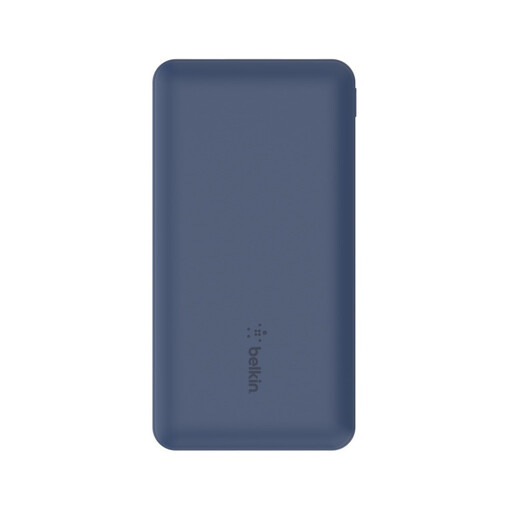
Why we love it : It's the perfect balance for daily use. Its 10,000 mAh capacity provides up to 40 extra hours of battery life for a smartphone, all in a format compact enough to slip into a bag or a large pocket.
The output power is clearly stated at 15W, ensuring an efficient charge for compatible devices. As a Belkin product, it includes all the necessary protections against overcharging and overheating. Safety first.
Its versatility : with one USB-C port and two USB-A ports, it can charge up to three devices at once. The included USB-A to USB-C cable means it's ready to use right out of the box.
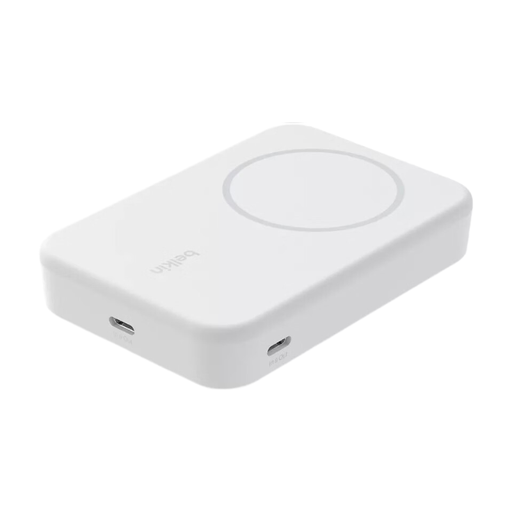
Why we love it : Tailor-made for iPhone users, this power bank offers a completely seamless experience. The magnetic alignment is flawless, and the wireless charging is optimised. Its built-in kickstand is a real bonus for watching videos or using iOS's StandBy mode.
It's Qi2 certified, the new standard that guarantees true 15W fast wireless charging, unlike older Qi chargers often limited to 5W or 7.5W. No false promises on speed here.
The ability to charge wirelessly and via the USB-C port simultaneously, plus its Pass-Through technology that recharges the power bank and your phone at the same time. All in a compact and lightweight (191g) package.
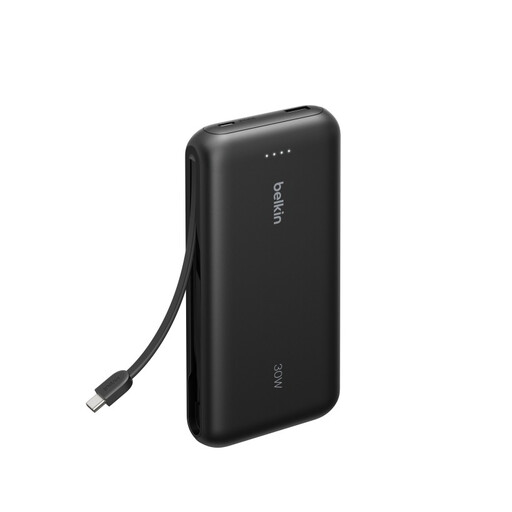
Why we love it : With its massive 20,000 mAh capacity and 30W power output, this power bank is built for the most demanding devices. It can bring a Nintendo Switch back to life up to 3 times or recharge a smartphone several times over. It's the essential companion for long gaming sessions and extended trips.
It doesn't just offer a large capacity; it pairs it with a high, clearly specified power output (30W PD). This guarantees a genuinely fast charge, even for a console, not just a sluggish trickle charge.
The integrated USB-C cable is both practical and durable. Combined with the other two ports, it allows you to charge 3 devices at once. Its universal compatibility makes it a true Swiss Army knife for charging.
We have selected a full range of products that meet our quality criteria and European safety standards.
It all depends on your usage. For a daily boost in a compact form factor, a 10000mAh power bank is perfect. For travel, heavy use, or powering multiple devices, aim for a 20000mAh power bank or higher for complete peace of mind.
A quality power bank from a reputable brand like Anker or Belkin that is CE certified is packed with safety features (overheating, overvoltage, short-circuit protection). It poses no danger to your device. The real risk comes from cheap, no-name products that skip these crucial safety standards.
Yes, but under certain conditions. Lithium batteries are prohibited in checked luggage and must be carried with you in the cabin. Most airlines set a limit per passenger, typically 100?Wh (watt-hours). A 20,000?mAh power bank (around 74?Wh) is therefore well within the limit. When in doubt, always check your airline's policy before you fly.