
Livraison le jour même ou le lendemain

Qualité garantie

Débloquez vos offres de bienvenue: Livraison GRATUITE | Jusqu'à -80 % | 30 jours d'essai gratuits à JoyPlus
Téléchargez l'application
The battery icon turning red at the worst possible moment... a universal dread. A power bank, or external battery, is the go-to solution. Yet, the market is a jungle of models with often outlandish claims. Make the wrong choice, and you're guaranteed to be disappointed: a device that's heavy, slow, or worse, dies after just a few charge cycles.
As a product expert for Joybuy, my mission is to help you navigate this overwhelming selection. Let's cut through the marketing jargon and get to the facts. Here are the three classic mistakes to avoid and the criteria that truly matter to find the perfect portable charger for you.
To make an informed choice, you need to understand a few key concepts. Don't worry, it's very simple.
A battery's capacity is measured in milliamp-hours (mAh). To estimate the number of recharges, don't just divide the power bank's capacity by your phone's. Always account for an energy conversion loss of about 30%.
Charging speed depends on the output power (in Watts) and the supported charging protocols.
Check that the battery includes protections against overcharging, short circuits, and overheating. Certifications (like the CE mark) are a guarantee of compliance with European safety standards. A quality power bank is a small investment to protect your valuable devices.
Rather than searching for a "perfect" model that doesn't exist, it's better to choose a battery tailored to your needs.
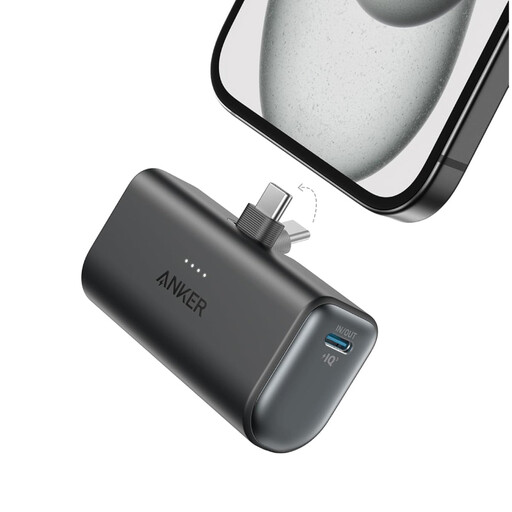
Why we love it: For those who need a quick boost at the end of the day, without the bulk. Its lipstick-sized format slips into any pocket, and the built-in connector means you never have to worry about a cable.
It avoids the forgotten-cable trap (#3) with its foldable USB-C connector. Its 22.5W output provides a fast top-up, far from the frustratingly slow speeds of some models (#2).
Built-in, foldable USB-C connector: the ultimate in convenience. No extra cable needed for compatible devices.
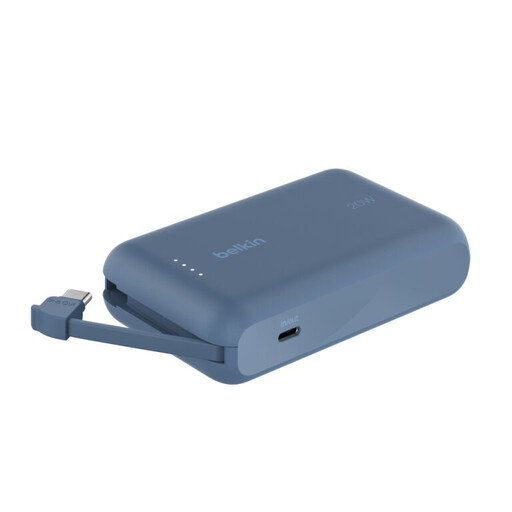
Why we love it: The perfect balance of capacity and portability. Ideal for getting through a long day of classes or meetings, it can charge a smartphone and a tablet thanks to its versatile ports and 20W power output.
Its 10,000 mAh capacity is reliable, and its 20W Power Delivery output ensures fast charging (goodbye, pitfalls #1 and #2). Its comprehensive port selection, including a built-in USB-C cable and an extra port, offers rock-solid versatility (pitfall #3 avoided).
Pass-through technology: Allows you to charge the power bank and a device at the same time. Perfect for optimising charging time at a hotel or the library.
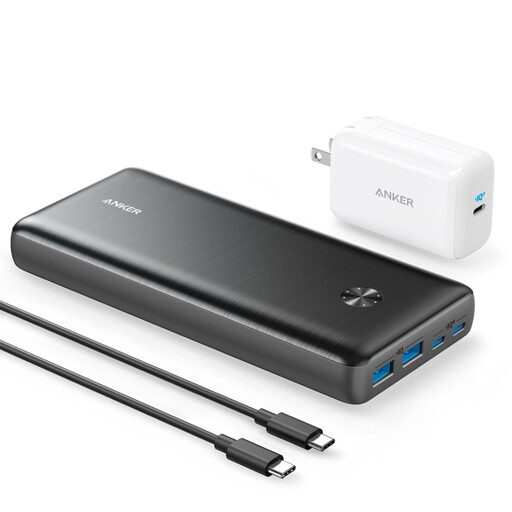
Why we love it: For those for whom running out of power isn't an option. With its colossal capacity and 87W output, it can recharge a smartphone, a tablet, and even a MacBook Air-type laptop multiple times.
Its real-world 25,600 mAh capacity is built for intensive use, and its 87W output tackles even the most power-hungry devices, including laptops (pitfalls #1 and #2 avoided).
87W Power Output: Capable of recharging a laptop at full speed via USB-C. A true portable power station.
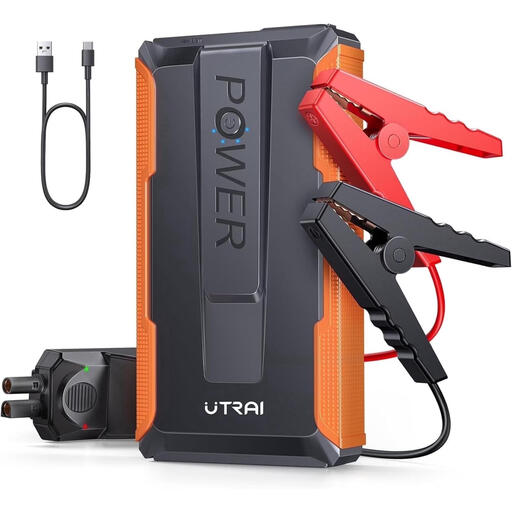
Why we love it: More than just a backup battery, it's a guardian angel for your car. It can jump-start a dead petrol or diesel engine while also serving as a charger for your devices via its Quick Charge 3.0 USB port.
This model addresses a critical need: a dead car battery. Its power bank function is a welcome bonus, but its real strength is getting you out of a tight spot on the side of the road.
Dual function: One device to start your car and charge your gadgets. The smart clamps protect against any connection errors.
We've selected a full range of products that meet our performance and safety standards.
A good quality power bank retains about 80% of its original capacity after 300 to 500 full charge cycles. In practical terms, for normal use, this translates to a lifespan of 2 to 4 years. To preserve it, avoid letting it fully discharge and do not expose it to extreme temperatures (neither too hot nor too cold).
Yes, but it must be in your carry-on luggage. Lithium batteries are prohibited in checked luggage. Most airlines limit the total capacity to 100 Wh (watt-hours) per passenger without special authorisation. For reference, a 20,000 mAh battery (at 5V) is equivalent to 100 Wh, and a 10,000 mAh battery is 50 Wh. When in doubt, always check your airline's policy before you fly.
The risk is almost zero with a reputable, CE-certified brand. These include multiple safeguards to protect your devices against overvoltage, short circuits, and other issues. The danger mainly comes from very cheap, "no-name" batteries, which often skip these essential protections.