
Livraison le jour même ou le lendemain

Qualité garantie

Débloquez vos offres de bienvenue: Livraison GRATUITE | Jusqu'à -80 % | 30 jours d'essai gratuits à JoyPlus
Téléchargez l'application
In an age where our lives revolve around our screens—for work, travel, or just staying in touch—the universal dread remains the same: that infamous 1% battery warning popping up at the worst possible moment. The solution? A power bank, of course. But the market is a jungle of models with marketing promises that are often far from reality.
As a product expert at Joybuy, my mission is to help you cut through the noise. Together, let's navigate the common pitfalls that turn a purchase into a regret.
To find the portable charger that won't let you down, forget the marketing fluff and focus on the technical specs that truly count.
Capacity, measured in milliampere-hours (mAh), determines the number of possible recharges. But what's important is the delivered capacity.
The output power in watts (W) is what determines charging speed. Period. For modern devices, a USB-C port compatible with Power Delivery (PD) has become non-negotiable.
These are the details that distinguish a gadget you forget in a drawer from a true daily companion.
Here are a few options that stand out for their clear technical specs and suitability for specific use cases.
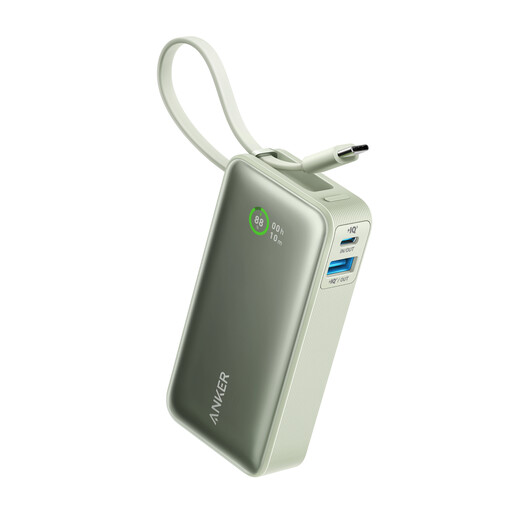
Why we chose it: Perfect for anyone looking for an ultra-compact, plug-and-play solution. Its small footprint and built-in cable make it a discreet yet powerful ally for days in the city or daily commutes.
It doesn't just claim a vague "fast charge"; it clearly states a 30W two-way power output, a precise and verifiable figure. The built-in cable prevents you from using an unsuitable cable that would throttle the speed.
Built-in USB-C cable for maximum convenience. 30W fast charging capable of restoring 50% battery to an iPhone 15 in 30 minutes, according to the manufacturer.
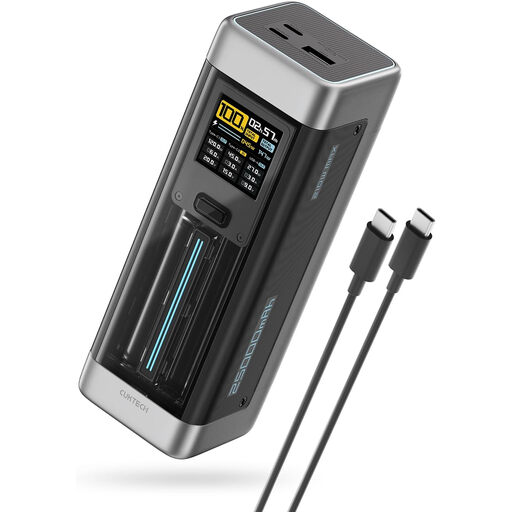
Why we chose it: Built for those who juggle a laptop, a tablet, and a smartphone. Its colossal capacity and firepower make it a true mobile power station.
Total transparency thanks to its smart TFT screen that displays real-time power, voltage, and current. No more guesswork—you know exactly what's happening. The 140W PD3.1 power is a precise standard, not a marketing slogan.
140W power output compatible with the most demanding laptops (MacBook Pro, etc.). 25,000 mAh capacity and a control screen for fine-tuned power management.
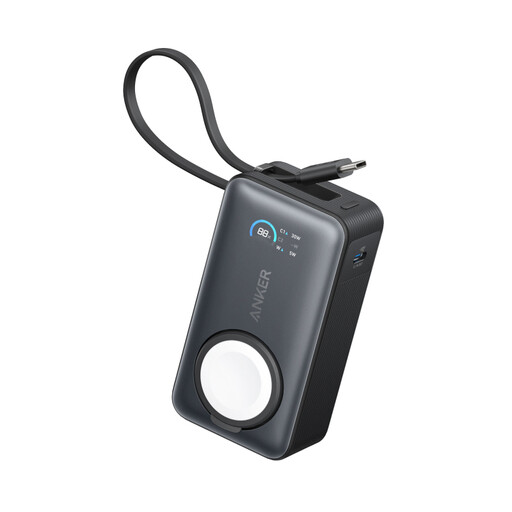
Why we chose it: The dream all-in-one solution for iPhone and Apple Watch owners. It combines fast wired charging, a wireless charger for the watch, and a built-in cable, all in an ultra-compact design.
This model is officially certified for Apple Watch, a guarantee of perfect compatibility and efficiency, unlike slow or unreliable generic chargers. The 35W power output is clearly stated.
Integrated, adjustable Apple Watch charger. Built-in USB-C cable and an additional port to charge up to 3 devices at once. Compact, airline-approved design.
Discover our full selection of power banks, all approved based on our performance and safety criteria.
1. How many charges can I get for my phone from a 10,000 mAh power bank? In practice, you can expect an efficiency of around 60-70%. For a 10,000 mAh power bank, this means a real-world capacity of 6,000 to 7,000 mAh. For a smartphone with a 4,000 mAh battery, this will give you about 1.5 full charges.
2. Will any "fast charging" power bank work with my iPhone or Samsung? It's not that simple. For truly fast charging on modern devices, it's essential to have a power bank compatible with the Power Delivery (PD) protocol via a USB-C port. This is the standard used by Apple and most high-end Android smartphones, including Samsung (which also supports PPS, an extension of PD). A "fast" power bank without PD will still charge your device, but at a much slower speed.
3. What is the lifespan of a power bank? A power bank's lifespan is measured in charge cycles (one full discharge/recharge). Most quality models retain about 80% of their original capacity after 300 to 500 cycles. With normal use, this translates to several years of reliable service. Models equipped with premium battery cells (sometimes called "automotive-grade") can last even longer.