
Livraison le jour même ou le lendemain

Qualité garantie

Débloquez vos offres de bienvenue: Livraison GRATUITE | Jusqu'à -80 % | 30 jours d'essai gratuits à JoyPlus
Téléchargez l'application
The sinking feeling of your smartphone, tablet, or laptop dying in the middle of the day... Who hasn't been there? The power bank has become the essential accessory for staying connected and productive in any situation. But with a jungle of models, capacities, and technologies to choose from, it's hard to find your way.
This guide is here to help you see things more clearly. We'll break down the essential criteria and present our selection of the best products to help you find the portable charger that's perfect for your needs, without drowning in technical jargon.
Before diving into our selection, let's review the key points that make all the difference in day-to-day use.
Expressed in milliampere-hours (mAh), capacity is the number one criterion. It determines how many times you can fully recharge your devices.
The output power, measured in watts (W), determines how fast your devices will charge. To take advantage of fast charging, make sure the power bank is compatible with protocols like Power Delivery (PD).
USB-C has become the standard, whether on Android devices, the latest iPhones, or laptops. A PD-compatible USB-C port is a major plus: it not only allows you to charge your devices at top speed but also to recharge the power bank itself much more quickly.
Double-check that the power bank is suitable for your gear. A power bank for an iPhone will require a Lightning cable (or USB-C for the newest models), while a portable charger for a laptop must deliver significant power (usually 45W or more) via a USB-C PD port. Juggling multiple devices? A model with several outputs (USB-A and USB-C) will make your life easier.
We've selected three models that stand out for their balance of performance, convenience, and reliability.
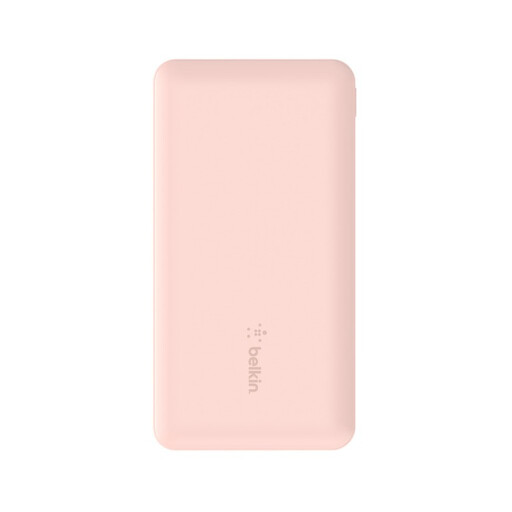
Editor's Take: The Belkin BOOST CHARGE is a classic, a reliable choice for everyday use. Its three ports allow you to charge multiple devices at once, which is perfect for juggling your smartphone, earbuds, and smartwatch.
What we like:
Who is it for?: Anyone looking for a simple and effective solution to never run out of battery with their daily devices (smartphone, earbuds, etc.).
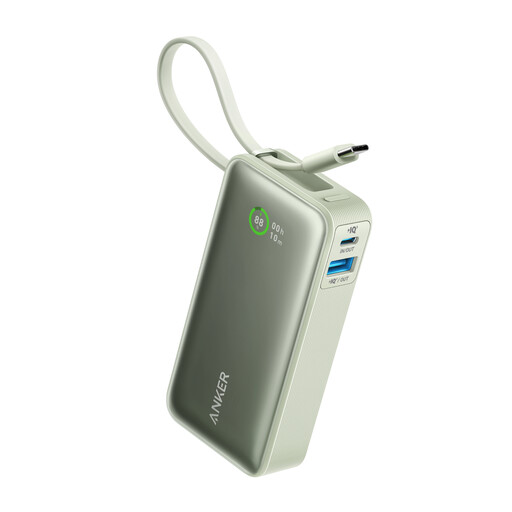
Editor's Take: The Anker Nano shines with its clever design. No more messy cables! Its integrated USB-C port makes it incredibly convenient and the perfect travel companion. Its key advantage: 30W two-way fast charging, both for reviving your devices and for recharging itself in a flash.
What we like:
Who is it for?: On-the-go users (professionals, travellers, students) who want maximum convenience in a compact form factor, without the hassle of extra cables.
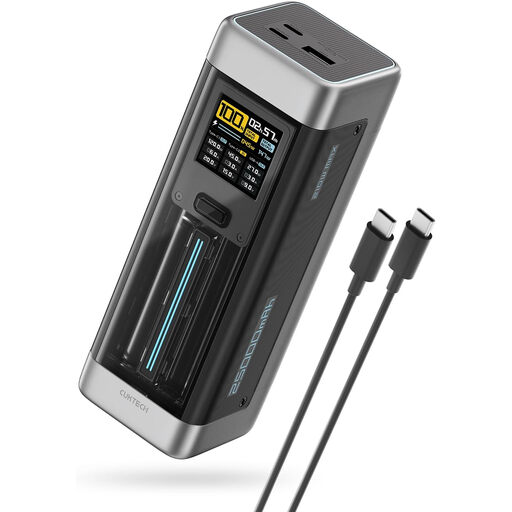
Editor's Take: We're in a different league here. The CUKTECH No. 20 is a true pocket-sized power station. With its colossal 140W of power (PD 3.1 compatible) and a monster 25,000 mAh capacity, it's aimed at the most demanding users. This is the ultimate portable charger for a laptop, capable of powering up a MacBook Pro and other power-hungry devices.
What we like:
Who is it for?: For professionals on the move, content creators, and tech enthusiasts who need to simultaneously charge powerful devices (laptop, tablet, smartphone) without any compromise on speed and autonomy.
Our selection covers the essentials, but your needs might be more specific. If you're looking for complementary accessories, like a multiport USB-C adapter to connect several peripherals to your computer or tablet, take a look at our dedicated category.
It all depends on your usage. To charge a smartphone once or twice, a 10,000 mAh model is an excellent starting point. For travel, heavy use, or to power a laptop, opt for models with 20,000 mAh, 25,000 mAh, or more.
Yes, but under certain conditions. Power banks are allowed in carry-on luggage (and never in checked luggage!) as long as their capacity does not exceed 100 Wh (watt-hours). A 25,000 mAh model (around 92.5 Wh) like the CUKTECH is therefore generally fine. When in doubt, always check your airline's policy before departure.
No, as long as you choose a quality model. Power banks from reputable brands include multiple protections (against overcharging, overheating, short-circuits) for a 100% safe charge. The golden rule to avoid any risk: use certified cables and steer clear of counterfeit products or unknown brands.