
Livraison le jour même ou le lendemain

Qualité garantie

Débloquez vos offres de bienvenue: Livraison GRATUITE | Jusqu'à -80 % | 30 jours d'essai gratuits à JoyPlus
Téléchargez l'application
On paper, the power bank with a built-in cable seems perfect?: no more cables getting lost at the bottom of your bag; everything is finally within reach. It promises simplicity for users on the go, whether they're professionals, students, or travellers. But be warned: this great idea can quickly turn sour. To prevent this convenient purchase from becoming a costly disappointment, you need to learn how to read between the lines of spec sheets and identify the features that truly make a difference.
The portable charger market is a jungle, and it's easy to get ripped off. Here are the three most common mistakes that turn a good deal into a useless gadget after just a few months.
To choose wisely, ignore the marketing jargon and focus on these key technical points. They will determine whether your power bank will be a reliable ally or dead weight.
Capacity determines how many recharges you can get. Instead of relying solely on the advertised number, think in terms of real-world use?:
Power, measured in watts (W), determines how fast your device will charge. To take advantage of fast charging, both the power bank and the device must support the same protocol (the most common being Power Delivery, or PD, usually via a USB-C power bank port).
The built-in cable is a great start, but versatility is a major plus.
We've reviewed dozens of models based on the performance, durability, and common-sense criteria mentioned above. Here is our selection, designed for different types of users.
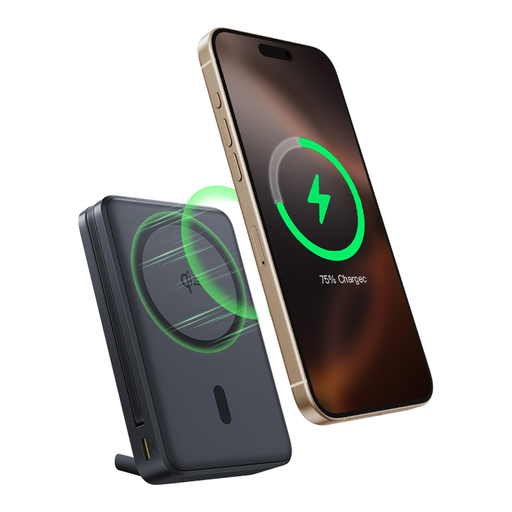
Why we chose it : It checks all the boxes: Qi2-certified 15W wireless charging (making it MagSafe compatible), a built-in USB-C cable, and a stand function. It's the perfect Swiss Army knife for iPhone owners who want a clean desk and an ultra-versatile portable charging solution.
Its 45W USB-C cable is not only durable but also ensures ultra-fast wired charging. This means you're not stuck with the often-slower wireless charging. This dual-purpose (wired/wireless) capability is an excellent safeguard.
The 15W wireless charging (Qi2) and the stand function—a winning combination for daily convenience.
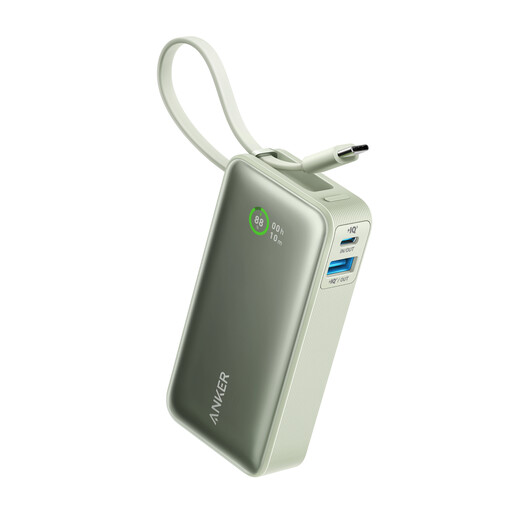
Why we chose it : Its ultra-compact design and 10,000 mAh capacity make it the perfect everyday companion. With its built-in USB-C cable and two extra ports (one USB-C and one USB-A), you can easily charge your phone and earbuds at the same time.
Anker's reputation for durable cables is well-established. Here, the 30W bi-directional cable allows you to charge both your devices and the power bank itself at full speed. No unpleasant surprises with the advertised power.
Its 30W bi-directional USB-C cable and its pocket-friendly size, which makes it extremely portable.
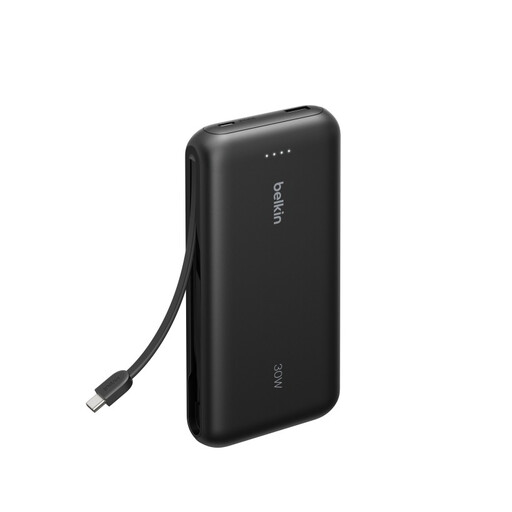
Why we chose it : Designed for long gaming sessions, its large 20,000 mAh capacity can bring a console like the Nintendo Switch back to life multiple times. Its built-in cable and additional ports let you charge your console and smartphone simultaneously without compromise.
The 30W power is intelligently distributed among the ports but remains sufficient to power a console even while gaming. Its very large capacity of 20000mAh is calibrated for power-hungry devices, preventing the frustration of running out of juice.
Its very high 20,000 mAh capacity and its power output, optimised for gaming consoles and power-hungry devices.
Explore our full selection of products that meet our selection criteria and European safety standards.
It depends on two factors: the battery cells and the cable. A quality lithium-ion battery retains about 80% of its original capacity after 300 to 500 full charge cycles. As for the cable, its longevity is directly related to its design and how well you take care of it. Opt for models with reinforced joints and avoid bending it at sharp angles.
Yes, but under certain conditions. To effectively charge a laptop (if it supports USB-C charging), you need a power bank that delivers a high power output—at least 45W. Check the power requirements of your machine and ensure the power bank can supply it via its cable or a USB-C PD port. For this purpose, models with 20,000 mAh or more are almost essential.
Absolutely. For most daily uses (students, mobile professionals), a 10000mAh capacity is the ideal compromise. It provides enough juice to fully charge a modern smartphone at least once, while remaining compact and lightweight enough to slip into a pocket or small bag.