
Same-day & Next-day Delivery

Quality Guaranteed

Unlock Your Welcome Offers: FREE Delivery | Up to 80% OFF | Free 30-day JoyPlus trial
Download the APP
A pot with a water reservoir can space out watering and simplify the upkeep of a balcony, terrace or indoor space. However, some models quickly show their limitations: a reservoir that’s hard to monitor, poorly suited dimensions, or a material that doesn’t cope well with temperature changes.
To help you avoid unpleasant surprises, Joybuy Product Recommendation Officer is here to help you sort genuinely useful features from mere marketing claims.
An integrated reservoir doesn’t mean you can skip regular checks. It stores some water beneath the substrate or in a separate compartment, but not all plants have the same needs. A Mediterranean plant may suffer from too much moisture, while a leafy plant will appreciate a more regular supply.
So check for a drainage system, drainage holes and, where the model includes one, a water level indicator. A poorly ventilated reservoir that’s kept constantly full can saturate the compost and weaken the roots.
A large planter might seem ideal for creating a generous display, but its weight increases significantly once filled with damp soil. On a balcony, consider stability, the available space and any load restrictions your building may have.
Conversely, a container that’s too small restricts root development and may mean you need to water more often. So you need to look at both the external dimensions and the actual usable volume together.
A designer plant pot may have a beautiful stone-effect, matt or coloured finish, without being suitable for permanent outdoor use. For outdoor use, look for precise information on UV protection, frost resistance and the quality of the plastic.
The mention ‘frost and UV resistant’ is a claimed feature for the product, but it doesn’t replace the need to follow the installation instructions. Water that freezes in a poorly drained container can exert strong pressure, even on a material designed for outdoor use.
For seasonal flowers or herbs, a small planter may be enough. A shrub, a dense arrangement or a small fruit tree will need more soil and stability.
Here are some useful guidelines:
The stated volume doesn’t always match the exact amount of soil you need to add: the reservoir and internal components take up part of the container.
A planter with a water reservoir should let you fill, check and empty the storage compartment without fiddly effort. Pre-drilled models make installation simpler, as long as you check the holes stay clear.
Indoors, allow a sufficiently large saucer to protect the floor. Outdoors, place the container on a stable, slightly raised surface if needed, to help water drain away.
Polypropylene and other moulded plastics are often lightweight, easy to clean and well suited to an outdoor plant container. A double-walled design can also improve stability and help insulate the container.
If you’re looking for a plant pot made in France, check the origin stated on the product page. Some models shown here indicate French manufacture and the Origine France Garantie certification. This information relates to the product described and cannot be extended to the entire collection.
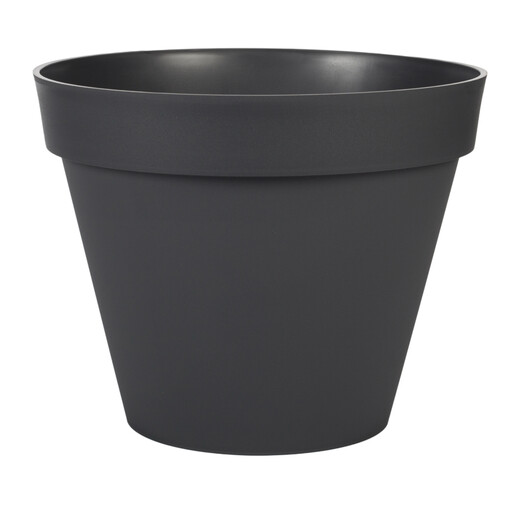
Why this choice suits this profile: With its diameter of around 40 cm and a volume of 23 litres, it’s ideal for a first setup on a terrace, balcony or near an entrance.
The integrated reservoir and the perforation under the base encourage more regular watering, without just acting as a decorative outer pot.
Recyclable polypropylene, stated UV protection and a 7-year commercial guarantee in mainland France.
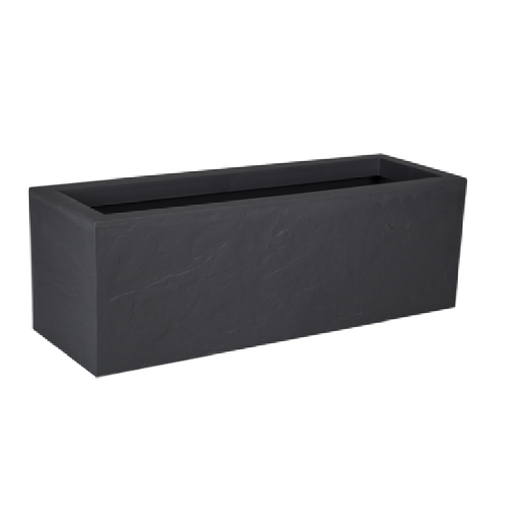
Why this choice suits this profile: Its dimensions of 99.5 × 39.5 × 43.5 cm and its stone-like appearance add character to a large terrace or spacious garden.
The double wall, retention area and pre-drilled holes are listed separately, so you can better understand how the container works.
98-litre capacity, 100% recyclable material, stated UV protection and frost resistance.
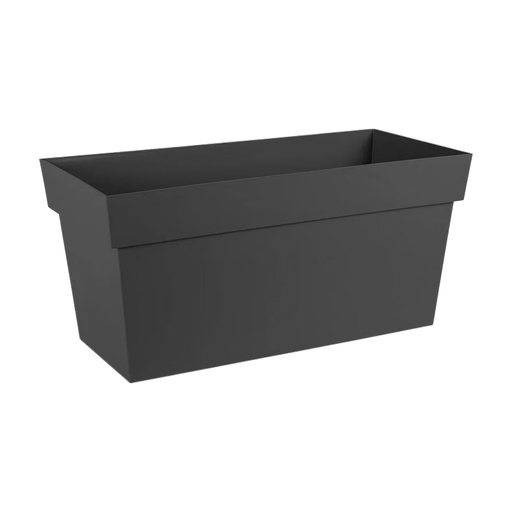
Why this choice suits this profile: Its 79 cm length, castors and reservoir make it a practical solution for large balcony planters or terrace dividers that need to be moved regularly.
The reservoir, filter grid and filling spout are built into the design, without relying on separate accessories.
74-litre volume, castors, filter grid, stated UV protection and frost resistance, with a 7-year commercial guarantee.
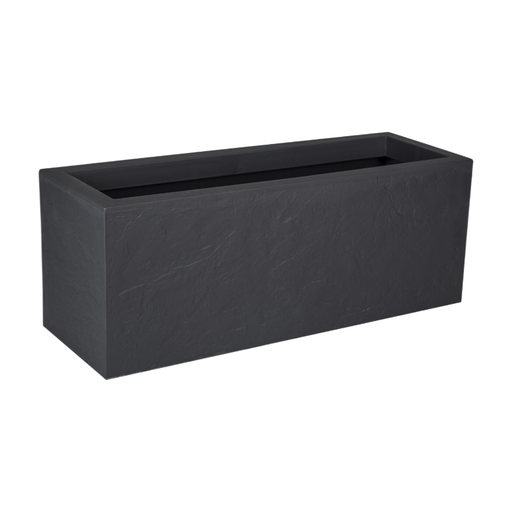
Why this choice suits this profile: Its size of 59 × 19.5 × 22.8 cm fits easily on a sufficiently wide railing, a shelf or the edge of a terrace.
The product page mentions the retention area and double wall, while the compact format keeps it from taking up too much space.
25-litre volume, stone-effect finish and integrated water reservoir for balcony planting.
We’ve put together a comprehensive, real-time updated selection of products that meet these selection criteria as well as European safety requirements.
Before planting, check that the drainage openings are clear. Use a compost suited to the plant species and avoid filling the reservoir to the maximum all the time. Newly planted specimens may also need watering from above while their roots establish.
For a heavy container, choose its final position before filling it. A planter with castors should stay on a flat surface; lock the wheels once the container is in place. In winter, follow the manufacturer’s recommendations and avoid any build-up of water that could freeze.
Depending on the model, water is poured into a dedicated opening or directly into the compartment beneath the substrate. Check the product page and allow time for the moisture to rise before adding more water. Avoid keeping the reservoir constantly full if the plant prefers dry soil.
It depends on the material, exposure, drainage and handling. UV protection, stated frost resistance and gentle cleaning can help preserve the container’s appearance. The warranty period stated by the manufacturer is a commercial reference, but it doesn’t replace the usage instructions.
It can indeed space out watering, but the result depends on the plant, temperature, wind, container size and compost. Check the soil moisture regularly rather than relying solely on the presence of a reservoir.