Households sharing a snack
If several people use the same jar, consider its weight and how you’ll serve it. A large jar is a shared container; it doesn’t provide ready-to-go portions for lunch boxes.


If you’re sharing a spread at home, choose a jar size that suits how much you use. For a lunch box, an individual portion may be easier to take with you, but check the number of units if you’re looking for a multipack. After exercise, don’t judge a snack by its packaging alone: compare the nutritional information, ingredients and allergens for the specific product, taking the other foods in your snack into account.
If several people use the same jar, consider its weight and how you’ll serve it. A large jar is a shared container; it doesn’t provide ready-to-go portions for lunch boxes.
After a workout, a format that’s easy to carry may matter more than the product’s total size. Check whether the product is genuinely an individual portion or whether you’ll need to transfer some to another container.
Compare the sugars, fat and other nutritional values per 100 g, as well as the ingredients and allergens. The DGCCRF states that Nutri-Score is voluntary in France; if it’s not shown, you should still check the nutrition declaration.
Start by thinking about where you’ll eat the spread, then check the label for the exact product. The weight of a jar and the amount in an individual portion meet different needs.
| What to consider | What to check | Who it matters to |
|---|---|---|
| Portability and portion size | Whether the packaging is genuinely individual, the weight of each unit and the number of units supplied. | When packing a snack in a lunch box, I want to know what I can take without scooping it out of a jar. Around 33% of consumers put portability and portion size first. |
| Ingredients and labelling | Nutritional values per 100 g, particularly sugars and fat; the ingredients list and allergens. | If I’m putting together a post-workout snack, I want to compare recipes without assuming the spread’s packaging alone establishes its nutritional role. Around 42% of consumers prioritise checking the ingredients. |
| Sharing at home | The jar’s net weight and how much you plan to serve each time. | When several people are helping themselves at home, I prefer a shared container, even if I have to prepare portions to take out separately. Around 25% of consumers put a sharing format ahead of other criteria. |
According to the DGCCRF, displaying a Nutri-Score is voluntary in France, whereas a nutrition declaration is generally required for prepacked foods. So the absence of the logo doesn’t, on its own, tell you what the product contains.
Compare the nutritional information per 100 g and the ingredients. If the packaging displays a Nutri-Score, use it as additional information.
The 750 g jars listed by Carrefour and Auchan, and the 1 kg jar listed by E.Leclerc, are containers for sharing, not packs of individual portions.
For a lunch box, check the type of container and the number of units. If you buy a large jar, transfer the amount you want to take with you into a separate container.
Ingredients and ‘may contain’ warnings can vary from one product to another. The product name or brand alone isn’t enough when choosing something for a person with an allergy.
Before buying, read the ingredients list and allergen information on the label for the exact product.
A jar’s nutrition table isn’t enough to conclude that the product alone meets your needs after exercise. Anses reminds us that nutrition should be assessed across your overall diet.
Consider the amount you serve and the other foods in your snack, rather than assuming a sports benefit from the product name or format.
These examples give you an idea of the jar sizes available. The brand alone won’t tell you whether a product is suitable for taking with you or sharing.
Auchan lists, among other products, a 750 g jar of Nutella spread.
Carrefour lists its hazelnut spread in a 750 g jar.
E.Leclerc lists, among other products, a 1 kg jar of Nustikao spread, with a Nutri-Score E shown on the product page.
Auchan lists a cocoa and hazelnut spread in a 200 g jar.
This selection of spreads includes jars in different sizes and a 25 g format described as an individual portion. Whether you’re sharing at home or packing a lunch box, choose based on the exact packaging rather than assuming a jar or portion is sold in a multipack.
 Image unavailable
A jar to consider if several people enjoy spread at home. The 1 kg format isn’t a multipack: for a lunch box, you’ll need to take out a portion, and check the label for the exact product.
 Image unavailable
This large jar may suit frequent use or sharing if you can serve the amount you need. The 3 kg format isn’t a pack of smaller containers or pre-portioned servings.
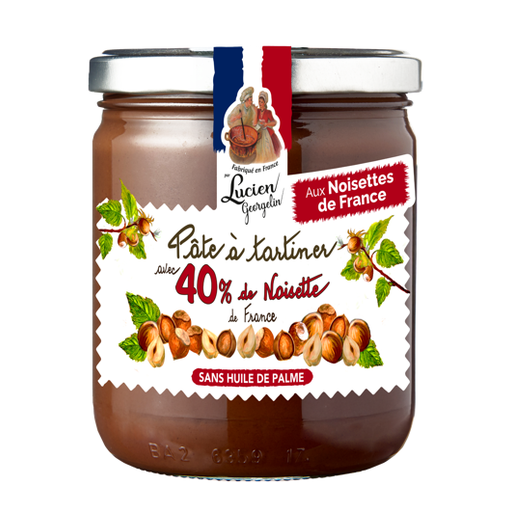 Image unavailable
This 400 g jar is an option if you’re looking for a recipe described as containing 40% hazelnuts and 7% cocoa. If you’re buying it for snacks to take with you, check the other ingredients and prepare portions separately: it isn’t presented as a multipack.
 Image unavailable
Another jar size to consider for serving spread at home. For a lunch box, you’ll need to prepare the amount you want to take from the 750 g jar; it isn’t a pack of individual portions.
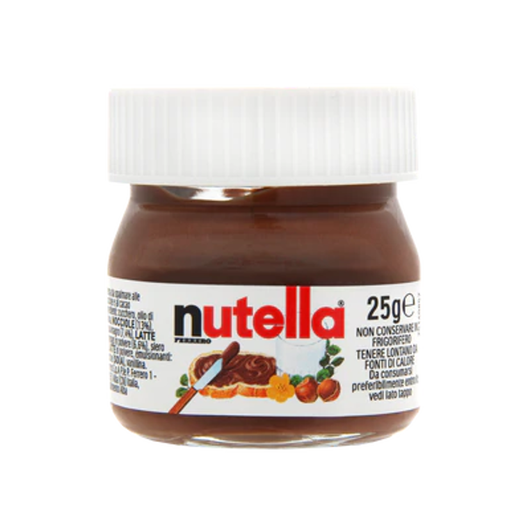 Image unavailable
The 25 g format is described as an individual portion for a snack on the go. If you’re looking for a multipack, check how many units are supplied. Also check the nutritional information and allergens on the packaging before choosing.
No. The DGCCRF says that displaying a Nutri-Score is voluntary in France. A nutrition declaration is generally required for prepacked foods, so check it to compare the stated values, even when no Nutri-Score is shown.
First, check whether you’ll receive an individual portion, several units or a jar from which you’ll need to take some spread. Then read the ingredients, allergen information, storage instructions and nutritional information per 100 g for the exact product.
The label alone isn’t enough to conclude that it makes a suitable post-workout snack. Anses considers nutritional intake as part of the overall diet. Think about how much you eat and what else is in your snack, without assuming the spread helps with recovery.