After doing work around the home, choose a vacuum cleaner based first on the debris you need to clear. For ordinary dry dust, check the filter, bag and hose diameter. If you also need to vacuum up water, choose a model whose instructions permit wet use and follow the specified wet-cleaning set-up. UFC-Que Choisir describes wet and dry vacuum cleaners as suitable for fine dust and small rubble, but these features do not prove that a domestic appliance is suitable for hazardous dust.
Who is this guide for?
DIYers dealing with dust
For ordinary dry dust after small jobs, make sure the filter and bag are suited to the debris. UFC-Que Choisir mentions wet and dry vacuum cleaners for fine dust and small rubble; France’s housing ministry and INRS distinguish potentially hazardous dust from everyday dirt.
People who need to switch between water and debris
If your garage or patio also has liquids to clear, check that the model is approved for wet vacuuming and find out what set-up it requires. Kärcher says the WD 3 V-17/4/20 has a cartridge filter that can be used for both water and dust, while Einhell specifies a foam filter for liquids on the TC-VC 1812/1 S.
People clearing light rubble or leaves
For larger debris, check that it is suitable for the vacuum and can pass through the hose. The tank capacity and storage space you have available also matter. UFC-Que Choisir covers small rubble, while Kärcher, Nilfisk and Einhell product specifications list the capacities of certain models.
What to check
Wet and dry vacuum cleaner
Choose this if: you need to clear ordinary dry debris as well as water, and the instructions confirm the model is suitable for both.
Bear in mind: the filter and bag may need to be set up differently for wet vacuuming, depending on the model.
Wet and dry vacuum cleaner with a bag
Choose this if: you prefer using a compatible bag to collect ordinary dry dirt.
Bear in mind: you’ll need bags with the correct product reference. Having a bag does not prove that the appliance is suitable for hazardous dust.
Bagless wet and dry vacuum cleaner
Choose this if: you’d rather empty the tank than replace bags, provided the instructions allow this set-up for the debris you need to clear.
Bear in mind: check the filter maintenance requirements and the precautions to take when emptying the tank for the model in question.
Suitable accessories and hose
Choose this if: small rubble, leaves, awkward corners or connecting a power tool are central to how you’ll use it.
Bear in mind: check which nozzles and connectors are actually included. Bosch lists an adapter and automatic tool start-up for the AdvancedVac 20, but these features aren’t available on all wet and dry vacuum cleaners.
| What matters |
What to check |
Who it matters most to |
| Filtering dry dust |
Identify the materials, then check which types of dust the vacuum can handle and which filters and bags are compatible in the instructions. |
After small jobs, I want to collect ordinary dust using a suitable set-up; around 33% of consumers prioritise dry dust. |
| Vacuuming up water |
Confirm that the model can handle liquids and check how to prepare the filter and bag before wet use. |
If I also want to clean a garage or patio where there’s water, I’m looking for a model designed for this purpose; around 25% of consumers prioritise water and wet dirt. |
| Small rubble and leaves |
Compare the types of debris the vacuum can handle, hose diameter, included accessories and tank capacity. |
When small rubble or leaves make up most of the mess, I want an appliance suited to this debris; around 25% of consumers prioritise collecting it. |
| Moving and storage |
Consider the space available, the distance you need to cover, the cable, hose and how the model can be moved. |
If I need to move between the house, garage or patio, I want to be able to move the appliance and store it where I’ve planned; around 17% of consumers prioritise portability and storage. |
Mistakes to avoid
-
Assuming “fine dust” means it can collect every type of dust
The materials you’re working with can affect the level of risk. France’s housing ministry says that work on materials containing asbestos can release fibres. A marketing claim alone does not mean an appliance is certified to collect them.
Identify the materials before cleaning. If hazardous dust may be present, don’t rely on a domestic vacuum cleaner chosen for everyday dirt. Get the risk assessed and find out what action is appropriate.
-
Assuming all wet and dry vacuum cleaners need the same set-up
Kärcher says the WD 3 V-17/4/20 has a cartridge filter that can be used for both water and dust. For the TC-VC 1812/1 S, Einhell specifies a foam filter for liquids. These set-ups are not automatically interchangeable.
Check the model’s instructions before switching from dry waste to liquids, and make sure you know what to do with the bag and filter.
-
Choosing based only on tank capacity
The stated capacity doesn’t tell you which debris the appliance can handle, whether it will pass through the hose or how much storage space you’ll need. UFC-Que Choisir includes small rubble among the uses for wet and dry vacuum cleaners, but make sure you check the limits of the model you’re considering.
Consider the debris you need to clear, the hose, accessories, cleaning route and available space together.
-
Assuming the standard model has a feature found on a variant
Nilfisk says the tool socket is available on the optional “+T” variant of the Multi II 22, not on the standard model.
Before you buy, check the full product reference, variant and accessories actually included.
Brands to consider for different uses
The details below apply to the models mentioned and shouldn’t be taken to represent an entire product range.
Kärcher
The WD 3 V-17/4/20 is worth considering for ordinary dry or wet dirt, with integrated storage.
- Kärcher lists a 17 L tank, a 2 m hose and a cartridge filter that can be used for both water and dust without replacing the filter.
- These features don’t prove that the model is suitable for hazardous dust.
Bosch DIY
The AdvancedVac 20 may be worth considering if you also need to vacuum up water or connect a power tool.
- Bosch lists a conical adapter, automatic tool start-up, a drain valve and a cartridge filter for wet and dry use.
- Check that your tool is compatible and confirm which features are included with the exact product reference. Don’t assume they’re available on every Bosch model.
Nilfisk
The Multi II 22 is worth considering for everyday dirt, indoors or outside.
- Nilfisk lists a 22-litre tank, a filter-cleaning indicator, a crevice nozzle, a floor brush for dry and wet dirt, and dedicated bags and filters.
- The tool socket is available on the optional “+T” variant, not the standard Multi II 22.
Einhell
The TC-VC 1812/1 S is worth considering as a workshop or garage vacuum cleaner when space is limited.
- Einhell lists a 12 l tank, a Ø 36 mm hose, four castors and a foam filter for liquids.
- The specifications also mention bags for dirt. Use the set-up specified for the debris you’re vacuuming.
Joybuy products related to this topic
This selection includes wet and dry vacuum cleaners for the home or garage, as well as models designed for workshop use or dry leaves. Check the usage limits for each model, particularly when it comes to water and debris.
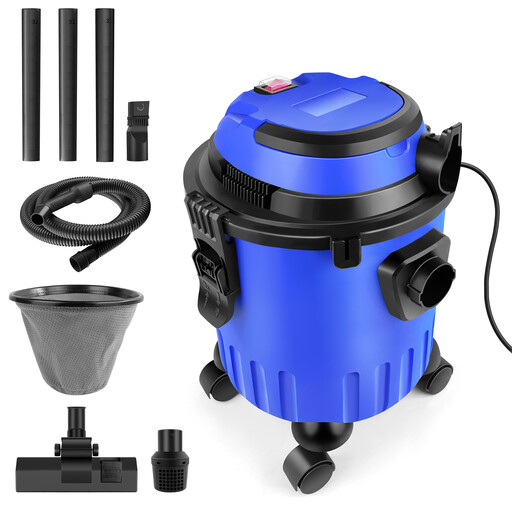 Image unavailable
3-in-1 wet and dry vacuum cleaner
For vacuuming dry debris or water, and using the blower function, according to the product description.
15-litre tank, washable filter and HEPA filter included.
View product
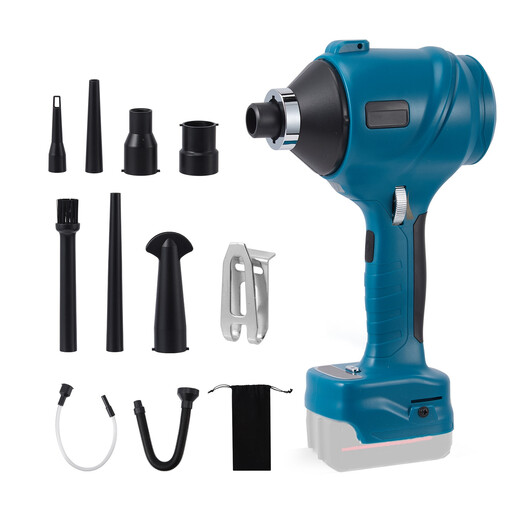 Image unavailable
Cordless workshop vacuum blower
The description mentions vacuuming dust from workshop tools, leaves and awkward corners.
Adjustable airflow, two extension tubes and seven nozzles. Battery not included.
View product
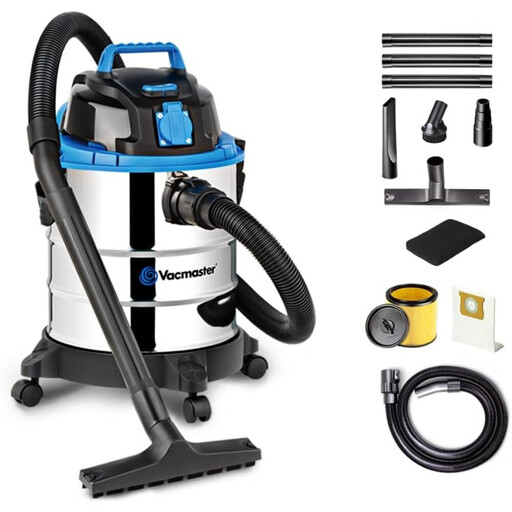 Image unavailable
Vacmaster VQ1220SC
For wet or dry cleaning at home, in the garage or in the workshop; the title also mentions a blower function.
20 L tank, 1250 W motor, stated suction of 20 kPa and 2430 W tool socket. Stainless steel tank.
View product
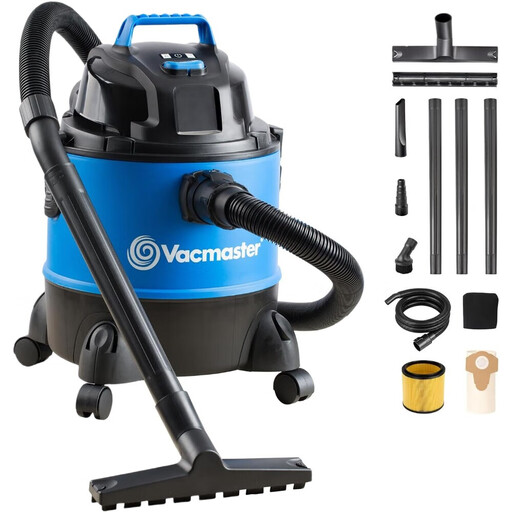 Image unavailable
Vacmaster VQ1220PF 3-in-1
For wet or dry use and blowing, according to the product title; the description also mentions use at home, in the garage and in the car.
20 L tank, 1250 W motor and stated suction power of 200 AW. 2.5 m hose; the description mentions a filter bag and cartridge filter.
View product
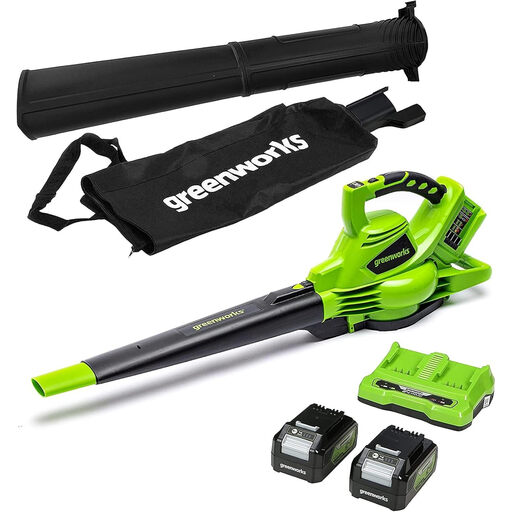 Image unavailable
Greenworks GD24X2BVK4X leaf vacuum blower
For collecting dry leaves outdoors; the description excludes wet leaves, water, stones and metal objects.
48 V (24 V × 2), 45 L collection bag, two 24 V 4 Ah batteries and dual charger.
View product
Frequently asked questions
How do I choose between a vacuum cleaner with a bag and one that empties straight from the tank?
Start by checking which debris the appliance can handle, then check compatible bags and filters, along with the emptying instructions. Going bagless doesn’t mean you can skip filter maintenance; a bag for ordinary dust doesn’t prove that the appliance is suitable for hazardous dust.
Do I need to change the filter before vacuuming up water?
The set-up depends on the model. Kärcher says the WD 3 V-17/4/20 has a cartridge filter that can be used for both water and dust, while Einhell supplies a foam filter for liquids with the TC-VC 1812/1 S. Follow the instructions and check how to prepare the bag before wet use.
Can I use a domestic vacuum cleaner for dust that may contain asbestos?
Don’t assume that a domestic vacuum cleaner is suitable. France’s housing ministry says that work on materials containing asbestos can release asbestos fibres; INRS describes class H vacuum cleaners for hazardous dust in professional settings. If you’re unsure what the materials contain, have the risk assessed before choosing a cleaning method.
What statutory guarantee applies to purchases from a trader in France?
For a non-professional buyer purchasing from a professional seller, Service-Public says in information updated on 17 August 2026 that the defect must appear within two years of delivery for the statutory guarantee of conformity to apply. This guarantee is separate from a commercial guarantee.


