
Livraison le jour même ou le lendemain

Qualité garantie

Débloquez vos offres de bienvenue: Livraison GRATUITE | Jusqu'à -80 % | 30 jours d'essai gratuits à JoyPlus
Téléchargez l'application
A notebook that gets bent at the bottom of your bag, sticky notes that peel off after a few hours or a memo board that’s too small for the whole family: buying office supplies and stationery can quickly become disappointing. A product’s appearance and marketing claims don’t always tell you how good it is.
Before you order, watch out for these three common pitfalls:
For classes, meetings or keeping a personal journal, an A5 spiral-bound notebook measuring 148 × 210 mm gives you a comfortable amount of writing space. A twin-wire binding usually lets the notebook lie flat, while an elastic closure stops it opening in your bag.
More compact, a hardback A6 notebook slips easily into a bag or briefcase. It’s handy for lists, jotting down ideas and reminders, especially if it has a pen loop or bookmark. Even smaller A7 models are better suited to quick notes and to-do lists.
Remember to check the number of sheets, not just the number of pages. Some manufacturers count each side of a sheet, which can make a notebook seem more spacious than it is.
A lined notebook is well suited to writing, classes and meeting notes. If you use a fountain pen or felt-tip pen, 100 g/m² paper may show through less than thinner paper. However, this doesn’t guarantee that ink won’t bleed through when using every type of pen.
For recycled or certified paper pads, make sure you understand what each detail means. A certification such as PEFC tells you about the paper’s source, while its weight describes its density. For drawing, diagrams or freeform notes, a blank notebook is often more practical than a lined one.
A repositionable sticky note pad is useful for temporary reminders, colour-coding or preparing for a meeting. Small coloured Post-it notes are ideal for short messages and marking documents. Larger options, including Super Sticky notes, give you more room for a schedule or information displayed on a vertical surface.
For a felt wall noticeboard, check its dimensions, weight and the type of fixing supplied. A self-adhesive model can be mounted without drilling, but don’t use it to hold heavy items unless you have a suitable accessory. A magnetic weekly planner, on the other hand, makes it easier to see appointments at a glance using magnets and a dry-wipe pen.
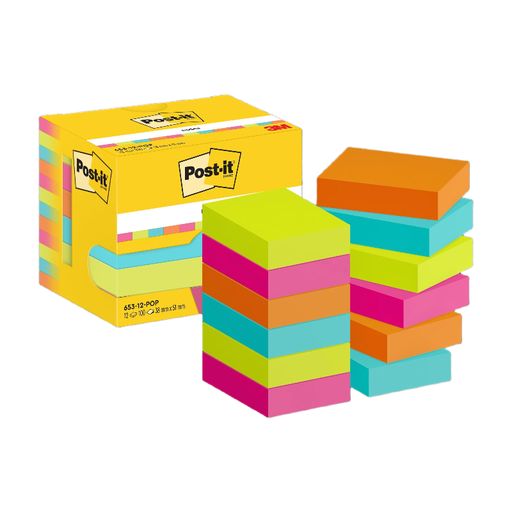
Why this is a good fit: This pack of 12 pads fits easily into a family workspace, ready for homework or everyday organisation. The different colours and compact size are perfect for short reminders.
The size and number of pads are clearly stated, so you won’t end up choosing oversized notes for simple messages.
12 pads of 100 sheets, assorted colours and repositionable adhesive, according to the product listing.
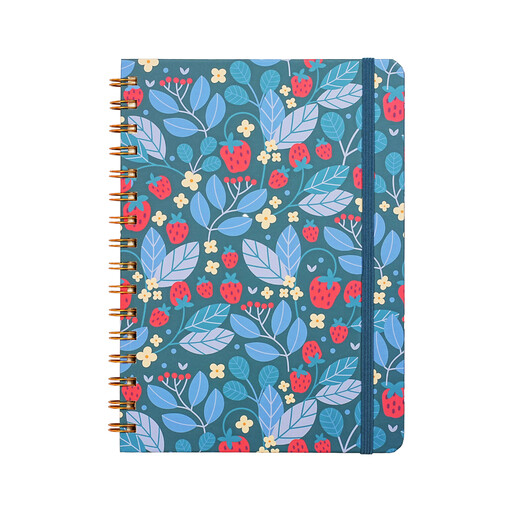
Why this is a good fit: With its laminated hardback cover, beige lined paper and elastic closure, this notebook is a dependable companion for regular use at the office, university or home.
The key details are clearly listed: A5 size, 192 sheets, 100 g paper and twin-wire binding.
192 lined sheets, 100 g offset paper, an elastic closure and a laminated hardback cover.
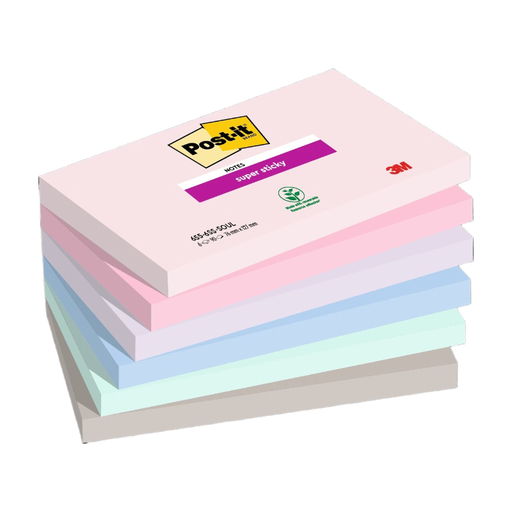
Why this is a good fit: At 127 × 76 mm, these notes give you enough room for a schedule, a to-do list or an instruction displayed on a vertical surface.
The product listing explains which surfaces the notes can be used on and confirms they can be repositioned. It also recommends keeping them dry.
Six pads of 90 sheets, PEFC-certified paper according to the product listing, and a size suited to detailed reminders.
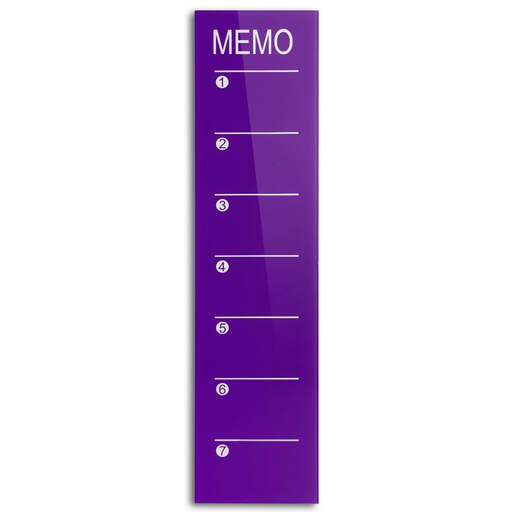
Why this is a good fit: Its seven sections make it easy to organise the week’s appointments and tasks in a hallway, kitchen or home workspace.
The dimensions of 80 × 20 cm, 4 mm glass thickness and mounting hardware are all listed before you buy.
Seven weekly sections, a wipe-clean surface and three neodymium magnets included.
We’ve put together a comprehensive, regularly updated list of products that meet these strict selection criteria and European safety regulations.
A lined A5 notebook is a good choice for classes, meeting notes and projects that need several pages. If you only need to carry a few everyday notes, a hardback A6 notebook takes up less space. Before choosing based on design, compare the paper weight, number of sheets and type of binding.
Product listings may claim that notes can be removed cleanly and repositioned easily. However, the result depends on the surface, how long they’ve been in place, dust and humidity. Test them somewhere discreet first, especially on delicate paintwork or an antique piece of furniture.
Start by separating items by use: notebooks for longer notes, sticky note pads for temporary reminders, and a wall board for information everyone needs to see. Then choose complementary sizes and limit colours to the categories that are genuinely useful to you. This will make things easier to organise and help you avoid buying duplicates.