
Livraison le jour même ou le lendemain

Qualité garantie

Débloquez vos offres de bienvenue: Livraison GRATUITE | Jusqu'à -80 % | 30 jours d'essai gratuits à JoyPlus
Téléchargez l'application
Buying sticky notes seems simple, right? Think again. We've all been frustrated by a reminder that peels away after five minutes, paper that curls up on itself, or a sticky residue left on an important document. These small failures, often caused by a low-grade adhesive or poor-quality paper, can turn an organisational ally into a real source of frustration.
Forget the flashy packaging and marketing promises. The real difference lies in a few technical details. This guide gives you the keys to decode the labels and choose the perfect Post-it Note for your needs, whether it's for the office, studying, or home organisation.
To make the right choice every time, you need to know what separates a simple piece of coloured paper from a sticky note that delivers on its promise. Here are the three essential points to check before you buy.
Not all adhesives are created equal. This is THE number-one criterion, as it directly depends on the surface where you'll be sticking your notes.
The standard square format (76?x?76?mm) is an excellent all-rounder, but it can't do everything. Scribbling a long list on a tiny note or wasting a large one on a single keyword is a surefire way to lose efficiency.
Colour is more than just an aesthetic choice; it's a powerful organisational tool. Using a colour-coding system with your Post-it Notes is a game-changing life hack: one colour per project, priority, or task type. While Canary Yellow remains the standard for its unbeatable visibility, collections in bright or pastel shades open the door to far more sophisticated systems.
One last point, often overlooked, is the paper's origin. The PEFC (Programme for the Endorsement of Forest Certification) certification ensures that the paper comes from sustainably managed forests. This is a mark of quality and a more responsible choice for your office supplies.
Enough theory—let's get practical. Here are a few models that perfectly illustrate these criteria, recommended for different user profiles.
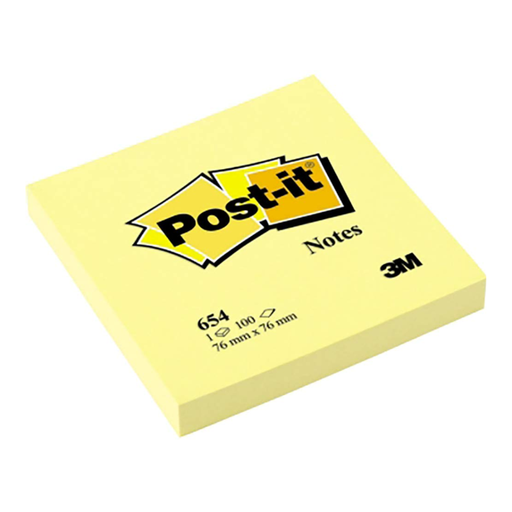
Why we chose it: A time-tested classic that has proven its worth. Ideal for the shopping list on the fridge, a phone number you can't lose, or a quick note left on a file. It's the ultimate safe bet.
Its standard adhesive is calibrated for paper and cardboard. It sticks just right, repositions effortlessly, and most importantly, leaves no unsightly residue on your documents.
The winning duo: a 76x76 mm square format and Canary Yellow colour. Maximum versatility and visibility for all everyday tasks.
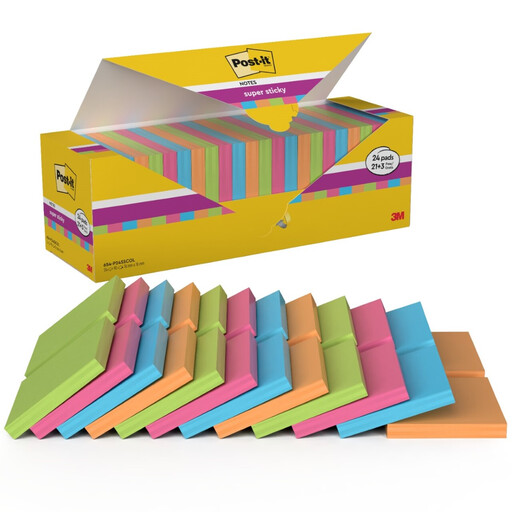
Why we chose it: The essential tool for project managers, Kanban method enthusiasts, or workshop facilitators. Thanks to the Super Sticky adhesive, your notes won't budge an inch, even on a wall, window, or whiteboard.
No more anxiety about a note falling off mid-meeting. Its reinforced adhesive is designed for vertical and difficult surfaces, guaranteeing a rock-solid hold.
The value pack (21 pads + 3 free) and the mix of colours make it excellent value for money for heavy use and for implementing an effective visual management system.
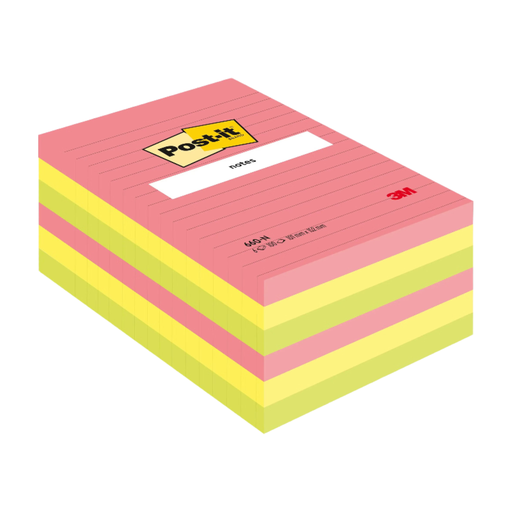
Why we chose it: The perfect ally for students and anyone who likes to structure their ideas. Perfect for summarising a lecture, preparing a presentation, or listing arguments. Its large size finally offers enough space to write without feeling cramped.
Goodbye to cluttered, illegible notes. The lines guide your writing for a clean, organised result that's easy to read, even the night before an exam.
The winning trio for studying: a large format (101 x 152 mm) for content, lines for clarity, and neon colours to ensure nothing important is missed.
Explore our full catalogue of sticky notes, all selected by our experts for their quality and reliability.
It's all about sticking power. Standard notes are perfect for smooth surfaces like paper. Post-it Super Sticky notes, on the other hand, feature a super-strong adhesive capable of holding securely to vertical or textured surfaces like walls, screens, or plastic.
Quality notes like those from the Post-it brand use an adhesive specially designed to be removed cleanly, without leaving a sticky residue or damaging the surface. As a precaution on very delicate surfaces (wallpaper, fragile lacquered wood), it's always a good idea to test it on a small, inconspicuous area first.
It all depends on the task at hand. For marking a page or jotting down a keyword, small, page-marker-style sizes are perfect. For everyday reminders, the square 76?x?76?mm format is the most versatile. Finally, for to-do lists, meeting notes, or diagrams, opt for large rectangular formats (e.g., 101?x?152?mm), preferably lined for a more comfortable writing experience.