
Same-day & Next-day Delivery

Quality Guaranteed

Unlock Your Welcome Offers: FREE Delivery | Up to 80% OFF | Free 30-day JoyPlus trial
Download the APP
A clothes airer might seem like a simple purchase. But an unstable frame, poorly judged dimensions or an overestimated capacity can quickly turn drying your laundry into a chore. Whether you live in a flat, have a balcony or share a family home, the right model should suit the amount of washing you do, the space you have available and how you like to store it.
A stated length in metres doesn’t necessarily mean you’ll be able to hang a large amount of clothing on the airer in suitable conditions. The gaps between the bars, the available height and the number of tiers all affect airflow and ease of use.
A large-capacity clothes airer with several tiers can hold more clothes without taking up much floor space. By contrast, a very compact model is better suited to a small daily wash.
Photos can make an airer look compact, even though its actual dimensions when open tell a very different story. Before you order, measure the space you have in mind, leaving enough room to move around the clothes airer. On a narrow balcony, an adjustable-width or extendable clothes airer is often more practical than a fixed model.
Remember to check how thick the airer is when folded, too. Some models fit behind a door or in a cupboard, while others need a dedicated storage space.
A clothes airer loaded with damp washing becomes considerably heavier. Narrow feet, castors without brakes or an uneven distribution of clothes all increase the risk of it tipping over. Castors make an airer easy to move, but you should be able to lock them while your washing is drying.
For one person or a student, a medium-capacity folding clothes airer may be more than enough. A model with wings lets you hang trousers, towels and longer items. For a family, it’s best to choose a 3-tier clothes airer or one with even more tiers, with extendable bars for sheets and towels.
Also check which accessories are built in:
Steel with a moisture-resistant finish is a popular choice for indoor use. A stainless-steel clothes airer or one with aluminium components can be particularly suitable for a bathroom, covered patio or damp room.
However, the material alone won’t tell you how durable a model is. Check the quality of the joints, the strength of the welds and whether the feet have protective pads. If you use your airer outdoors, bring it inside when the weather turns.
Stick to the maximum load specified by the manufacturer and avoid placing heavy items on just one bar. Wet blankets, coats and towels should be spread across several tiers.
Always place the airer on a flat surface. When unfolding it, keep your fingers away from the hinges and position it out of the reach of children and pets. If the model has castors, lock the brakes before hanging out your washing.
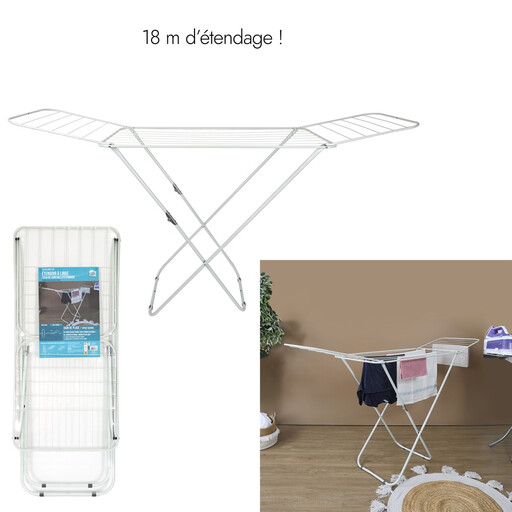
Why this is a good match: This folding model offers 18 metres of drying space, two adjustable wings and a frame that arrives already assembled. It’s ideal for flats and for anyone looking for a straightforward set-up.
The wings let you adjust the layout to accommodate longer items, while its folded size makes it easy to store in a small space.
18 metres of drying space, fold-down wings and smooth-surfaced bars.
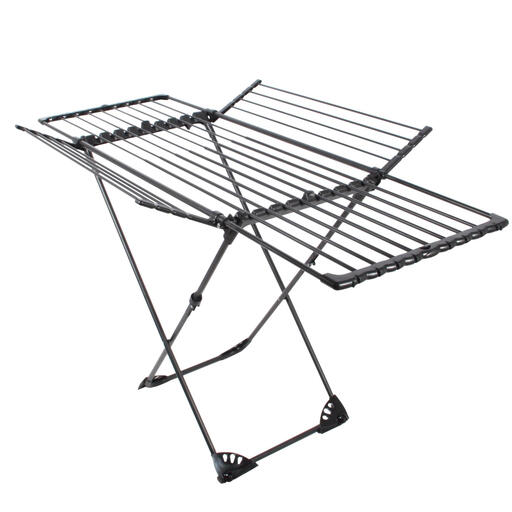
Why this is a good match: Its stainless-steel frame, 27 metres of drying space and adjustable width of 107 to 180 cm make it a great fit for households that do both small and large loads of washing.
The adjustable width means you don’t have to choose an oversized model for every job, while the two wheels make it easier to move.
Stated capacity of 25 kg, side hooks and adjustable width.
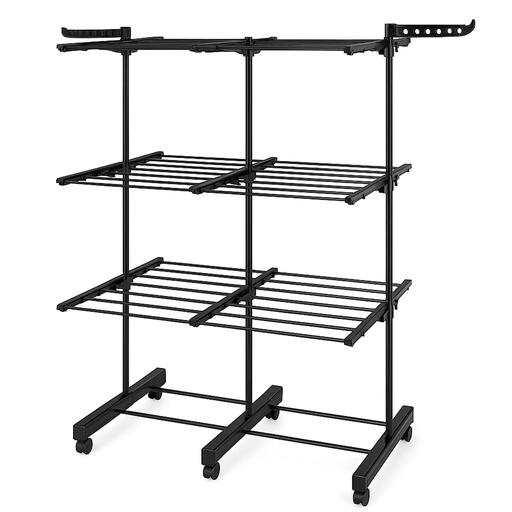
Why this is a good match: With three tiers, extendable bars and a stated 38 metres of drying space, this model is made for larger families and especially big loads of washing.
The six feet and anti-sway system help prevent instability when several tiers are loaded.
Three tiers, six swivel castors and hanger holders.
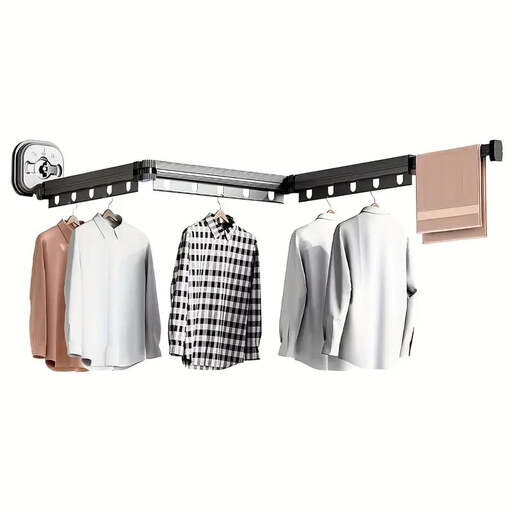
Why this is a good match: This 125 cm wall-mounted model frees up floor space when folded away. Its suction-cup system is designed for drill-free installation, provided the surface is suitable.
Its fold-down design takes up less space and means you won’t have a freestanding airer in the middle of a narrow room.
15 hooks, spaces for hangers and a corrosion-resistant aluminium frame.
Fully unfold the feet and wings, then place the airer on a flat floor. Spread heavier clothes across several bars and start by loading the centre. If the model has castors, apply the brakes before use.
Its lifespan depends on how often it’s loaded, the ambient humidity and how well it’s maintained. Wipe the bars regularly, don’t exceed the recommended load and store your indoor or outdoor clothes airer in a dry place when it’s not in use.
A manual clothes airer doesn’t use electricity. The cost of using one is essentially limited to the purchase and upkeep. However, natural drying can take longer depending on ventilation, humidity and the space between garments.