
Livraison le jour même ou le lendemain

Qualité garantie

Débloquez vos offres de bienvenue: Livraison GRATUITE | Jusqu'à -80 % | 30 jours d'essai gratuits à JoyPlus
Téléchargez l'application
A portable neck fan can be incredibly practical on public transport, at the office, while hiking or at a concert. However, some purchases can quickly lead to disappointment: a device that is too heavy, airflow that is poorly directed, battery life that falls short of the claims or an inconvenient charging process.
Before comparing models, it is worth knowing the main pitfalls to avoid.
A maximum battery life of 16 hours, for example, generally refers to the lowest speed and ideal usage conditions. The higher the power, the faster the battery will run down. So look at the battery-life range at different speeds, rather than relying on a single headline figure.
A hands-free neck fan rests on the back of your neck for several hours. A model weighing close to 300 g may suit some people, but could become genuinely uncomfortable during a walk or commute. The shape, weight distribution and presence of ventilation openings are just as important as the stated power.
A bladeless neck fan reduces the risk of direct contact with rotating blades and can help limit the risk of hair getting caught. However, it is still an electrical device fitted with a lithium-ion battery. The air inlets must remain clear, while the device should be protected from water, excessive heat and any disassembly not предусмотрed by the manufacturer.
A rechargeable neck fan equipped with a 5,000 mAh battery offers a comfortable reserve for commutes and long days. Capacity is not everything, however: also check the charging time, connector type and the conditions corresponding to the stated battery life.
The JISULIFE Neck Fan Life 4 contains a 5,000 mAh lithium-ion battery, equivalent to 18.5 Wh at 3.7 V, charges via USB-C in approximately 3 to 4 hours and offers a stated battery life of 2.5 to 16.5 hours depending on the setting and usage. This information makes it easier to compare the claims made for different models more accurately.
In everyday use, USB-C makes charging simpler: you can use your phone charger, a power bank or certain laptops. However, check the input power specified in the instructions; for this model, it is 5 V – 2 A.
A five-speed neck fan lets you adapt the airflow to the situation: a reduced flow at the office, a medium setting on public transport and higher power outdoors. The number of settings alone does not guarantee greater comfort. Above all, examine the arrangement of the air inlets and outlets.
The JISULIFE Life 4 has two air inlets and several side outlets designed to direct the airflow towards the neck and face. This configuration may suit those who want to keep their hands free, provided the openings are not blocked by a collar, scarf or hair.
In shared spaces, choose a quiet neck fan by consulting the product listing and any available acoustic measurements. If no decibel value is provided, the term ‘quiet’ should be taken as a general indication, not as a standardised measurement.
The Life 4 weighs approximately 282 g. Its neck support and ventilation channels are designed for extended wear, but comfort remains a personal matter. For sport and outdoor activities, also check its water-resistance credentials: this model is not presented as waterproof and must be protected from rain and excessive moisture.
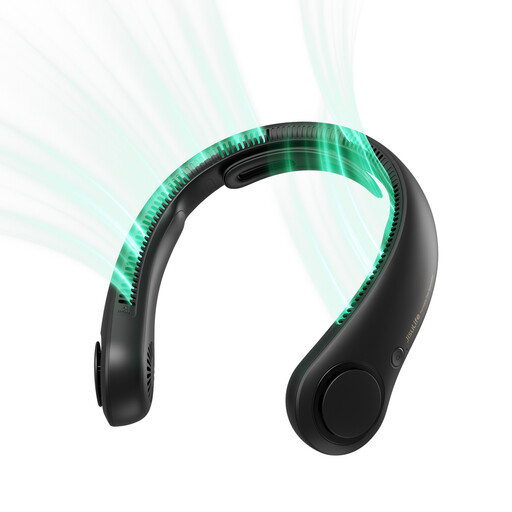
Why this choice suits this profile: A straightforward solution for discovering portable cooling while keeping your hands free, whether you are at the office, travelling or enjoying an outing.
The product listing specifies the approximate 282 g weight, five speeds and battery-life range of 2.5 to 16.5 hours, rather than simply displaying a maximum duration.
Bladeless design, 5,000 mAh battery and USB-C cable included.
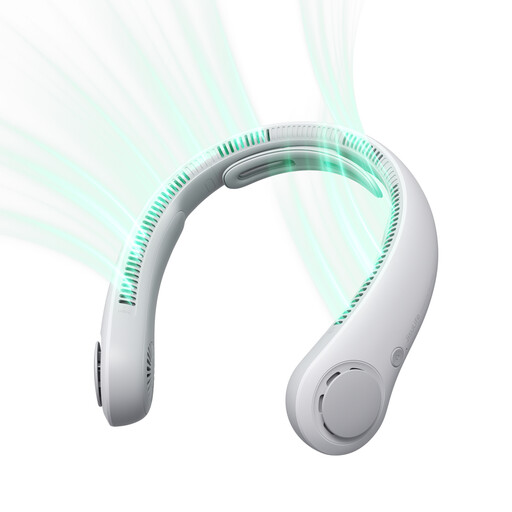
Why this choice suits this profile: Its streamlined design and range of settings will appeal to those who value presentation as much as precise airflow.
The specifications clearly state the 3 to 4 hour charging time, five power levels and 5,000 mAh capacity.
Ergonomic neck support and hands-free operation for commuting and working from home.
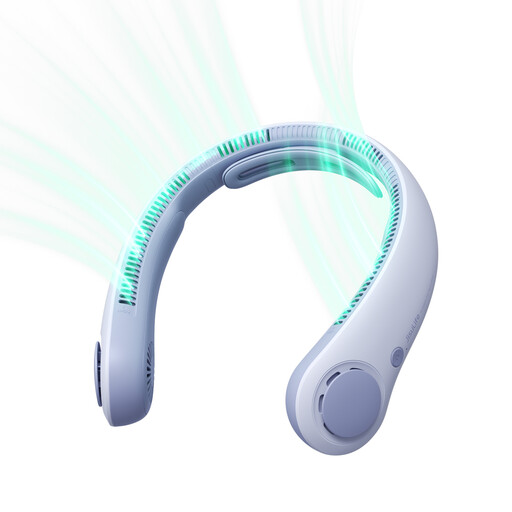
Why this choice suits this profile: The rechargeable design and quick airflow adjustment may suit outdoor activities, events and long working days.
The product listing goes beyond battery capacity: it also specifies the weight, charging time, speeds and lack of water resistance.
Stated battery life of up to 16.5 hours depending on the setting, with a USB-C charging cable supplied.
We have put together a complete, real-time updated selection of products that meet these strict criteria and European safety requirements.
The guidance may vary depending on the product version and its instructions. One product listing specifies that the Life 4 can operate while charging, while another recommends not using it in this situation in order to preserve the battery. Therefore, consult the instructions corresponding exactly to the reference you receive and do not use the fan while charging if a restriction is mentioned.
Electricity consumption is generally low: it corresponds to the energy required to recharge the battery. To estimate it, multiply the capacity in watt-hours by the price per kilowatt-hour, then add the charger’s losses. With a battery rated at 18.5 Wh, a full charge represents approximately 0.0185 kWh, excluding losses. The tariff set out in your contract will then determine the exact amount.
It depends on the number of charging cycles, heat, storage conditions and your charging habits. Avoid extreme temperatures, store the device partially charged if it will remain unused for a long time and follow the manufacturer’s recommendations. Battery life will gradually decrease over time, even if the fan continues to operate.