
Livraison le jour même ou le lendemain

Qualité garantie

Débloquez vos offres de bienvenue: Livraison GRATUITE | Jusqu'à -80 % | 30 jours d'essai gratuits à JoyPlus
Téléchargez l'application
A portable Bluetooth speaker slips easily into a bag, ready to accompany you on a picnic, at a get-together with friends, on a day at the beach or during a few hours of music at home. Yet product descriptions often focus on power, bass or water resistance without really explaining how these features affect everyday use.
Before buying a wireless speaker, three mistakes come up time and again: confusing power with sound quality, treating an IP rating as a guarantee that the speaker can be submerged and relying on battery-life figures measured in particularly favourable conditions. Here are the key criteria to consider, followed by a selection of models suited to different needs.
Watts mainly indicate the advertised power output. They are not enough to determine the quality of the audio reproduction. The type of speakers, the presence of passive radiators, digital signal processing and the cabinet design all matter just as much.
Powerful bass can be enjoyable with electronic music or during a party. On the other hand, overly prominent low frequencies can muddy vocals. For versatile listening, check whether the speaker has multiple drivers, equaliser modes or adjustment options through an app.
IP ratings distinguish protection against dust from protection against water.
Choose your waterproof Bluetooth speaker according to the situation you will actually use it in: light rain, by the pool, on sand, around splashes or where there is a risk of dropping it into water. Always remember to close the port covers before exposing the device to moisture.
A Bluetooth speaker advertised with long battery life may indeed run for several hours, but the duration varies depending on the volume, lighting effects, type of connection and temperature. At maximum volume, the battery will generally run down much faster.
To avoid disappointment, compare the advertised battery life with your real-world use: a few hours on a patio, a day camping or a whole evening. A built-in battery that can also be used as a power bank may be useful in an emergency, but this function will consume some of the energy normally available for playing music.
For a speaker intended for the beach or camping, look for at least a clearly stated protection rating. A dust-resistant speaker certified to IP6X will be better suited to sandy environments than a model that merely mentions being waterproof.
However, bear in mind that certification does not necessarily protect against salt, mud or repeated impacts. After exposure to salt water, rinse the exterior with fresh water if the manufacturer permits it, then let the device dry before recharging it.
A small portable stereo speaker is perfectly suitable for a bedroom, office or outdoor meal. To fill a large room or patio with sound, a larger model with a higher advertised power output may offer more headroom.
The stereo pairing function lets you connect two compatible speakers to distribute the left and right channels. Check, however, whether the second model needs to be identical or simply from the same range. This function will not necessarily replace a more powerful speaker when you are hosting a large party.
Bluetooth 5.3 or 5.4 can help maintain a stable connection, but range also depends on obstacles and the devices being used. Multipoint connectivity can allow several devices to remain paired, while an auxiliary input or card reader provides a practical backup option.
For a portable speaker intended for outdoor use, also consider the weight, handle, hanging loop and button layout. A compact model weighing less than one kilogram will be easier to take on a hike than a more powerful but considerably heavier speaker.
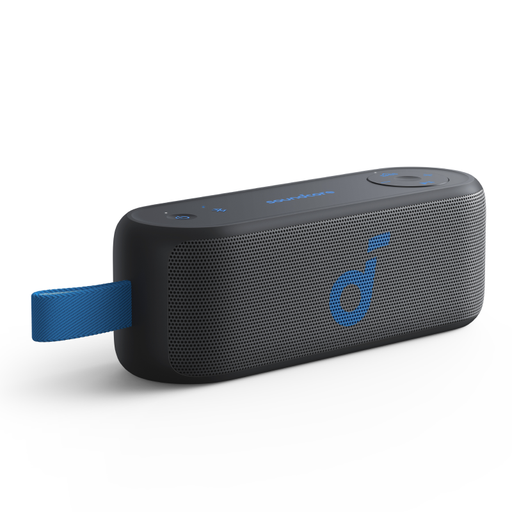
Why this choice suits this profile : Weighing 575 g and offering up to 20 hours of advertised playback, it is an easy-to-use first speaker for the home, garden or occasional outings.
The product description states 16 W of stereo power, two full-range drivers and IPX7 protection. The latter concerns water, with no stated dust-protection certification.
Advertised BassUp technology, up to 20 hours of battery life and a lightweight design that is easy to carry.
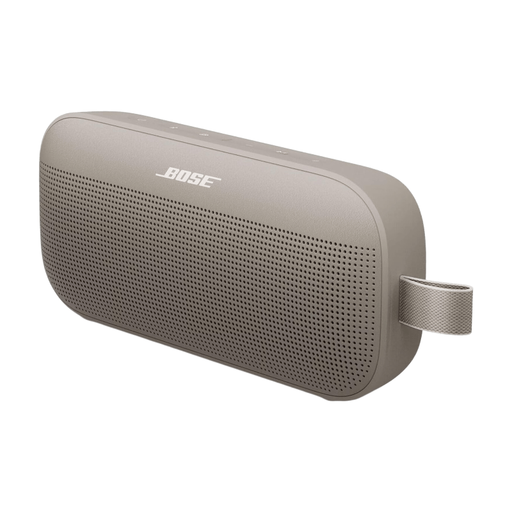
Why this choice suits this profile : Its easy-to-attach design, dedicated app and robust construction make it well suited to frequent trips, whether to the beach, on a hike or by the pool.
Its IP67 rating distinguishes dust protection from water resistance. However, the manufacturer requires the USB-C port cover to be closed securely.
Bluetooth 5.3 with multipoint, up to 12 hours of advertised battery life and stereo pairing for two compatible speakers.
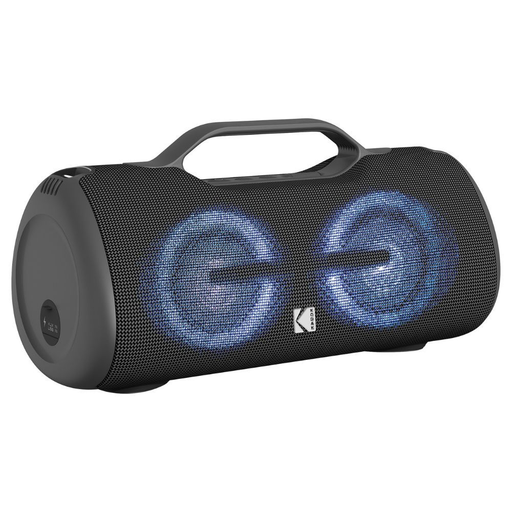
Why this choice suits this profile : Its advertised 60 W output, three equaliser modes and auxiliary and USB inputs are designed for parties, large rooms and situations requiring several audio sources.
The IPX5 rating is well below protection against immersion: it is suitable for splashes, but the speaker must not be submerged in water.
Advertised 60 W output, TWS function, 7.4 V/3 600 mAh battery and USB charging for another device.
We have put together a complete, real-time updated list of products that meet these demanding selection criteria and European safety regulations.
Turn on the speaker, activate Bluetooth in your phone’s settings, then select its name from the list of available devices. When connecting for the first time, pairing may take a few seconds. For shared use, some models support two devices connected simultaneously.
Its lifespan depends on the battery, listening volume, number of charging cycles and storage conditions. To preserve the battery, avoid high temperatures, moisture around the charging port and prolonged discharge. If the casing is damaged or the battery swells, stop using the speaker immediately and contact the after-sales service.
Yes, provided its protection rating matches the intended use. An IPX5 or IPX6 speaker can withstand splashes, while an IPX7 or IP67 model can cope with temporary immersion under the stated conditions. Do not deliberately leave it underwater, and check that the covers are securely closed before bringing it near the pool.