
Livraison le jour même ou le lendemain

Qualité garantie

Débloquez vos offres de bienvenue: Livraison GRATUITE | Jusqu'à -80 % | 30 jours d'essai gratuits à JoyPlus
Téléchargez l'application
A portable Bluetooth speaker can accompany you to the beach, a gathering with friends, on holiday or simply around the home. The problem is that product specifications often highlight figures that are difficult to compare: maximum power, claimed battery life, water-resistance rating or “enhanced” bass.
To avoid disappointment, it is better to consider these features in relation to how you will actually use the speaker. A lightweight portable speaker will not meet the same needs as a powerful Bluetooth model designed to keep a whole party dancing all evening. Here are the key criteria to consider before choosing your wireless speaker.
High power alone does not guarantee balanced sound. The result also depends on the number of speakers, the enclosure volume, the presence of passive radiators, digital signal processing and the speaker’s position.
For listening to podcasts in a bedroom, moderate power may be more than sufficient. For a Bluetooth speaker intended for parties or a large room, look instead at continuous power, usually expressed in watts RMS, as well as the available bass and treble controls.
IP ratings are not all the same and do not cover identical uses. The first digit generally relates to protection against particles and dust, while the second indicates water resistance under specific conditions.
An IPX7 waterproof Bluetooth speaker may be designed to withstand temporary immersion, within the limits specified by the manufacturer. An IPX6 rating is more concerned with powerful water jets: it does not mean the device can be submerged. An IPX4 speaker, on the other hand, is resistant only to splashes.
The charging-port cover must also be properly closed. Water resistance does not necessarily protect the speaker from salt water, sand or impacts.
Claimed battery life is generally measured at a specific volume level and with certain functions enabled. High volume, ambient lighting, hands-free calls or use of an equaliser can significantly reduce actual play time.
For regular use, check the battery capacity, charging method and whether the speaker can be used while plugged in. A long-battery-life Bluetooth speaker should also be easy to carry and straightforward to recharge.
For a portable speaker intended for outdoor use, choose a clearly stated rating that suits the environment in which you plan to use it:
At the beach, sand and dust are just as important to consider as water. A model protected against particles may be more suitable than a basic speaker described as “waterproof” without a precise rating.
To achieve a fuller sound, focus on the audio configuration rather than the power figure alone. Two full-range speakers can create a more open stereo soundstage. A passive radiator can also enhance the perception of bass without requiring an additional speaker.
Models featuring a stereo speaker, two-unit pairing or digital signal processing are generally better suited to detailed music listening. If you are looking for powerful bass, check for a passive radiator, a dedicated control or clearly described amplification technology.
Bluetooth 5.3 or 5.4 can provide a newer, stable connection, but compatibility also depends on the phone, tablet or computer being used. Connecting two devices is useful when several people want to stream their music. Stereo pairing, meanwhile, separates the left and right channels using two compatible speakers.
Also consider the weight, handle, strap and dimensions. A portable speaker weighing less than one kilogram will be much easier to take with you than a model weighing several kilos, even if the latter can produce greater volume.
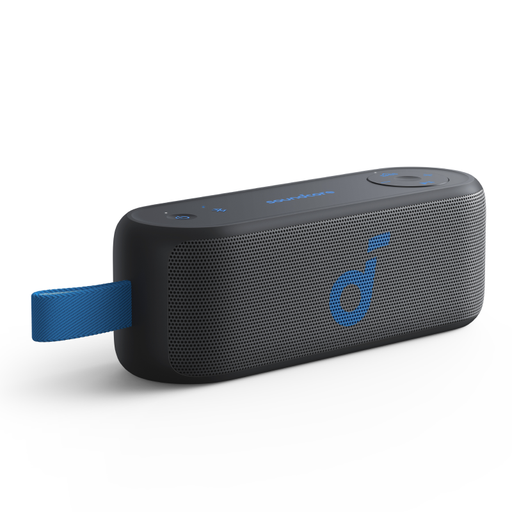
Why this choice suits this profile : Weighing 575 g, with an easy-to-carry design and claimed battery life of up to 20 hours, it makes a good first wireless speaker for the home, garden or days out.
The product page specifies 16 W stereo power, two full-range speakers and BassUp technology. Buyers can therefore rely on concrete details rather than a simple promise of volume.
Claimed 16 W power, playback of up to 20 hours and an IPX7 rating stated on the product page. Check the instructions before exposing it to water.
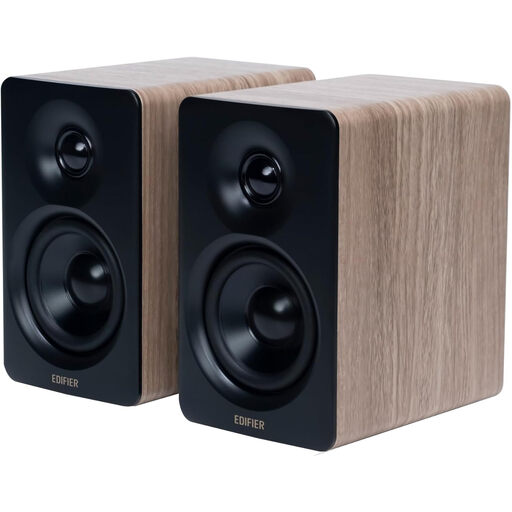
Why this choice suits this profile : This compact pair is designed for the office or a home where sound precision and a range of connections matter more than weather resistance.
Power is expressed as 66 W RMS, and the product page specifies dedicated speakers, digital signal processing and Hi-Res Audio certification.
Bluetooth 5.3 with LDAC support, USB-C and auxiliary inputs, supplied aluminium stands and a compact design suited to the office.
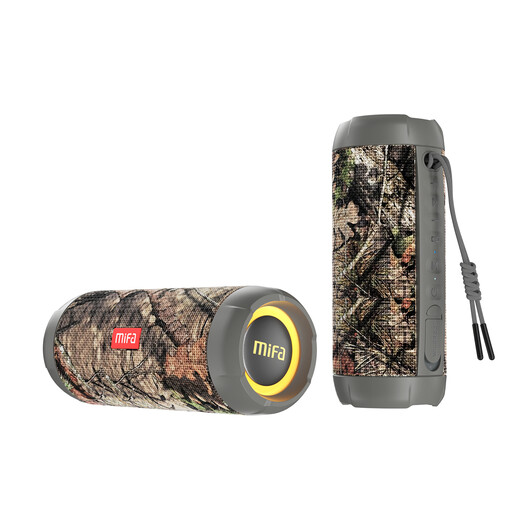
Why this choice suits this profile : Its IP67 rating, claimed battery life of up to 12 hours and outdoor-focused design make it a suitable choice for days out, camping, by the pool or other outdoor activities.
The product page distinguishes IP67 dust protection from water resistance. It also mentions a floating design and immersion to a depth of 1 metre for 30 minutes, under the stated conditions.
Claimed 30 W power, Bluetooth 5.3, simultaneous connection of two devices, MicroSD card reader and claimed battery life of up to 12 hours.
We have put together a comprehensive, real-time updated selection of products that meet these demanding selection criteria while complying with European safety regulations.
For a bedroom, office or close-range listening, moderate power may be sufficient. For a terrace, a Bluetooth speaker intended for parties or a larger room, compare RMS power, speaker configuration and the option to pair two speakers. Sound levels also depend on the acoustics of the space and the device’s positioning.
An IP rating indicates a level of protection under specific conditions, but you should still consult the instructions. Carefully close the port covers, avoid salt water and dry the speaker before charging it. An IPX4 speaker must not be immersed, while an IPX7 or IP67 model may offer greater protection, depending on its technical specifications.
Avoid keeping the volume at maximum all the time, store the device away from heat and use a compatible cable and adapter. Charge it before a long trip and watch out for any overheating, swelling or visible battery damage. These precautions help preserve its performance and ensure safe, reliable use.