
Livraison le jour même ou le lendemain

Qualité garantie

Débloquez vos offres de bienvenue: Livraison GRATUITE | Jusqu'à -80 % | 30 jours d'essai gratuits à JoyPlus
Téléchargez l'application
A portable air conditioner can cool a bedroom, home office or living room without major building work. It is particularly suitable for tenants, older homes and rooms that are only used for a few hours a day. However, be careful: product listings sometimes mix together power, coverage area and practical features. Check the specifications carefully before making a purchase.
A 9000 BTU air conditioner will not necessarily provide the same level of comfort from one room to another. Insulation, exposure to sunlight, ceiling height and the number of occupants all directly affect the heat load. A claim such as ‘up to 30 m²’ should therefore be treated as a general indication, not a guarantee that applies to every home.
A portable air conditioner is not completely installation-free. Even a model sold as an air conditioner without an outdoor unit will generally need to be connected to an exhaust hose leading outside. Without this hose, the appliance releases the heat back into the room and loses much of its effectiveness.
Check whether a window kit is included, whether it is compatible with a sliding or casement window, and how long the hose is. Models supplied with a sealing system reduce the amount of hot air entering around the opening.
A quiet air conditioner still contains a compressor and a fan. The noise levels stated in decibels relate to specific testing conditions. Night mode may reduce the fan speed or gradually adjust the temperature, but it does not eliminate all noise. For a bedroom, compare the stated figures and position the appliance a sufficient distance from the bed.
Cooling capacity is expressed in kilowatts and BTU/h. As a general guide, models rated at 7000 to 9000 BTU are often suitable for a bedroom, home office or moderately sized room. A 12000 BTU air conditioner has a higher capacity, making it suitable for a living room or larger space, provided the insulation and sun exposure are also taken into account.
Here are the details to check:
To find an air conditioner for a 30 m² room, compare several 9000 BTU models and review their operating conditions. Do not base your decision solely on the room size highlighted in the product listing.
A three-in-one or four-in-one appliance can provide cooling, ventilation and dehumidification. A dehumidifying air conditioner can be useful during humid periods, but the amount of water extracted depends on the conditions in the room. In dehumidification mode, the tank may also need to be emptied regularly.
A reversible portable air conditioner or an air conditioner with heating can be useful during the spring and autumn shoulder seasons. However, check the heating capacity separately from the cooling capacity: the two figures are not necessarily identical.
The energy rating provides a useful starting point, but actual consumption depends on how long the appliance is used, the temperature setting and the price of electricity. Models marketed as Class A or A+ portable air conditioners should be compared based on their power consumption and energy label.
The R290 refrigerant is used in several recent appliances. It is a flammable refrigerant: never puncture the circuit and follow the manufacturer's instructions carefully. Plug the appliance into a suitable earthed socket. Do not use a multi-socket adaptor or extension lead if the instructions prohibit it.
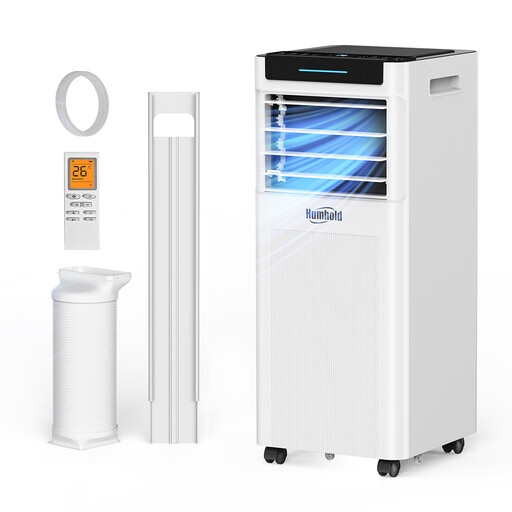
Why this choice suits this profile : Weighing 19.7 kg and fitted with castors and a window kit, it is suitable for a bedroom, home office or small room used occasionally.
The listing specifies the 2.0 kW capacity, hose connection and recommended clearance distance, rather than relying on a vague promise of cool air.
Cooling, ventilation and dehumidification modes, a 24-hour timer and a night mode rated below 49 dB.
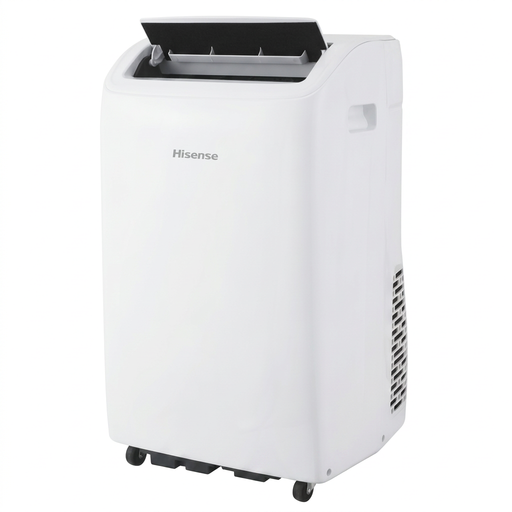
Why this choice suits this profile : Wi-Fi, the advertised voice control and timer allow you to operate the appliance remotely in a connected home.
The listing clearly states that venting to the outside is still required, despite there being no outdoor unit. The minimum stated noise level is 50 dB.
Cooling capacity of 2.6 kW, advertised heating capacity of 2.4 kW and Class A rating in cooling mode.
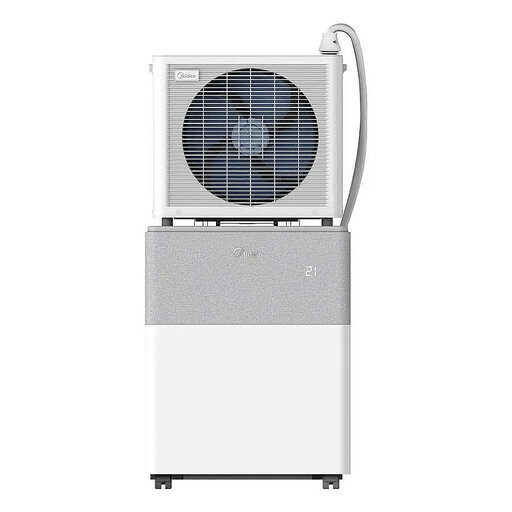
Why this choice suits this profile : Its portable split design is intended for larger spaces, with an advertised capacity of up to 42 m² and year-round use.
Its configuration is clearly detailed : one indoor unit, one outdoor unit and a 2 m connecting tube are supplied.
12,000 BTU, Class A+, Wi-Fi, heat-pump heating and a quiet mode rated between 39 and 59 dB(A).
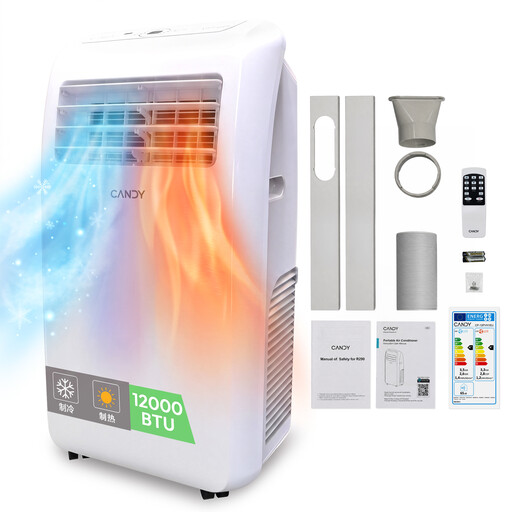
Why this choice suits this profile : Its four modes, 400 m³/h airflow and advertised capacity of up to 35 m² make it suitable for a living room or a heavily used space.
The window kit is included, while the cooling and heating capacities are clearly distinguished in the technical specifications.
3.5 kW cooling, 3.3 kW heating, advertised Class A+ rating and a 24-hour timer.
We have brought together a complete, real-time updated selection of products that meet these demanding criteria and European safety standards.
Place the portable air conditioner on a flat surface, away from walls and curtains. Keep the hose as straight as possible to help vent the hot air effectively. Before switching the appliance on for the first time, read the instructions and make sure it has not been transported on its side. Some manufacturers recommend waiting several hours after the appliance has been tilted.
To maintain consistent airflow:
An opening is needed for the exhaust hose, but the area around the hose should be sealed. Leaving a window wide open allows hot air to enter and reduces cooling efficiency.
Consumption depends on the appliance's power draw, how long it runs, the temperature setting and the home's insulation. Check the energy label and the kW data rather than relying solely on the stated energy class.
It depends on build quality, filter maintenance, storage conditions and compliance with electrical safety instructions. The availability of spare parts, where stated by the manufacturer, is also worth checking before you buy.