
Livraison le jour même ou le lendemain

Qualité garantie

Débloquez vos offres de bienvenue: Livraison GRATUITE | Jusqu'à -80 % | 30 jours d'essai gratuits à JoyPlus
Téléchargez l'application
A portable air conditioner can cool a bedroom, home office or living space without the need for building work. It is a particularly practical solution for tenants, remote workers and households that want to move the appliance around as needed. However, there can sometimes be a significant gap between manufacturers’ promises and everyday reality.
Before comparing models, focus on three often underestimated points: power suited to the room size, effective hot-air exhaust and a noise level that is genuinely comfortable. An appliance described as powerful can quickly become a poor investment if it is incorrectly sized, badly installed or too noisy for a bedroom.
A 9000 BTU portable air conditioner is generally suitable for medium-sized rooms. However, the area it can cool depends on many factors, including insulation, sunlight exposure, ceiling height and the number of occupants. A south-facing room or one located in a loft conversion will often require more power.
Conversely, installing a 12000 BTU portable air conditioner in a small bedroom can increase energy consumption and lead to less consistent operating cycles. Power should therefore always be considered alongside the room size and the actual conditions in your home.
Even when portable, a single-unit appliance will generally need to expel hot air outside through a hose. A window kit makes installation easier, but you will still need a compatible window. In particular, check whether it is designed for a vertical sliding opening, a horizontal sliding opening or both.
A portable air conditioner with no outdoor unit will therefore not work without an exhaust system. To prevent heat from flowing back into the room, the hose should be kept as short and straight as possible, without being pinched or crushed.
Noise levels vary according to the selected mode, the fan speed and the distance at which the measurement is taken. Figures of around 49 to 51 dB may sometimes refer to night mode or a very specific configuration. Other appliances list levels closer to 54 to 64 dB in their technical specifications.
When choosing an air conditioner for a bedroom, do not focus solely on the figure shown. Also check for a night mode, a timer and gradual fan-speed adjustment. Vibration and stability on the floor can also affect acoustic comfort.
The guidelines below provide an indication rather than a guarantee that will apply to every home:
Also compare the power rating in kilowatts, the airflow rate and the rated energy consumption. Some specifications, for example, list 2.6 kW for a 9000 BTU model and 3.5 kW for a 12000 BTU appliance.
A 3-in-1 air conditioner usually combines cooling, fan and dehumidification functions. An air conditioner with dehumidifier function can be useful during humid periods, but the amount of water collected depends on the ambient humidity level and the mode being used.
A reversible air conditioner adds a heating function, which is handy during the in-between seasons. Remember to check the power rating and energy class separately in heating mode: these values may differ from those given for cooling.
The energy class, EER and COP can be used to compare appliances when they have been calculated using the same methods. To keep your energy bills under control, set a reasonable temperature, use the timer and clean the filters regularly.
A washable filter should be cleaned at regular intervals and allowed to dry completely before being put back in place. Place the appliance on a stable surface and leave enough space around the air vents. Also follow the recommendations concerning R290 refrigerant, the power supply and the use of an extension lead, which the manufacturer may advise against.
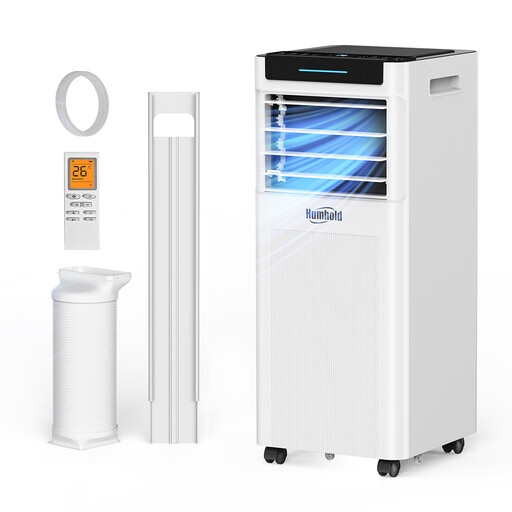
Why it suits this profile : With its 2.0 kW output, three modes, 24-hour timer and included window kit, this model covers the needs of a bedroom, home office or small room without adding unnecessary equipment.
The specifications state the recommended room size, power output and a noise level below 49 dB in night mode. This makes it easier to compare models in practical terms.
Night mode, washable filter, castors, remote control and automatic evaporation under normal humidity conditions.
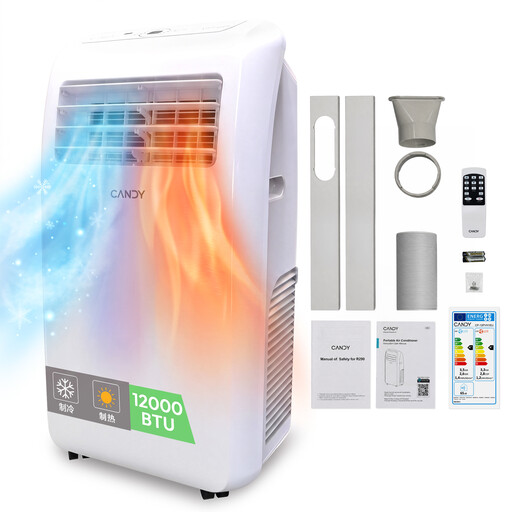
Why it suits this profile : Its 3.5 kW output, four modes and 3.3 kW heating function make it a versatile appliance, suitable for a room of up to 35 m², depending on its layout.
The specifications distinguish between cooling and heating capacities, with the corresponding EER and COP values, rather than reducing the appliance to a single power rating.
Cooling, heating, fan and dehumidification functions, with an airflow rate of 400 m³/h and a window kit included.
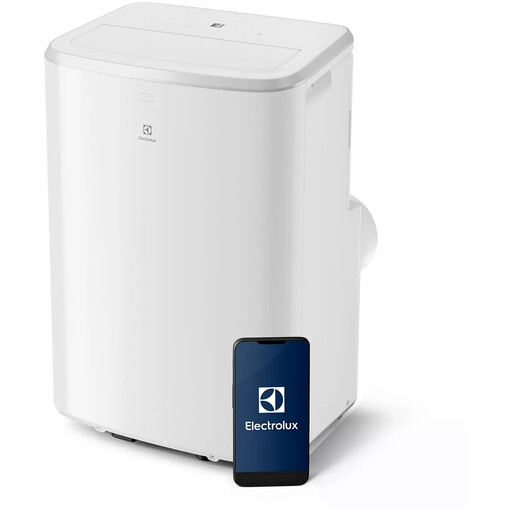
Why it suits this profile : Its Wi-Fi connection, stated dehumidification capacity of 28 L/24 h and heating function make it suitable for users who want to control their appliance regularly.
The specifications state a noise level of 64 dB and confirm that no standard remote control is included : the appliance is controlled via Wi-Fi.
Cooling, fan, dehumidification and heating functions, with spare parts stated to be available for 15 years.
We have brought together a complete, real-time updated selection of products that meet these demanding criteria, as well as European safety requirements.
The key point is to allow hot air to be expelled outside. The window remains partially open to accommodate the hose and window sealing kit. Operating the appliance without an exhaust system significantly reduces cooling efficiency.
Consumption varies according to the appliance’s power, how long it is used, your home’s insulation and the selected temperature. Check its electrical power rating in watts or kilowatts, then use the timer and night mode to avoid running it unnecessarily. An appliance marketed as an energy-efficient air conditioner should be compared using its efficiency data, rather than relying on this phrase alone.
This depends on how often the appliance is used, maintenance, air circulation around the unit and compliance with the manufacturer’s recommendations. Cleaning the filter, avoiding moving the unit while it is running and storing the hose properly out of season can all help extend its lifespan. Before buying, also check the length of the warranty and the availability of spare parts.