
Livraison le jour même ou le lendemain

Qualité garantie

Débloquez vos offres de bienvenue: Livraison GRATUITE | Jusqu'à -80 % | 30 jours d'essai gratuits à JoyPlus
Téléchargez l'application
A loss of pressure can happen before a long journey, on a mountain road, or after several weeks without driving. A portable tyre air compressor lets you quickly reinflate a car, motorbike or bicycle tyre without having to find a petrol station. The trick is to choose a model that suits your needs.
Spec sheets often highlight a high maximum pressure or an impressive inflation speed. But these figures alone aren't enough to judge an electric tyre inflator. Here are the criteria to consider before buying, followed by a selection tailored to different uses.
A stated pressure of 150 or 160 PSI usually refers to the maximum limit specified by the manufacturer, not the speed at which the device will inflate a car tyre. Depending on the vehicle, the load and the manufacturer's recommendations, a car tyre typically sits around 30 to 40 PSI.
To compare two models, also look at the airflow rate, expressed in L/min or CFM, as well as the stated time for reinflation. A tyre pump capable of reaching 150 PSI may be fine for topping up, but its motor is likely to heat up more when it has to reinflate a completely flat tyre.
A 12 V car compressor plugs into the vehicle's accessory socket. It avoids relying on a built-in battery, but its cable needs to be long enough to reach all four wheels. For extended use, it's generally best to start the engine to protect the battery.
A cordless inflator is more practical by the roadside, when camping or on a bike. However, you need to check its battery capacity, charging time and how many tyres it can inflate on a single charge. The figures quoted for completely deflated tyres aren't directly comparable to those for a simple top-up.
Without a digital pressure gauge, it's harder to adjust the pressure accurately. The auto-stop function lets you stop inflation at the set value, but it doesn't replace following the recommendations in your vehicle's manual or on the sticker inside the door frame.
Also check the accessories supplied. A Presta valve for bikes, a ball needle and a cone nozzle all serve different purposes.
For a small city car, a motorbike or a bicycle, a portable mini-compressor rated at 150 or 160 PSI can cover everyday needs. For an SUV, a motorhome or larger tyres, go for a higher airflow rate and a suitable running time.
The mention 100 % duty cycle, when it appears on a spec sheet, should be interpreted with caution. It describes a characteristic stated by the manufacturer, but real-world performance varies depending on temperature, starting pressure and tyre type. Always follow the recommended breaks and the instructions in the manual.
A capacity of 4,000 mAh, for example, gives a useful indication, but doesn't guarantee a precise number of inflations in every situation. Cold weather, starting pressure and battery condition all directly affect battery life. For regular use, having a USB-C port makes charging easier at home or in a vehicle with a compatible adapter.
A flexible hose, a well-fitting connector and clearly identified accessories help minimise air leaks. For travel, a compact size and a storage pouch can be more useful than a very high maximum pressure. A portable air pump designed for balls or air mattresses isn't necessarily suitable for high-pressure tyres: always check the intended use stated by the manufacturer.
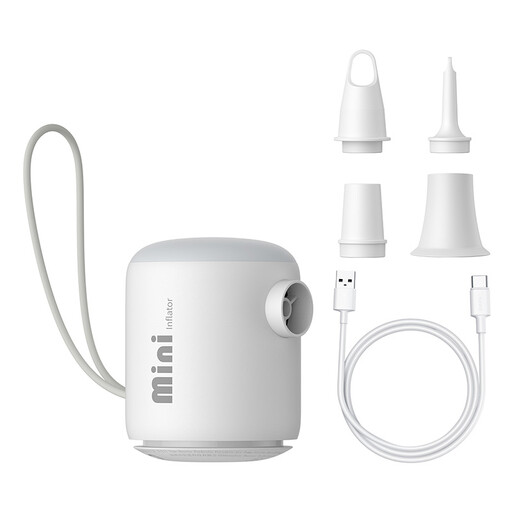
Why this choice suits this profile: With a stated weight of around 130 g and a pressure of 350 kPa, this portable air pump slips easily into a glove box or bag.
Its design prioritises portability over the promise of reinflating large, completely flat tyres.
Weight of around 130 g and stated airflow of 230 L/min.
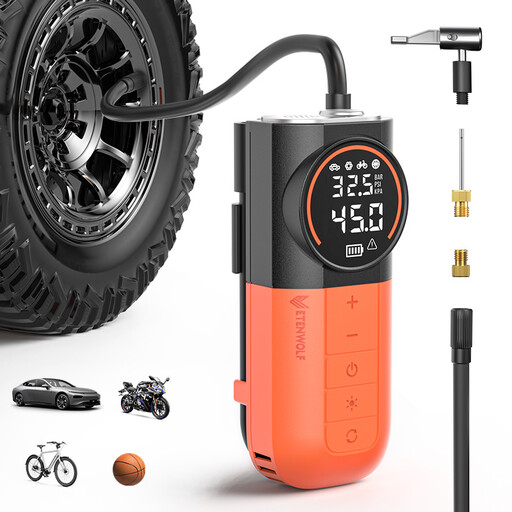
Why this choice suits this profile: This cordless inflator combines a stated maximum pressure of 160 PSI, a digital display, LED light and auto-stop.
The digital pressure gauge and pressure setting reduce guesswork when topping up.
Stated airflow of 20 L/min, built-in battery and weight of 0.65 kg.
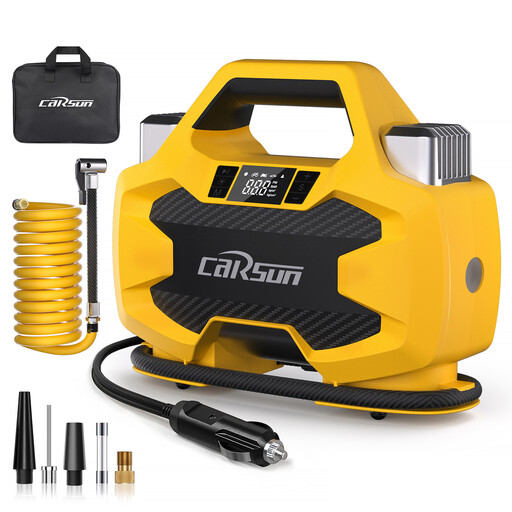
Why this choice suits this profile: Its dual-pump design and intended use target SUVs and motorhomes, which often require a larger air volume.
The spec sheet advises monitoring heat and letting the device cool down after extended use.
Portable format and 30-cylinder design stated for large-diameter tyres.
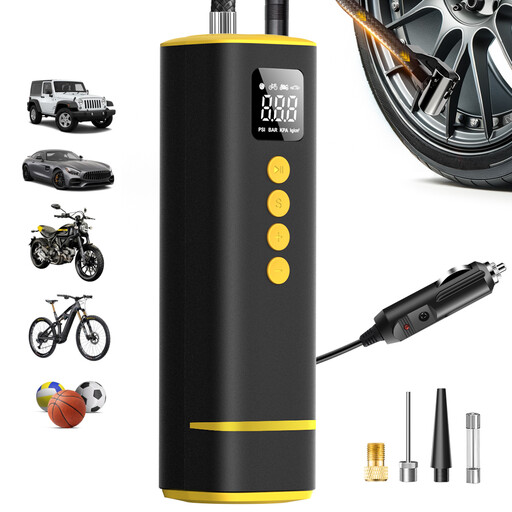
Why this choice suits this profile: Its long power cable suits motorists who want a permanent 12 V source in their vehicle.
Its wired power supply means you don't have to charge an internal battery before every trip.
12 V power supply, stated maximum pressure of 150 PSI and compatibility with cars, motorbikes and bicycles.
We've put together a comprehensive, real-time updated list of products that fully meet these strict selection criteria and European safety regulations.
Yes, some models are designed for this, but the inflation time depends on the tyre volume, airflow rate and battery capacity. A compact device is better suited to occasional top-ups than repeatedly reinflating SUV tyres.
The 12 V car compressor is ideal for car journeys and benefits from a continuous power supply. The cordless model is easier to use around a car, motorbike or bicycle, but you need to check its battery life before heading out.
For an occasional top-up, the power consumption is generally low. The cost mainly depends on how often you use it, the motor power and the type of power supply. To limit wear, follow the recommended rest times and avoid running the pump for longer than necessary.