
Livraison le jour même ou le lendemain

Qualité garantie

Débloquez vos offres de bienvenue: Livraison GRATUITE | Jusqu'à -80 % | 30 jours d'essai gratuits à JoyPlus
Téléchargez l'application
The tire pressure light flashing on your dashboard—it always happens at the worst possible moment. This usually leads to a frantic search for a gas station, hoping its inflator isn't broken or already in use. A portable tire inflator is a complete game-changer. This compact tool gives you the freedom to maintain ideal tire pressure wherever you are, ensuring your safety and optimizing your fuel economy.
But with an overwhelming number of options on the market, it's hard to know where to start. To help you see more clearly, we've broken down the features that truly matter and selected the best models available, whether for your car, motorcycle, bike, or even the kids' toys.
By the Joybuy Editorial Team
Before you buy, here are the key points to check that will make all the difference in daily use.
Pressure, expressed in PSI or Bar, is the number one criterion. Most car tires require between 2.1 and 2.5 Bar (30 to 35 PSI). Aim for a model that can reach at least 100 PSI for maximum versatility. The inflation speed, in liters per minute (L/min), determines how long you'll have to wait. A high flow rate means less time spent on the side of the road. Finally, a good digital pressure gauge with an auto-shutoff feature is simply essential for an accurate reading and hassle-free inflation.
There are two main types of models:
An integrated LED light quickly proves indispensable for nighttime emergencies. The power bank function can be a lifesaver if your smartphone is dead. The most comprehensive models even include a jump starter with a compressor: the ultimate combo for tackling both dead batteries and flat tires.
We've selected three models that stand out from the crowd, each catering to specific needs.
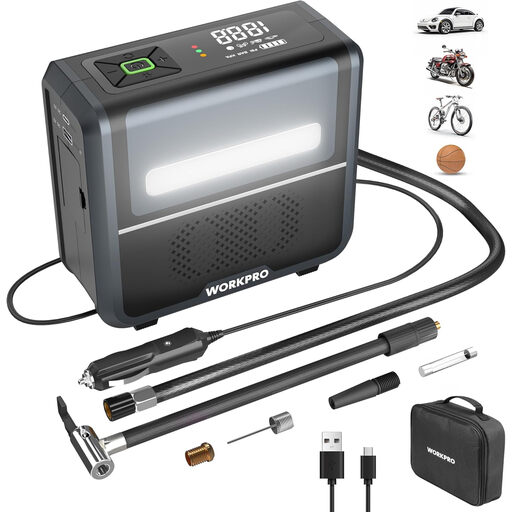
What makes it unique: Its versatility and, above all, its dual power supply. Battery dead? No problem, just plug it into your vehicle's 12V socket. It offers true peace of mind.
The pros:
Who is it for? For the driver looking for a reliable and versatile Swiss Army knife, equally suited for routine maintenance and unexpected roadside issues.
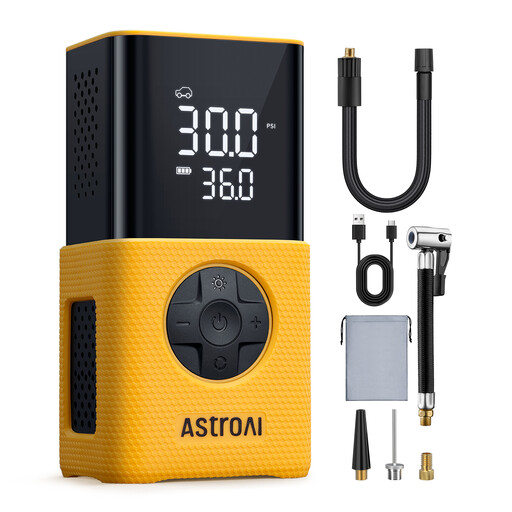
What makes it unique: The AstroAI L7S focuses on speed and compactness. Weighing just 460g with a flow rate of 17 L/min, it fits anywhere and promises express inflation.
The pros:
Who is it for? Ideal for cyclists, motorcyclists, and drivers who want a lightweight, compact, and fast tool for regular pressure top-ups.
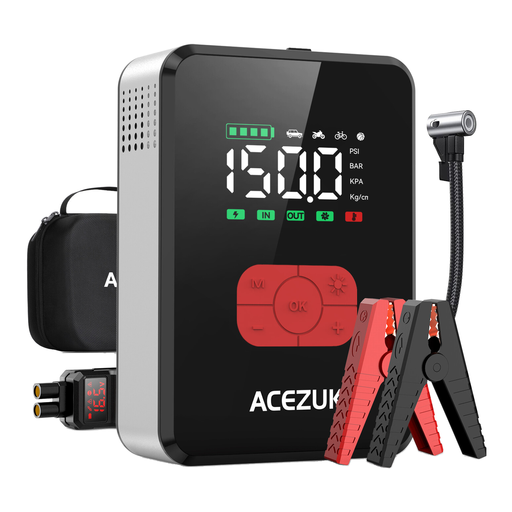
What makes it unique: This is a true emergency power station. Much more than just an inflator, the ACEZUK M06 is a powerful jump starter capable of reviving gasoline and diesel engines up to 12L.
The pros:
Who is it for? For the prepared driver who wants a single device to tackle the two most common breakdowns: a dead battery and a flat tire. A particularly wise choice for owners of large vehicles (SUVs, vans) or for anyone seeking the ultimate backup solution.
Properly inflated tires are fundamental. But if you're forced to stop on the side of the road, especially at night, good visibility is just as vital. To complete your safety kit, a high-performance portable light is a smart investment.
? Discover our full range of portable lamps and emergency lighting to be prepared for any situation.
1. What is the recommended pressure for my tires? The correct pressure is specified by your vehicle's manufacturer. You can usually find it on a sticker inside the driver's door, in the fuel filler flap, or in the owner's manual. It is often given for a vehicle at normal load and full load.
2. Can a portable inflator reinflate a completely flat tire? Absolutely. Most of the models in our selection can handle it. Just be aware that the process will take much longer than a simple top-up (sometimes over 10-15 minutes, depending on the tire size and compressor power). They are primarily perfect for correcting a pressure drop or managing a slow leak long enough to get to the nearest garage.
3. How long does it take to charge a cordless pump's battery? Charging time depends on the battery's capacity and the power of your charger (most often USB-C). On average, expect 3 to 5 hours for a full charge. Our advice: recharge the device every 3 months, even if you don't use it, to preserve its battery health.