
Livraison le jour même ou le lendemain

Qualité garantie

Débloquez vos offres de bienvenue: Livraison GRATUITE | Jusqu'à -80 % | 30 jours d'essai gratuits à JoyPlus
Téléchargez l'application
The idea of a 100-inch screen that fits in a backpack is an exciting prospect. A movie night in the garden, an immersive gaming session, a series projected onto the bedroom ceiling... the portable projector promises nearly endless versatility.
But be warned: the market is a minefield, littered with spec sheets designed to mislead you. Between fanciful brightness figures and "compatible" resolutions that hide a mediocre image, it's easy to make a purchasing mistake. To help you avoid getting duped, here is our guide to decoding the jargon, avoiding the pitfalls, and choosing the model that will truly meet your expectations.
Marketing can be deceptively effective at overselling products that ultimately disappoint. To avoid a letdown, here are the three key points to watch out for.
Don't be impressed by projectors claiming thousands of "lumens". This marketing value, which adheres to no official standard, often measures the power of the light source (the LED) rather than the brightness of the actual projected image. The only reliable indicator is the ANSI lumen (from the American National Standards Institute), which quantifies the perceived brightness on the screen. A 300 ANSI lumen model will almost always be brighter and have better contrast than another claiming "9000 lumens" without this crucial specification.
This is one of the most misleading claims on the market. A portable projector may be "4K compatible" or "supports 4K", which simply means it can decode a 4K video signal. However, the image will be displayed at the device's native resolution, which is often much lower (720p or even less). For a sharp and detailed picture, only the native resolution (e.g., 1280x720p or 1920x1080p) truly matters.
The promise of an all-in-one Android projector is tempting. In reality, many entry-level models run on outdated or uncertified versions of Android. The result? A laggy interface, apps that can't be updated, and, most importantly, the inability to properly run services like Netflix, which require official certification (DRM Widevine L1).
To make the right choice, focus on the few specifications that define the true performance of a portable projector.
As mentioned, this is the only figure worth considering. Ignore the marketing values and trust only ANSI lumens. Here are a few benchmarks:
This is what determines the sharpness of the image, often called "detail".
Your projector's versatility is determined here.
By applying these filters, we have selected models that stand out for their honest spec sheets and their suitability for specific use cases.
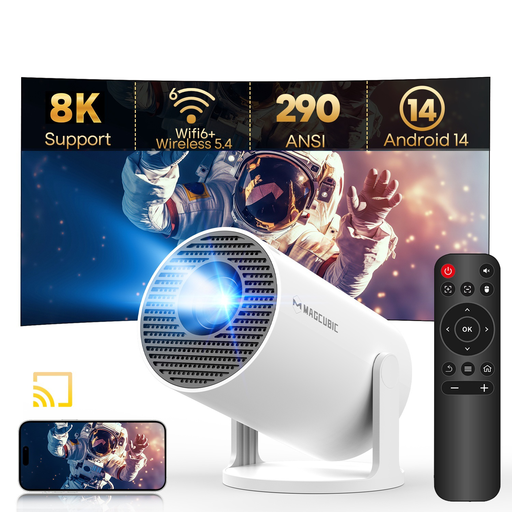
Why it stands out: Perfect for a bedroom or occasional projections without breaking the bank. Its rotating design is a real bonus for projecting on the ceiling to watch a series from your bed. It's a very accessible entry point into the world of smartphone projectors and streaming.
Its spec sheet is transparent: native 720p resolution and 4K compatibility. No unpleasant surprises. Its brightness of 290 ANSI lumens is a standardised value, not a fanciful marketing number.
Its 180° rotation for ultra-flexible projection, its Android 14 system, and its Wi-Fi 6 connectivity are rare at this price point.
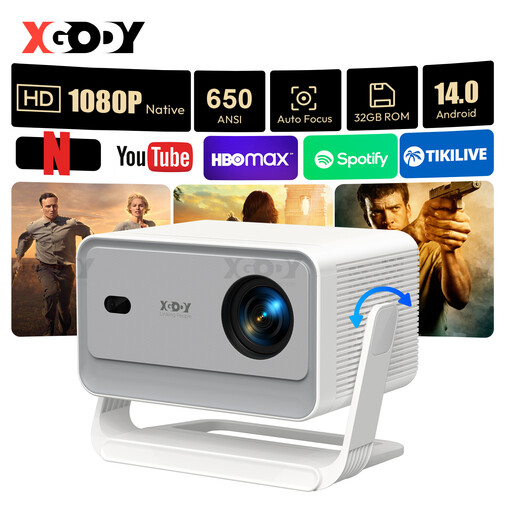
Why it stands out: This is a clear step up in quality. Its native 1080p resolution and high brightness deliver a far superior visual experience, whether for movies or gaming. Its automatic adjustment features make it incredibly easy to set up, even for a novice.
No smoke and mirrors here. The projector delivers a true native Full HD 1080p resolution. Its 650 ANSI lumens ensure the image remains viewable even in a room with ambient light, unlike underpowered models that disappoint on first use.
Its native Full HD 1080p resolution and comprehensive automatic calibration features (autofocus, keystone correction, obstacle avoidance) for a true "plug-and-play" setup.
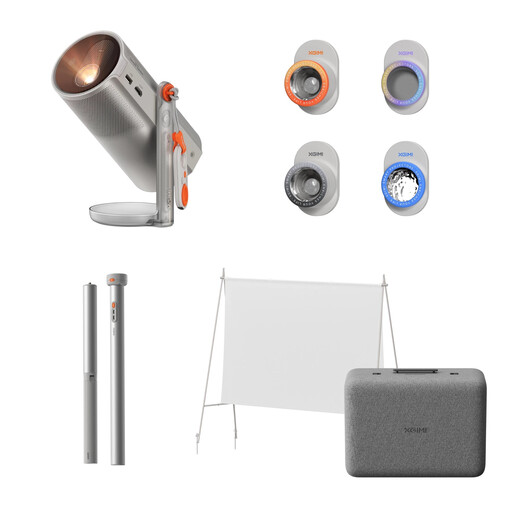
Why it stands out: This is the adventurer of the selection. With its built-in battery offering up to 2.5 hours of runtime, it's perfect for camping, garden parties, or impromptu weekends away. Its Google TV ecosystem and polished audio make it a remarkably effective all-in-one solution.
It's truly portable, thanks to its built-in battery that frees it from a power outlet. Most importantly, its Google TV system with official Netflix certification puts an end to the headache of non-functional apps and laggy interfaces.
Its battery life, its smooth and comprehensive Google TV interface (with official Netflix), and its above-average audio quality by Harman Kardon.
Discover our full selection of products that meet our rigorous selection criteria and European safety standards.
Nearly all modern pico projectors and portable models use an LED light source. Unlike traditional mercury lamps, their lifespan is exceptionally long, typically rated between 20,000 and 30,000 hours. In practical terms, this amounts to over 10 years of use at 5 hours per day. Therefore, "lamp" replacement is no longer a concern for this type of device.
Let's be clear: no. Even the brightest models cannot compete with daylight. A portable projector is designed for use in a dark environment or, at the very least, in dim conditions: a room with the curtains drawn or outdoors after nightfall. The higher the ANSI lumen count, the better it will handle some ambient light, but a projection in broad daylight will always result in a washed-out and nearly invisible image.
For occasional use, a smooth, matte white wall can suffice. However, to truly get the most out of your home cinema projector and achieve the best possible image quality, a proper projection screen is a wise investment. It significantly improves contrast, colour accuracy, and perceived brightness for a much more immersive experience.