
Livraison le jour même ou le lendemain

Qualité garantie

Débloquez vos offres de bienvenue: Livraison GRATUITE | Jusqu'à -80 % | 30 jours d'essai gratuits à JoyPlus
Téléchargez l'application
The dream of a home cinema, indoors or out, has never been more accessible. A portable projector can transform any white wall into a giant screen for your films, series, or video games. But in the jungle of tech specs and marketing promises, it's easy to get lost. To help you see clearly, we've decoded the common pitfalls and highlighted the criteria that truly matter before you buy.
Deciphering spec sheets can sometimes feel like solving a puzzle. Here are three points to watch out for to avoid disappointment and make a purchase you won't regret.
For a future-proof investment, focus on these three pillars of performance.
Native resolution defines the clarity and sharpness of the image. For a portable home cinema experience worthy of the name, a native Full HD 1080p resolution (1920 x 1080 pixels) is an excellent starting point. It guarantees a precise and detailed image for your films and games. Some models decode 4K signals, which can improve the image rendering even if the projection remains in 1080p.
Brightness, measured in ANSI lumens, determines the projector's ability to display a readable image in different lighting conditions.
A good portable projector should be a breeze to set up and use. The automatic keystone correction feature has become practically essential?: it straightens the image to be perfectly rectangular, even if the projector isn't perfectly aligned with the wall. In terms of connectivity, a WiFi Bluetooth projector is the standard today. Prioritise models equipped with WiFi 6 for more stable and faster streaming, and Bluetooth to wirelessly connect a soundbar or headphones.
Rather than an endless list, here are a few models that check all the right boxes, each tailored to a specific use case.
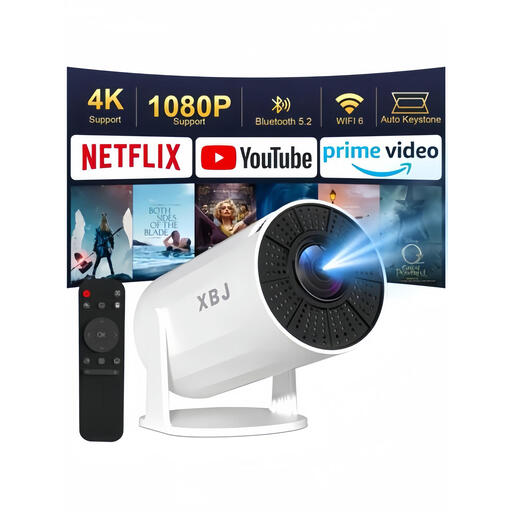
Who is it for? Ideal for those looking for an ultra-portable, ready-to-use solution for occasional screenings in a bedroom or on holiday. Its feather-light weight and rotating stand make it extremely versatile.
It plays the transparency card with 300 ANSI lumens, a brightness suitable for a dark room, and a native 720p resolution, avoiding confusion with fake 4K compatibility. The integrated Android 11 system is functional for basic use.
Its 180° rotating stand allows for easy projection onto the ceiling. The automatic vertical keystone correction radically simplifies setup.
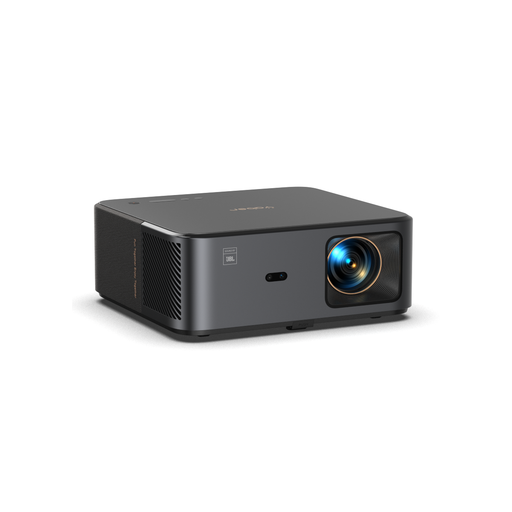
Who is it for? Designed for those who want a true cinema experience at home, without compromising on image quality, sound, and interface fluidity. Perfect for the living room.
It checks all the right boxes: a native 1080p resolution, a high brightness of 800 ANSI lumens, and an integrated and certified Google TV system. The result: direct and smooth access to Netflix, Disney+, and others, without any workarounds.
The stereo JBL speakers with Dolby Audio deliver immersive sound. The fully automatic calibration (focus and keystone) and WiFi 6 ensure a premium, effortless experience.
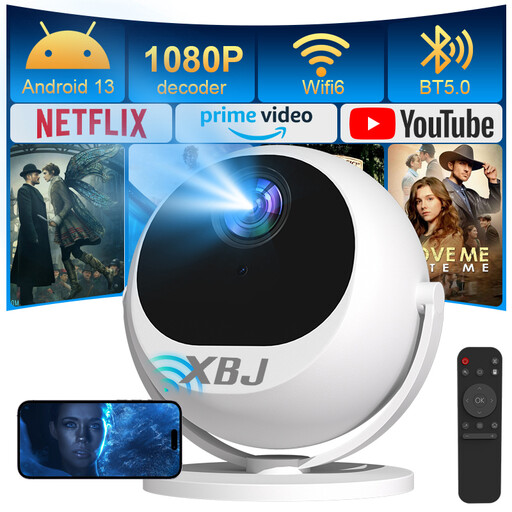
Who is it for? For the user who loves innovative technology and seeks maximum flexibility. This model allows you to project on any surface (wall, ceiling, floor) effortlessly, whether for a movie, a game, or a presentation.
It stands out with crystal-clear specifications: native Full HD 1080p resolution and a high brightness of 900 ANSI lumens. It thus avoids the two main market pitfalls, guaranteeing a sharp and bright image.
Its 360° rotating design is its major asset, offering unmatched placement freedom. The automatic 6D keystone and focus functions make setup nearly instantaneous.
We have compiled a complete selection of products that meet our quality criteria and current safety standards.
Most modern portable projectors use an LED light source. Their lifespan is generally between 20,000 and 50,000 hours. In practical terms, this represents several years of daily use before the brightness begins to decline significantly.
No, it's not essential to get started. A smooth, matte white wall can do the job just fine. However, a true projection screen is designed to enhance contrast, colour fidelity, and brightness. It's a recommended addition to get the most out of your device, especially for use as an outdoor projector.
The simplest method is to choose a model with a certified operating system, like Google TV, which provides access to the Play Store and official, functional apps for Netflix, Prime Video, etc. If the projector doesn't have a certified system, the most reliable solution is to connect an external media player (like an Amazon Fire TV Stick, Google Chromecast, or Apple TV) to the projector's HDMI port.