
Livraison le jour même ou le lendemain

Qualité garantie

Débloquez vos offres de bienvenue: Livraison GRATUITE | Jusqu'à -80 % | 30 jours d'essai gratuits à JoyPlus
Téléchargez l'application
The idea of a 100-inch cinema screen you can take anywhere is certainly appealing. Whether it's for a movie night in the living room, an impromptu business presentation, or a gaming session projected onto the ceiling, the portable Wi-Fi Bluetooth projector promises unparalleled flexibility. The problem is, the market is saturated with marketing promises that too often turn the dream into a disappointment. Before you take the plunge, it's essential to know how to avoid the most common pitfalls.
To make the right choice, focus on the technical specifications that truly matter and will have a direct impact on your experience.
The only reliable measurement for comparing image brightness is the ANSI lumen (or its equivalent, the ISO lumen). This international standard measures brightness at nine points on the screen, ensuring a value that represents real-world performance.
Don't be fooled by the "4K compatible" label. This simply means the projector can receive a 4K signal, but it will downscale it to its actual resolution for display. The only number that matters is the native resolution.
A good portable projector must, above all, be self-sufficient.
Here are a few models that tick all the boxes, designed for specific use cases.
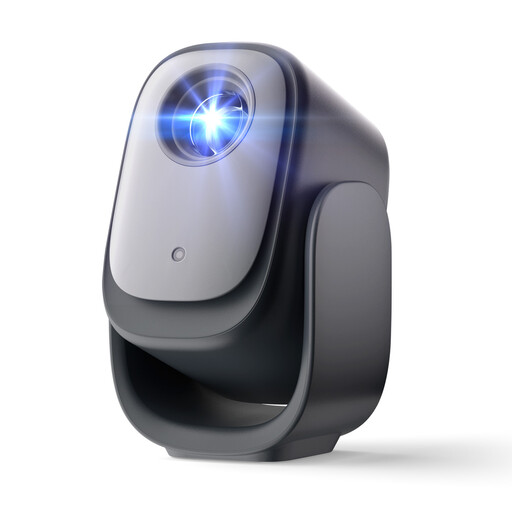
Why it's for you: Ideal for those who want a "plug-and-play" solution. Its compact size and officially licensed Netflix system make it the perfect companion for impromptu series nights, without the hassle of connecting another device.
It avoids the "fake smart projector" trap by integrating an officially certified version of Netflix, which guarantees smooth, high-definition streaming.
Native 1080p resolution, autofocus, and automatic keystone correction for instant setup. Its Dolby Audio processing is a real bonus in such a small device.
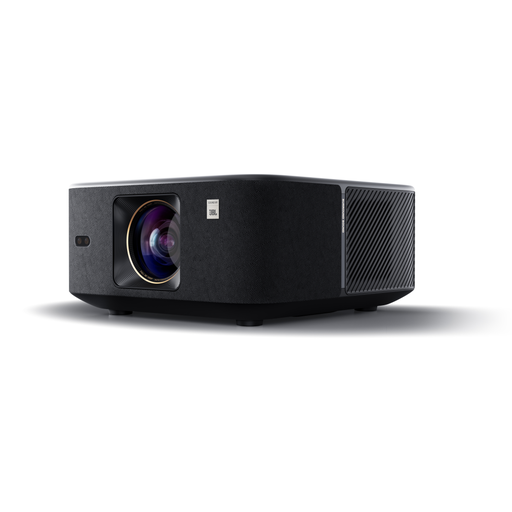
Why it's for you: For those seeking an immersive, no-compromise home cinema experience. Its high brightness allows for quality projection even with ambient light, and its integrated JBL speakers deliver powerful sound, making an external system optional.
It tackles the misleading brightness trap by displaying a certified value of 1000 ISO lumens. It also solves the problem of anemic sound found in many projectors, thanks to its JBL-designed audio system.
1000 ISO lumens brightness, 30W stereo sound by JBL with Dolby Audio, and Google TV integration for access to thousands of apps.
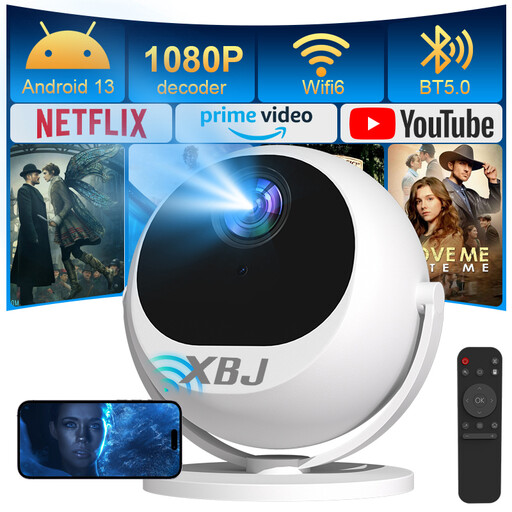
Why it's for you: Perfect for students, apartment dwellers, or anyone looking for maximum flexibility. Its 360° rotating base allows you to effortlessly project onto a wall, the ceiling, or even the floor, turning any space into a giant screen.
It ends the frustration of complex adjustments. Its 360° rotation and automatic keystone correction make setup trivial, even in the most awkward positions, like for a ceiling projector.
Unique rotating design for absolute versatility, native 1080p resolution, and modern connectivity with Wi-Fi 6 and Bluetooth 5.2.
We have curated a complete and up-to-date selection of products that meet our strict selection criteria and current safety standards.
The native resolution is the actual number of pixels the projector's chip can display. This is the figure that determines image sharpness. "Compatible" or "supported" resolution simply indicates that the device can receive a higher-definition signal (e.g., 4K), but it will compress (downscale) it to display at its native resolution. In short, a "4K compatible" projector with a native 1080p resolution will display a 1080p image, not a 4K one.
A dedicated projection screen will always offer the best image quality, with more accurate colours and better contrast. That's undeniable. However, the whole point of a portable projector is its flexibility. A simple, smooth, white or light-beige wall will do the job perfectly for occasional use and will still yield excellent results.
It all depends on its brightness (in ANSI lumens) and the ambient light. Entry-level models (under 400 ANSI lumens) are strictly for dark rooms. To get a visible image in a room with the curtains open, you'll need a much more powerful model, typically over 800-1000 ANSI lumens. Even then, direct sunlight on the projection surface will render the image nearly unwatchable.