
Livraison le jour même ou le lendemain

Qualité garantie

Débloquez vos offres de bienvenue: Livraison GRATUITE | Jusqu'à -80 % | 30 jours d'essai gratuits à JoyPlus
Téléchargez l'application
The idea of a portable projector is certainly tempting: transforming any wall into a cinema screen, whether in your bedroom, living room, or for an outdoor cinema night. But be warned, the market is flooded with marketing promises that can quickly turn the dream into a disappointment. To avoid nasty surprises, it's crucial to know the most common pitfalls before making your choice.
The first trap to avoid is brightness. Many manufacturers promote dazzling "lumen" figures that don't correspond to any standardised norm, making any comparison impossible. The second pitfall is "smart" features: an outdated or poorly optimised operating system can turn accessing your favourite streaming services (Netflix, Disney+, etc.) into a real ordeal, when it's not simply impossible due to digital protections (HDCP). Finally, the "portable" label is often misused for devices that, in reality, have no built-in battery and depend on a power outlet, defeating their nomadic purpose.
To navigate the jungle of portable home cinema, focus on a few objective technical criteria. These, not the marketing spiel, will tell you if a device truly meets your needs.
This is the heart of the matter. Native resolution is the actual number of pixels the projector displays. It determines the sharpness and clarity of the image. Conversely, supported resolution (for example, a "4K compatible" mention) only means the device can receive a signal of that quality, but it will compress it (downscaling) to display it in its much lower native resolution.
In practical terms, a native 4K Android projector will produce an infinitely more detailed image than a 720p model that merely "supports" a 4K signal. For a sharp and precise image, aim for a minimum native resolution of 1080p (Full HD), especially if you plan to project a large image.
Forget "lumen" or "lux" figures without further clarification. The only reliable and standardised measurement for comparing brightness is the ANSI lumen. The higher this value, the more visible and contrasted the image will remain in a room that isn't completely dark.
A good mini WiFi Bluetooth projector should be child's play to connect and set up.
To illustrate these criteria in practice, here are a few products that meet specific needs.
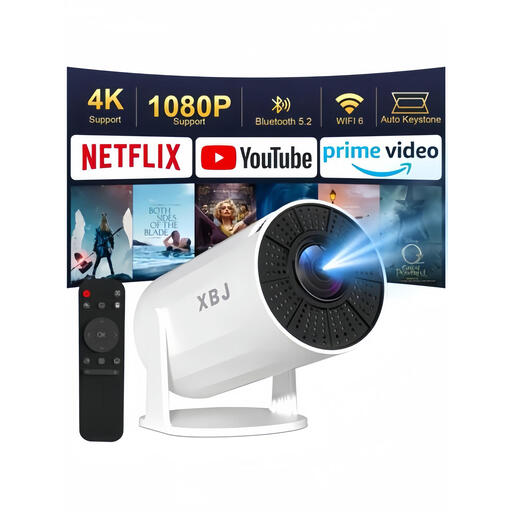
The ideal user: Perfect for those who want an all-in-one, ready-to-use solution for a bedroom or small living room. Its Android 11 system and rotating base allow you to project on the wall or ceiling in the blink of an eye. Ideal for a movie night on a whim.
This model features a recent Android 11 system, which helps it avoid the trap of lagging "smart" interfaces. Its brightness is clearly specified in ANSI lumens (300), an honest figure for use in a dim room.
The automatic keystone correction (vertical) and its 180° rotating base give it stunning installation flexibility. WiFi 6 ensures flawless streaming.
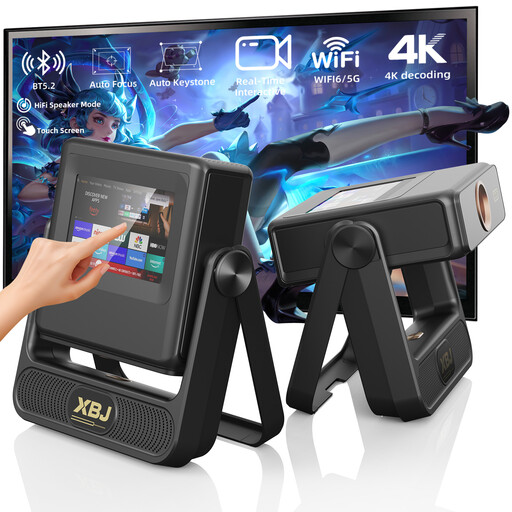
The ideal user: Designed for those who demand great image quality outdoors. Its high brightness and native 1080p resolution allow for a large, sharp image to be projected in the garden, even when night has not yet fully fallen.
With its 900 ANSI lumens and native 1080p resolution, this projector boasts solid, verifiable specs, light-years away from fanciful spec sheets. The automatic focus and keystone correction save you from tedious manual adjustments.
Its high brightness makes it very versatile (indoors and out). The integration of a touch control screen is a real bonus, offering a practical alternative to the remote control.
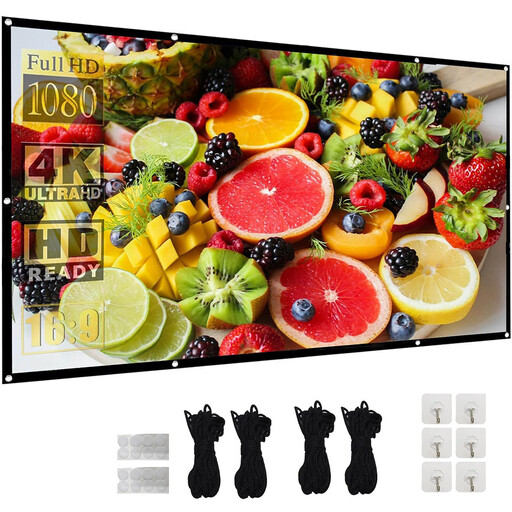
The ideal user: For anyone investing in a good projector, a dedicated screen is an essential step to unlock its full potential. This foldable model is perfect for a quick setup indoors or out, guaranteeing a flawless projection surface.
It solves the problem of the living room wall, which is never perfectly white, smooth, or uniform. A foldable, anti-crease projection screen ensures a flawless image with enhanced contrast and more accurate colours.
Its "polyester milk silk" fabric is designed to be crease-resistant and offers a wide 160° viewing angle. It is washable and can be set up in minutes using the provided hooks and ropes.
To perfect your setup, discover our selection of screens and accessories that meet the same standards of quality and practicality.
Most modern portable models use an LED light source, whose main advantage is longevity. Generally, the lifespan of an LED lamp is estimated to be between 20,000 and 30,000 hours. In practical terms, this is equivalent to more than 10 years of use if you turn it on for 5 hours a day. This performance is far superior to that of traditional lamps, which required regular and costly replacement.
This is a real challenge, even for the most powerful projectors. Daylight is so intense that it tends to completely wash out the projected image. For daytime use indoors, you will not only need a very bright model (over 1500 ANSI lumens) but also the ability to achieve near-total darkness in the room (blinds, blackout curtains). Outdoors, it is simply better to wait for nightfall.
A white wall can work in a pinch, but it's rarely an optimal solution. Walls often have small imperfections, a texture, or a shade that isn't pure white, which distorts colour accuracy and degrades the image contrast. An outdoor projection screen or indoor one, on the other hand, has a special coating that reflects light uniformly, maximises brightness, and ensures colour fidelity. For a true home cinema experience, buying a screen, even a simple foldable projection screen, is therefore highly recommended.