
Livraison le jour même ou le lendemain

Qualité garantie

Débloquez vos offres de bienvenue: Livraison GRATUITE | Jusqu'à -80 % | 30 jours d'essai gratuits à JoyPlus
Téléchargez l'application
The idea of a 100-inch screen you can set up anywhere—from the living room to the bedroom or even the garden—is undeniably appealing. The portable projector embodies this promise of flexibility, but be warned: the market is flooded with marketing slogans that too often turn an exciting purchase into a costly disappointment. To avoid unpleasant surprises, it's crucial to know the most common pitfalls and make a truly informed choice.
As a product expert at Joybuy, I'm here to help you see things more clearly. Let's break down the three most common mistakes together and identify the essential criteria for finding the projector that will truly meet your expectations.
For a truly great experience, a few technical specifications are simply non-negotiable. They are what separate a fun gadget from a genuinely high-performing and user-friendly mini projector.
A good operating system makes all the difference. An Android TV or Google TV projector with certified apps (Netflix, Prime Video, YouTube, etc.) turns your device into a 100% standalone entertainment station. The key? Check that it has official access to the Google Play Store, ensuring your favourite streaming apps work flawlessly. For gamers, an HDMI port is non-negotiable for connecting a console (PS5, Switch) and enjoying epic gaming sessions on a giant screen with a suitable gaming projector.
Rather than a long list, we've selected models that excel in specific use cases, strictly applying the criteria we've just discussed.
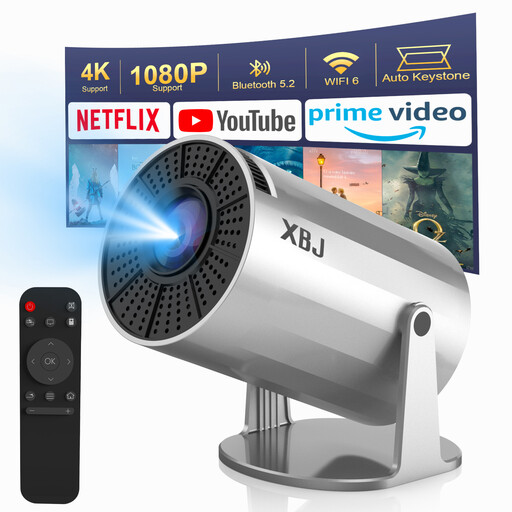
Why we love it: Perfect for those looking for an ultra-compact device to slip into a bag. Its 180° rotating base is brilliant for projecting onto the ceiling from your bed, or onto a makeshift wall during a weekend away with friends. It's the very definition of "plug-and-play."
It delivers 300 ANSI lumens of brightness: an honest figure, perfect for use in dim lighting. Its built-in Android 11 system provides access to a myriad of apps, so you don't have to constantly connect a PC.
Its automatic vertical keystone correction, combined with its rotating base, makes it incredibly easy to set up anywhere. Wi-Fi 6 ensures smooth streaming from your smartphone.
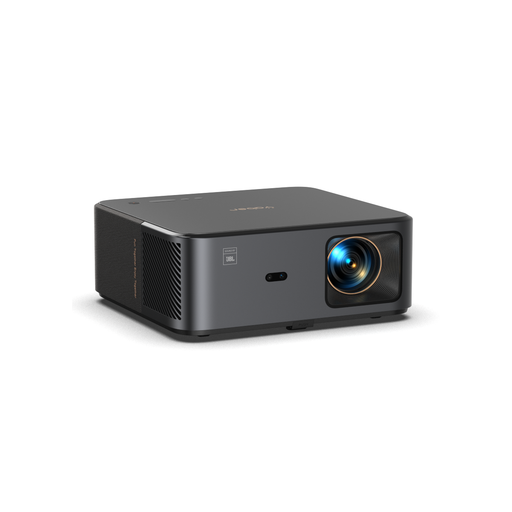
Why we love it: For those who want a true all-in-one home cinema experience, without compromise. It combines a bright picture, quality sound, and a responsive smart system. It can easily replace your living room TV.
It comes with Google TV built-in, guaranteeing native, certified access to Netflix, Disney+, and thousands of other apps. Its 800 ANSI lumens of brightness and native 1080p resolution are solid guarantees of quality, even if the room isn't completely dark.
The audio system, powered by JBL and compatible with Dolby Audio, delivers an immersive sound experience that makes an external soundbar unnecessary. The autofocus and keystone correction are nearly instantaneous.
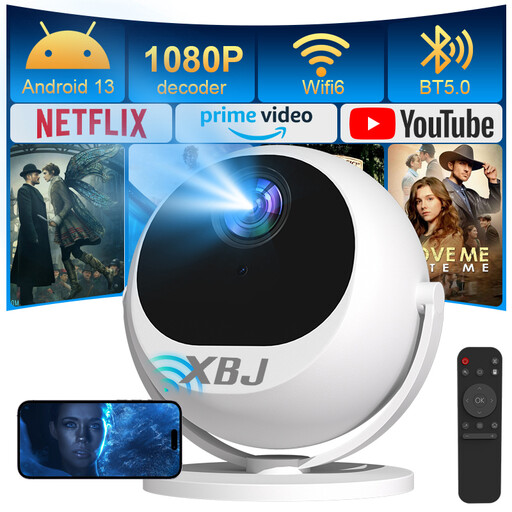
Why we love it: This is the Swiss Army knife of family entertainment. Powerful enough for movie nights, responsive enough for video games (PS5, Switch), and bright enough to venture outdoors, all in a sturdy chassis.
With its 900 ANSI lumens, it ensures a clear picture even if the room isn't pitch black. Its autofocus and 6D keystone correction features are impressively effective, making it perfect for being moved multiple times throughout the day.
Its 360° rotation offers unparalleled placement freedom (wall, ceiling, and even pointing down onto a table). Its comprehensive connectivity (HDMI, USB, Wi-Fi 6) makes it compatible with all household devices.
Explore our full selection of projectors that meet our quality standards and European safety regulations.
The vast majority of current portable models use an LED light source. Their lifespan generally ranges from 20,000 to 30,000 hours. To put that figure into perspective, it's equivalent to over 10 years of use if you run it for 5 hours a day. An investment built to last.
Not necessarily. For occasional use, a simple smooth, matte white wall will do the trick perfectly. However, for a true home cinema experience, a dedicated projection screen makes a real difference: it visibly improves contrast, colour accuracy, and overall brightness, as its surface is optimised to reflect light perfectly evenly.
This is the one point you should never overlook. The simple "lumen" is a non-standardised marketing unit, often measured at the lamp's output rather than on the projected image. In contrast, the ANSI lumen is a certified measurement, derived from an average of brightness across nine points on the screen. It is the one and only value that allows for an objective comparison between two projectors. Insist on it.