
Livraison le jour même ou le lendemain

Qualité garantie

Débloquez vos offres de bienvenue: Livraison GRATUITE | Jusqu'à -80 % | 30 jours d'essai gratuits à JoyPlus
Téléchargez l'application
A home cinema experience, or even one in the garden, on a giant screen? That's the promise of a portable projector. But between the technical jargon and misleading marketing claims, it's hard to navigate, and the risk of making a bad purchase is very real. As a product expert for the editorial team, my mission is to help you see things more clearly to make the right choice.
Before you buy, here are the 3 classic traps to avoid so you don't regret your purchase:
To avoid falling for the hype, focus only on the criteria that truly matter. These are what make all the difference in the quality and user experience of a mini projector.
The only reliable measurement for comparing brightness is the ANSI Lumen. It's a standardised norm that measures brightness across multiple points on the image.
Don't be fooled by the "4K Supported" label. What matters is the native resolution—the actual number of pixels the projector can display.
A true smart projector should, above all, make your life easier.
A projector for every profile. Here are three models that meet specific needs, all while avoiding the traps we've discussed.
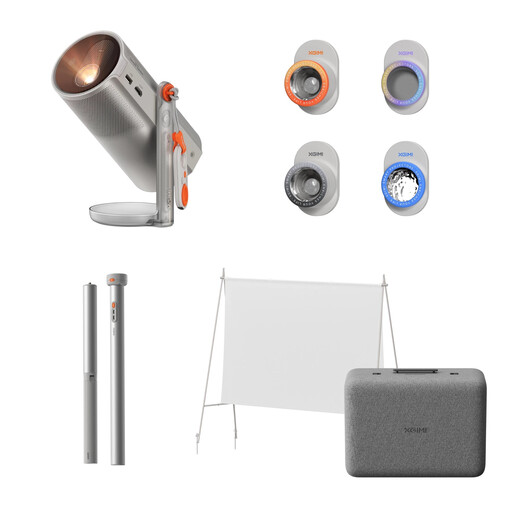
Why it's the right choice: Compact, lightweight, and with 2.5 hours of battery life, it's perfect for an impromptu session at home, in the garden, or even on holiday. With Google TV and sound by Harman Kardon, it's a ready-to-use, all-in-one solution.
It integrates a true Google TV with certified Netflix, allowing it to avoid the trap of subpar "smart" OSes that require an external stick.
Superior sound quality thanks to its dual Harman Kardon speakers and true portability with its built-in battery.
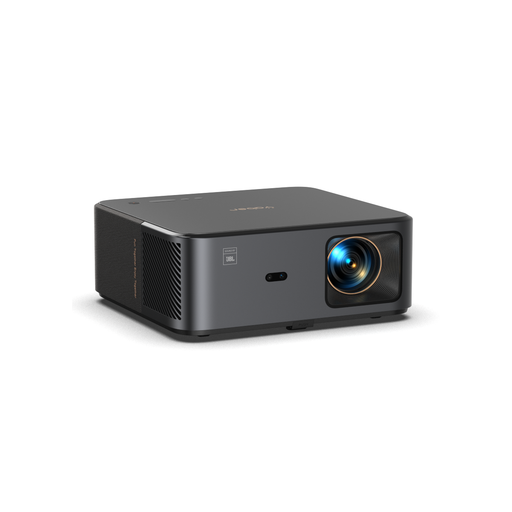
Why it's the right choice: With its high brightness, powerful JBL audio, and Google TV, it's built for no-compromise entertainment. Wi-Fi 6 ensures low latency for gaming on a PS5, and its brightness even allows for outdoor use at nightfall.
Its 800 ANSI Lumens are a certified measurement that ensures a viewable image even in a slightly lit room, a far cry from inflated marketing numbers.
Powerful sound by JBL with Dolby Audio support and NFC connectivity to cast your smartphone screen with a single tap.
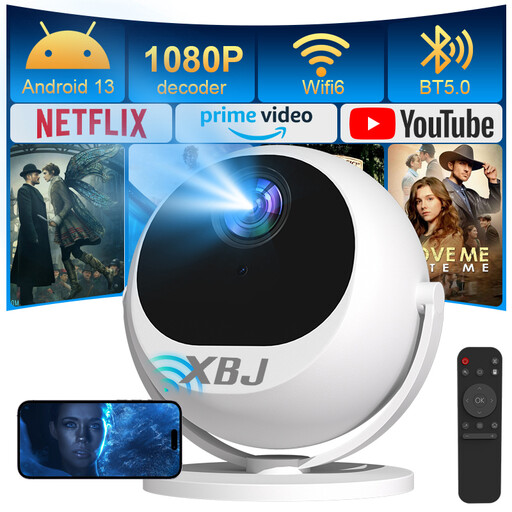
Why it's the right choice: Its 360° rotating stand lets you project an image onto the ceiling in an instant, perfect for turning a bedroom into a cinema. Its native 1080p resolution and automatic features make it incredibly easy for the whole family to use.
It avoids the tedious setup trap thanks to its autofocus and 6D automatic keystone correction. The result: a sharp, straight image in seconds, with no manual adjustments.
Unique projection flexibility with its 360° rotation and a well-defined image thanks to its native Full HD 1080p resolution.
Discover our full selection of projectors that meet our quality criteria and safety standards.
Most modern portable projectors use an LED light source, whose lifespan is a significant advantage. It is generally estimated to be between 20,000 and 30,000 hours. To put it simply, that's equivalent to over 10 years of use at 5 hours per day. This is a much longer lifespan than that of traditional projector lamps, which needed to be replaced.
A dedicated projection screen will always offer the best results in terms of colour and contrast. However, the whole point of a portable projector is its versatility. A simple, smooth, matte white wall will do the job perfectly for an impromptu session, both indoors and outdoors.
For daily use in broad daylight, a TV is often more practical and performs better. However, a portable projector is an excellent supplement, or even a prime alternative for those seeking a very large image, flexibility, and cinema-like immersion. In a small apartment or for those who move frequently, it can even become the main display.