
Livraison le jour même ou le lendemain

Qualité garantie

Débloquez vos offres de bienvenue: Livraison GRATUITE | Jusqu'à -80 % | 30 jours d'essai gratuits à JoyPlus
Téléchargez l'application
Turn a blank wall into a cinema screen, host an outdoor movie night, or project a presentation in seconds: that's the promise of a portable projector. With an ever-growing market, it's easy to get lost in complex spec sheets and sometimes misleading marketing claims.
This guide is here to help you cut through the noise and choose the model that perfectly matches your needs, whether you're a discerning cinephile, an avid gamer, or a family looking for new, memorable evenings.
Before diving into our selection, let's review the three essential criteria for making an informed choice.
This is the heart of the matter: brightness. It's measured in ANSI lumens, the only standard that allows for a serious comparison between models. A higher number simply means the image will remain visible even if the room isn't completely dark.
Resolution defines the detail and sharpness of the image. Be careful—it's crucial not to confuse native resolution with supported resolution.
A good Wi-Fi Bluetooth projector will make your life easier.
Here are a few models that stand out for their performance and versatility, catering to different uses and budgets.
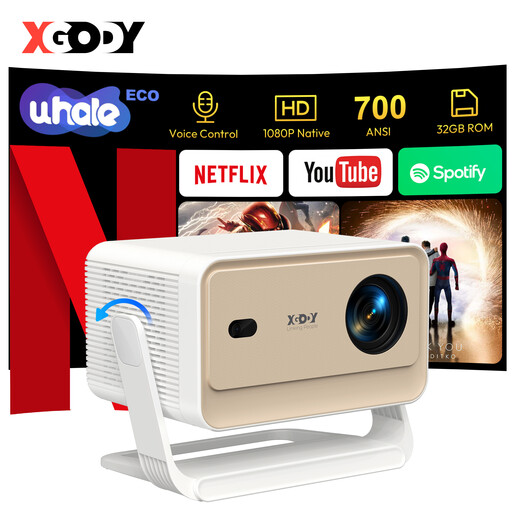
This model presents itself as a true all-in-one for those who want a great picture without the hassle.
Its Standout Feature? Thanks to its official Netflix license and WhaleOS 3.0, it offers direct, smooth access to a myriad of content. Its fully automatic adjustments (autofocus, keystone correction, obstacle avoidance) make it incredibly easy to set up, even for a beginner.
Key Strengths
Who is it for? For cinephiles and families looking for a "plug-and-play" solution without fussing over settings. Its brightness and automatic features make it an excellent choice for a home cinema in a bedroom or living room.
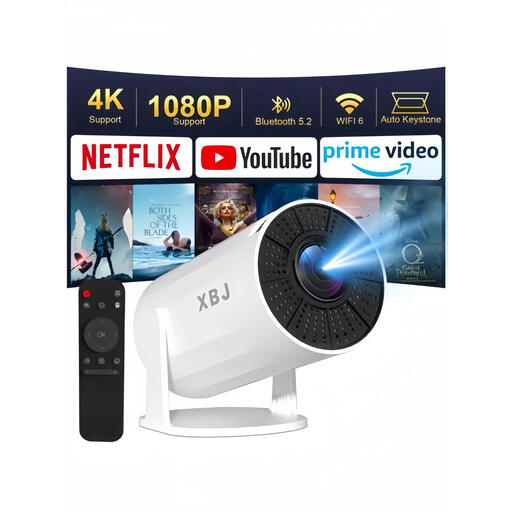
This mini-projector focuses on compactness and versatility with its unique rotating base.
What sets it apart? Its key feature: a 180° rotating stand that lets you project wherever you want (wall, floor, and even the ceiling) effortlessly. Its feather-light weight of 0.68?kg makes it the ideal travel companion or a smart choice for small spaces.
Key Strengths
Who is it for? The perfect partner for students, city dwellers in apartments, or anyone who dreams of watching a movie in bed, projected directly onto the ceiling. A smart and ultra-flexible entry-level option.
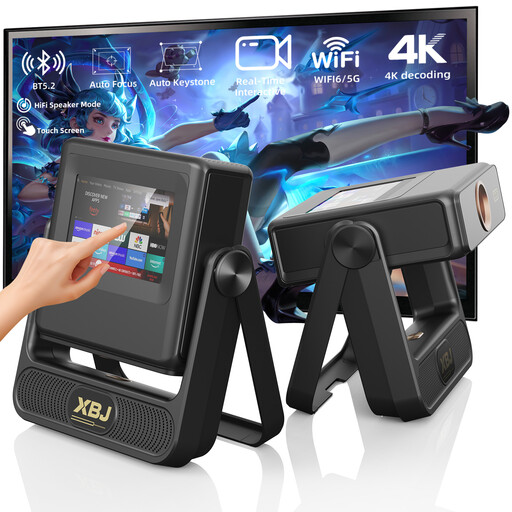
This model steps up its game with high brightness, smart features, and a unique control interface, making it just as suitable for entertainment as it is for occasional professional use.
What's unique about it? An integrated touchscreen on top, which allows you to manage essential controls without the remote. With its 800 ANSI lumens and ability to project an image up to 300 inches, it promises total immersion, whether for video games (gaming projector) or big movie nights.
Key Strengths
Who is it for? For those seeking a powerful and versatile device, capable of switching between a PS5 session and an outdoor movie screening. Its touchscreen is a real bonus for fans of well-designed gadgets.
Our selection is just a taste of what the market has to offer. If your needs are different or if you wish to explore other options, many other solutions are available.
? Discover our full range of projection equipment to find the projector that will light up your evenings.
1. What is the difference between lumens and ANSI lumens? The term "lumens" alone is often a vague, sometimes inflated marketing term used by manufacturers. ANSI lumens (American National Standards Institute) are the result of a rigorous testing protocol. It is the only reliable measurement for comparing the true brightness of two projectors. Trust only this value.
2. Can I use a portable projector in broad daylight? Let's be clear: even the most powerful projectors can't compete with daylight. for daytime use, it is essential to be in a room where the light is controlled (blackout curtains, blinds). A model with over 1000 ANSI lumens will perform better, but the experience will always be best in a dim or completely dark environment.
3. Do I need a projection screen? For occasional use, a smooth, matte white wall does the job perfectly. However, a real projection screen is designed to reflect light optimally, which improves contrast, colour fidelity, and perceived brightness. It's an investment we recommend to truly get the most out of your home cinema setup.