
Livraison le jour même ou le lendemain

Qualité garantie

Débloquez vos offres de bienvenue: Livraison GRATUITE | Jusqu'à -80 % | 30 jours d'essai gratuits à JoyPlus
Téléchargez l'application
A portable karaoke speaker can turn a simple get-together into an unforgettable event, whether it's with family, friends, or even for belting out some tunes solo. But there's a catch: the market is saturated with models making tempting promises that often hide nasty surprises. Our mission is to help you decode the spec sheets, identify common pitfalls, and make a truly informed choice.
Before you dive in, watch out for these 3 pitfalls that can literally ruin the party?:
To avoid disappointment, focus on a few key features that truly define the quality and versatility of a Bluetooth singing machine.
While Bluetooth has become the standard, a good speaker needs to be more versatile. Check for the following ports based on your intended use?:
The microphone is your instrument. For karaoke for adults or lively duets, a system with a dual wireless mic is a major asset. Pay attention to these details?:
A portable speaker should be easy to carry. Don't just rely on the photos! Check the device's weight and dimensions. A sturdy carrying handle is also a significant plus.
Regarding battery life, look for the battery capacity expressed in watt-hours (Wh) or milliampere-hours (mAh) paired with the voltage (V). A higher value means better endurance. Models with fast charging via USB-C are also much more convenient for daily use.
Rather than an endless list, here are models that cater to specific profiles, taking into account the quality and versatility criteria we've just covered.

Why it's a great choice : It's an excellent compromise for livening up parties at home or in the garden. Its power is enough to set the mood for a small group, and its portable design makes it easy to transport. The perfect party speaker.
It avoids the low-end microphone trap by including a robust wireless model and offers comprehensive connectivity, including a guitar input, which is rare in this price range.
Its full-range stereo speaker system with bass enhancement delivers rich, balanced sound. The 9000 mAh battery (2x 4500 mAh) provides ample power to last the whole evening.
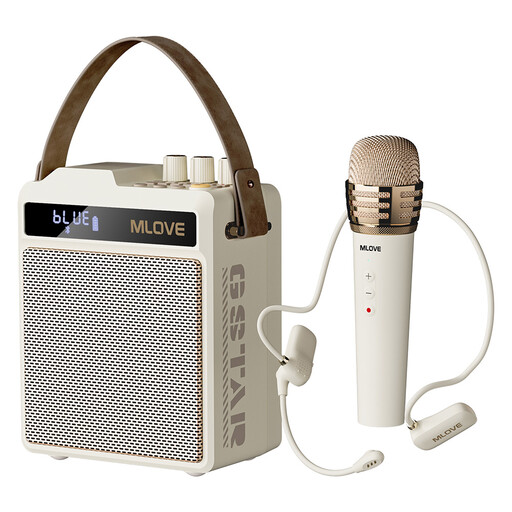
Why it's a great choice : Its great versatility makes it perfect for street performers, speakers, or event hosts. The package includes both a handheld and a headset wireless microphone, offering complete freedom of movement.
It sidesteps the microphone choice issue by providing two different types out of the box. Its compact size (approx. 1.35 kg / 3 lbs) and fast USB-C charging make it a true portable workhorse.
The combination of a dual wireless mic (handheld + headset) and a 6.35mm instrument input makes it a complete and ultra-portable PA solution.
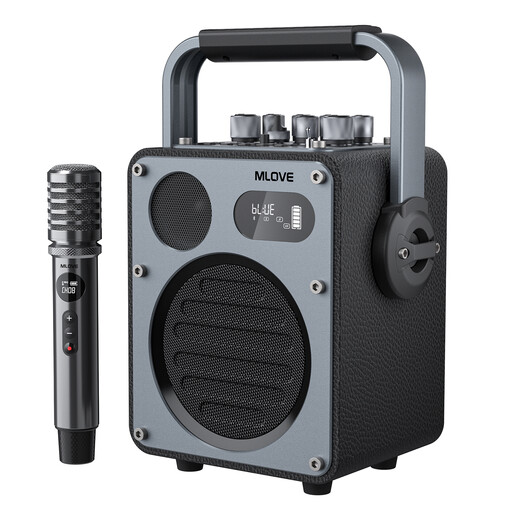
Why it's a great choice : Designed for those who refuse to compromise on sound quality and features. Ideal for recording, live streaming, and musical performances thanks to its audio processor (DSP) and premium materials.
It stands out with superior build quality: a wood and zinc alloy casing, and a unibody zinc alloy microphone. The inclusion of a DSP and dedicated EQ modes ensures optimized sound, a far cry from basic settings.
The ability to record and stream directly to a smartphone via the USB-C OTG port is a major asset for creators. The two-way audio system (woofer + tweeter) ensures remarkable sound clarity.
Explore our full selection of audio and music products that meet our quality charter and safety standards.
Instead of being blinded by peak power, rely on RMS power. For indoor use in a 20-30 m? (200-300 sq ft) room, 20 to 40W RMS is generally sufficient. For outdoor parties or larger spaces, aim for 50W RMS or more to get clear, distortion-free sound, even at full volume.
The easiest method is to use Bluetooth if your TV is equipped with it. If not, most TVs have an audio output. You can use an AUX (3.5mm jack) cable or an RCA to 3.5mm adapter to connect your TV's audio out to the speaker's auxiliary input. This will let you play karaoke videos from YouTube on your big screen while enjoying the sound through your speaker.
Yes, provided the speaker has a dedicated instrument input (6.35mm jack). This input is specifically designed to match the impedance of an electric or acoustic-electric guitar. Plugging a guitar into a standard mic or auxiliary input will produce very disappointing results. Be sure to check for this port if you plan to use it that way.