
Livraison le jour même ou le lendemain

Qualité garantie

Débloquez vos offres de bienvenue: Livraison GRATUITE | Jusqu'à -80 % | 30 jours d'essai gratuits à JoyPlus
Téléchargez l'application
A portable garment steamer can replace an ironing board for a quick touch-up, a crumpled shirt at the bottom of a suitcase or an outfit you need to prepare before an appointment. However, not every appliance is designed for the same needs. A compact model may lack battery life, while a more powerful appliance can quickly become heavy and awkward to carry.
To avoid disappointment, it is better to focus on a few practical specifications rather than relying solely on the promises made in the product description.
Measured in watts, power indicates how quickly the appliance can heat up. However, it is not enough to assess the quality of the steaming performance. Steam output, measured in grams per minute, gives a more useful indication of the amount of steam released continuously.
A 1,500 or 1,600 W handheld steamer can reach its operating temperature quickly. You should also check how consistent the steam output is and the capacity of the water tank. For occasional touch-ups, a less powerful model may be perfectly adequate.
A small tank makes the appliance lighter and easier to slip into your luggage. On the other hand, it may require several refills to steam a complete outfit. A capacity of 250 to 300 ml will be more convenient when steaming several garments in succession, but it will generally make the appliance heavier.
The real question is therefore: do you simply want to freshen up a shirt before going out, or do you need to steam several garments one after another?
Steam reaches a high temperature. Follow the instructions in the manual, keep the appliance out of children’s reach and unplug it before filling or cleaning the tank. Features such as automatic shut-off, anti-drip protection and protection against running dry make the appliance more comfortable to use, but they do not replace basic safety precautions.
Empty the tank after every use to help limit mineral deposits. In areas with hard water, check the manual to see whether tap water can be used or whether the manufacturer recommends another type of water.
For everyday touch-ups, a continuous output of around 18 to 25 g/min is a good basis for comparison. Thick fabrics, jackets and curtains will naturally require more passes than a lightweight shirt.
The heat-up time also deserves your attention. The models featured here claim to reach operating temperature in 30 to 45 seconds. That makes them suitable for use in the office, in a hotel room or in the morning before you leave.
A vertical garment steamer is used with the garment hanging on a hanger. This setup is particularly practical for dresses, jackets, shirts and curtains. Some appliances can also be used horizontally, making it easier to steam trousers laid on a suitable surface.
A foldable garment steamer makes perfect sense for regular travellers. However, remember to check its dimensions when folded, its weight, the length of its power cord and its electrical compatibility with your destinations. In France, a mains-powered appliance must operate with a 220–240 V supply.
A removable tank makes filling and cleaning easier. A fabric brush can help separate the fibres of certain garments more effectively, while a steam-lock function means you do not have to hold the button down continuously.
Where included, the soleplate may be ceramic or feature a coating designed to help it glide over fabric. Take care: always check the care label and test the appliance on a hidden area first, particularly when working with silk, velvet and coated fabrics.
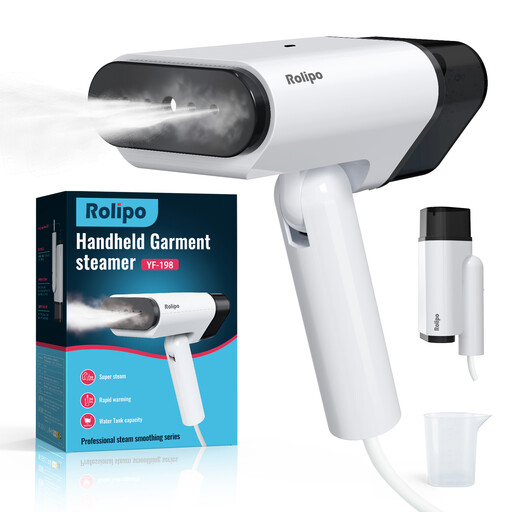
Why it suits this profile : Its one-button operation and foldable design make it a straightforward choice for beginners, whether at home, in the office or on a short trip.
The leak-proof tank helps reduce the risk of spills during transport. Its foldable design also takes up less space.
Intuitive controls, easy-to-carry design and claimed suitability for different types of fabric.
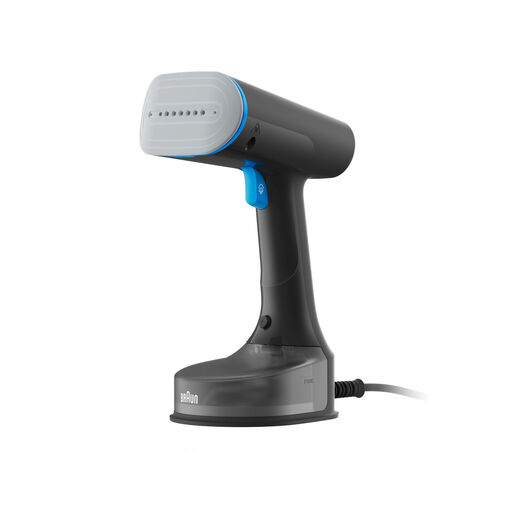
Why it suits this profile : This model can be used both vertically and horizontally, and includes a 2.5 m cord, anti-drip protection and automatic shut-off.
Its 150 ml capacity, removable tank and automatic shut-off help make handling easier and reduce the risks associated with use.
1,200 W, claimed output of 25 g/min, 45-second heat-up time and included brush.
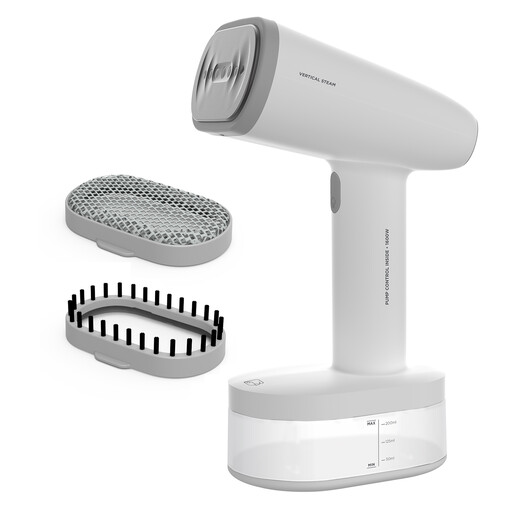
Why it suits this profile : With its 250 ml tank and claimed output of 25 g/min, it is designed for longer sessions covering several garments, suits, curtains and upholstery fabrics.
The anti-drip system and self-cleaning cycle are designed to help prevent water marks and mineral deposits during maintenance.
1,600 W, removable 250 ml tank, steam lock and ceramic soleplate.
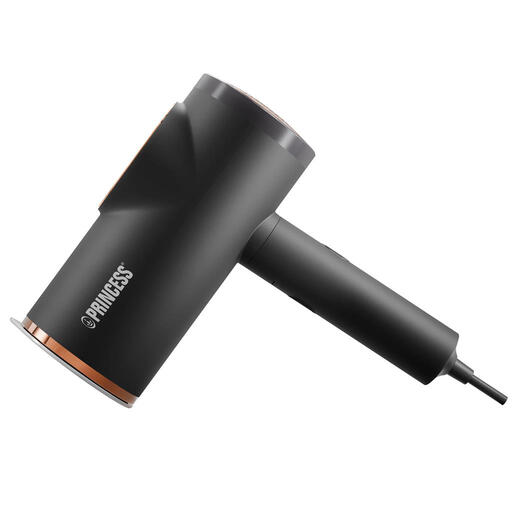
Why it suits this profile : Its claimed weight of 0.80 kg, foldable design and lint-removing attachment make it easier to care for clothes while travelling.
The removable 100 ml tank and automatic shut-off allow the appliance to remain compact without compromising maintenance or safety.
1,300 W, claimed 30-second heat-up time, lockable button and two-year manufacturer’s warranty according to the product description.
We have selected a complete, real-time updated range of products that meet these demanding criteria and European safety standards.
Hang the garment on a sturdy hanger, then gently pull the fabric taut with one hand. Move the steam head from top to bottom without lingering in one place. For delicate materials, keep a sufficient distance and refer to the care label.
A vertical steam iron will not always replace a traditional iron when you need to create a sharp crease in trousers or a shirt. Its advantage lies elsewhere: it lets you quickly freshen up an outfit without getting out the ironing board.
Before putting the appliance away, unplug it, let it cool down and empty its tank. Never add perfume, essential oils or chemicals to the water unless the manufacturer explicitly permits it.
It depends on its power rating and how long it is used. A 1,200 W appliance running for five minutes theoretically uses around 0.1 kWh. In practice, consumption varies according to the heat-up time and the length of time steam is actually released.
No. Steam is suitable for many textiles, but some materials do not tolerate heat or moisture well. Always check the care label, test the appliance on a hidden area first and avoid sensitive surfaces, particularly certain plastic-coated materials.
It depends on how often it is used, the quality of the water and how well it is maintained. Emptying the tank after every use, cleaning the appliance in accordance with the manual and avoiding running it dry will help preserve its performance. The manufacturer’s warranty period, where specified, is also worth checking before you buy.