
Livraison le jour même ou le lendemain

Qualité garantie

Débloquez vos offres de bienvenue: Livraison GRATUITE | Jusqu'à -80 % | 30 jours d'essai gratuits à JoyPlus
Téléchargez l'application
Whether you're on a van road trip, a week on the road for work, or a simple family camping weekend, keeping your provisions cool is non-negotiable. The market for portable fridge-freezers is vast, and it's easy to fall for the classic pitfalls that turn a promising purchase into a costly disappointment.
As a product expert at Joybuy, my mission is to help you see things more clearly. Let's cut through the marketing jargon and focus on what really matters. Here are the mistakes to avoid and the criteria to scrutinize to make a truly informed choice.
To avoid these disappointments, it's essential to understand a few technical concepts.
This is THE decisive factor. It all comes down to your use case.
A good portable fridge should be able to plug in anywhere.
Capacity is measured in litres. To give you an idea, a 22L portable fridge can hold enough provisions for two people for a weekend. A solo traveller won't have the same needs as a family of four. The common-sense advice: measure the intended space in your vehicle before you order.
Instead of an endless list, we've selected three models that meet specific needs, applying the criteria we've just covered.
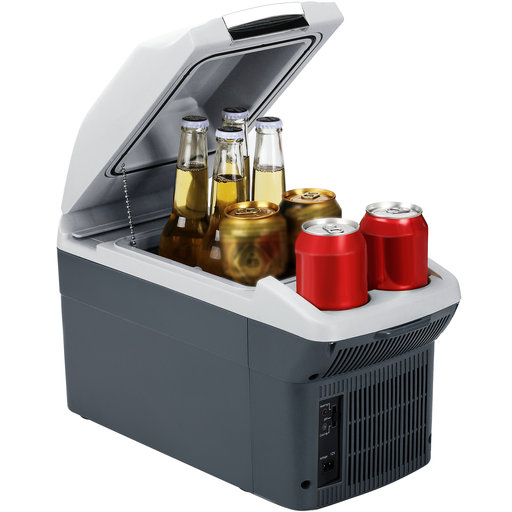
The Lowdown: Perfect as a secondary cooler for keeping a meal or drinks cool during a trip. Compact and equipped with a warming function, it's a practical ally for occasional needs.
This model is upfront about what it is: a thermoelectric cooler/warmer, period. It doesn't promise to freeze, thus avoiding false expectations. It's perfect for its intended mission: maintaining a temperature for a short duration.
Its dual cool/warm function and its ultra-compact design with cup holders, engineered to fit easily into a vehicle's cabin.

The Lowdown: For those who live on the road, reliability is non-negotiable. This compressor model ensures true freezing capability and maximum power versatility.
It ticks all the critical boxes. It's a true compressor electric cooler (down to -18 °C), it's compatible with 12V, 24V, and 220V, and it includes battery protection. It thereby neutralizes all three major pitfalls.
Its reliable freezing capacity and universal power options make it the peace-of-mind choice for a truck cooler or a fridge for a converted van.
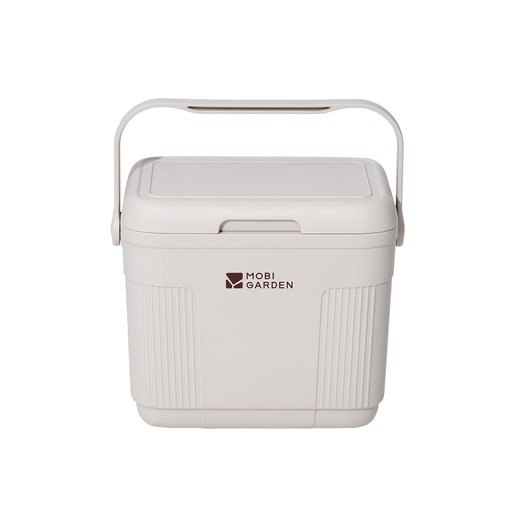
The Lowdown: For outdoor purists far from any power outlet, who prioritize simplicity and ruggedness. Ideal for a fishing trip or a base camp where self-sufficiency is the name of the game.
As a passive model, it bypasses all power and consumption issues. Its performance depends purely on physical properties: high-density insulation and a high-performance seal.
Absolute autonomy. No electricity needed. It can keep contents cold for 36 to 48 hours (or even longer) with ice packs, depending on usage.
Explore our full selection of portable solutions for keeping your food cool, all tested and approved according to our criteria.
The difference is night and day. A compressor model is a true miniature fridge: it actively generates cold (even down to freezing) regardless of the outside temperature. A thermoelectric model, on the other hand, merely "cools" by lowering the temperature 15-20?°C below the ambient air. In high heat, this is insufficient for sensitive foods.
Absolutely. It's a very real risk, especially with low-end models. The solution is to choose a compressor model equipped with multi-level battery protection (usually High, Medium, Low). This smart system cuts power to the fridge before the battery voltage becomes critical, ensuring you can always start your vehicle.
Its performance depends on several factors: the quality of the insulation, the outside temperature, the amount of ice packs used (opt for large blocks, which melt more slowly), and how often you open it. A good model like the Mobi Garden can last 24 to 48 hours, and even longer if you use it optimally (pre-chilling it, keeping it in the shade, and filling it as much as possible).