
Livraison le jour même ou le lendemain

Qualité garantie

Débloquez vos offres de bienvenue: Livraison GRATUITE | Jusqu'à -80 % | 30 jours d'essai gratuits à JoyPlus
Téléchargez l'application
A portable fan can accompany you to the office, on public transport, while travelling, at a concert or during outdoor activities. However, not all models are equally suited to every situation. A small pocket fan focuses primarily on portability, while a desk or pedestal fan is designed to circulate air over a wider area.
Before buying, there are three pitfalls to avoid:
To compare models on a like-for-like basis, examine the battery, settings, noise level, charging method and stability of the appliance.
On a rechargeable mini fan, battery capacity is generally expressed in mAh. A 5 000 mAh battery offers a greater energy reserve than a 1 800 mAh model. However, runtime also depends on the motor and the selected speed.
Always check:
A fan with a 5 000 mAh battery can keep you cool throughout a long day on the move, but it will generally be heavier than a compact model designed for a few hours of use.
A handheld or pocket fan should let you adjust the airflow to suit the situation. Five speed levels offer more flexibility than a simple on/off button: a gentle breeze on a train, or a more concentrated airflow during an outing or a walk.
Specifications such as 10 m/s, 27 000 rpm or 245 L/s refer to precise technical characteristics, but they cannot be directly compared across devices with different designs. For personal use, also consider:
Weight is particularly important if you plan to wear the appliance around your neck or carry it in a bag. A 180 g model will be easier to transport than a fan weighing several kilograms, but it obviously will not be able to cool an entire room.
For working at a desk or sleeping, choose a quiet fan or a night mode. Where the information is available, check the stated noise level. Models fitted with a lithium battery must be recharged using the supplied cable or charger, away from heat sources and without attempting to modify the battery.
Always clean the appliance when it is switched off, take care not to block the grilles and avoid using it in a damp environment unless the instructions permit it. These precautions are even more important when the fan is transported frequently.
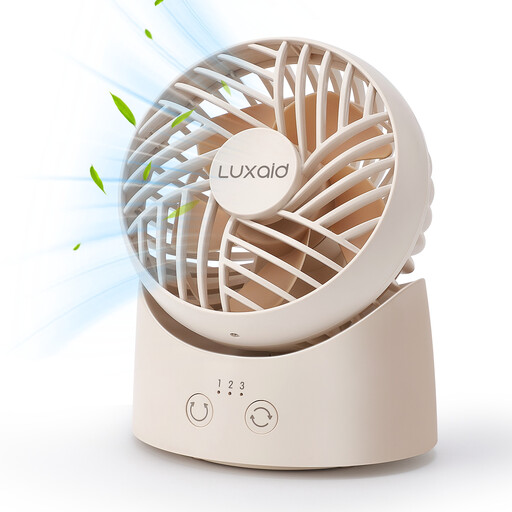
Why this choice suits this profile: Its compact design and Type-C charging make it easy to use at a desk, on a bedside table or in a small space.
The technical specifications clearly state that the battery is 1 800 mAh, not 2 000 mAh. This means runtime comparisons are based on reliable information.
Three speeds, 60° oscillation and up to 8 hours of advertised runtime.
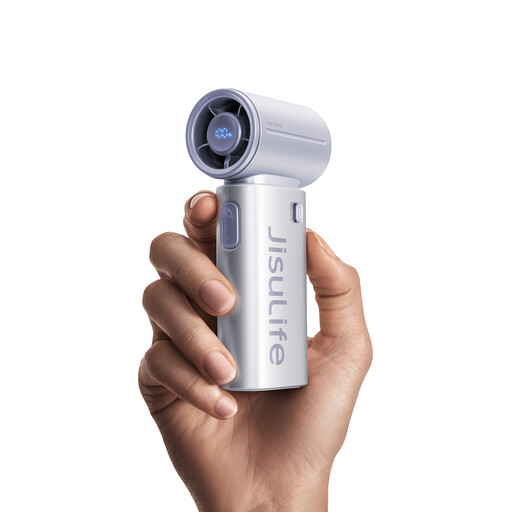
Why this choice suits this profile: Its digital display, five speeds and 180 g weight offer precise control, whether you are on public transport, at a concert or travelling.
The display shows the selected speed and remaining battery level. This helps prevent unpleasant surprises linked to the advertised maximum runtime.
5 000 mAh battery, five speeds, LED display and an advertised runtime of 3 to 22 hours depending on the setting.
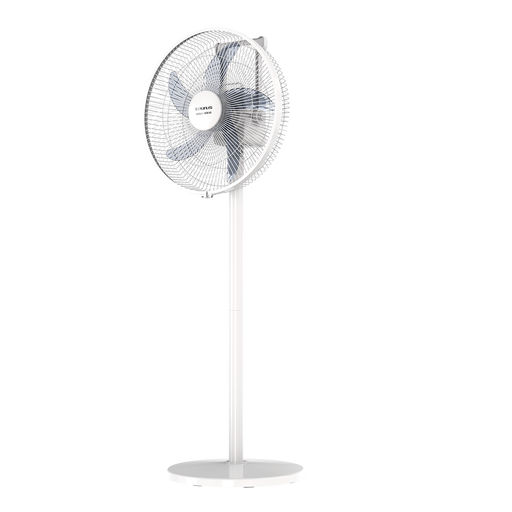
Why this choice suits this profile: It is designed for people who want to move the same appliance from the floor to a desk, use it in tower mode or install it on a wall mount.
Its five speeds, three modes and 8-hour timer let you tailor operation to your needs, rather than leaving the appliance running continuously at full power.
40 cm diameter, automatic oscillation, remote control, DC motor and up to 8 hours of advertised runtime.
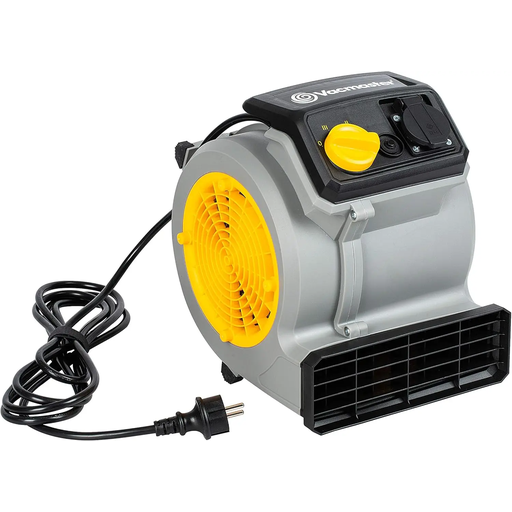
Why this choice suits this profile: Its floor-standing design and advertised airflow of 245 L/s make it suitable for large spaces, workshops and drying or air-circulation requirements.
The airflow, 124 W power rating and three tilt positions are listed separately. This makes it easier to distinguish its intended use from that of a pocket fan.
Three speeds, tilt adjustment of up to 45° and an integrated socket for connecting several appliances. This model runs from the mains and is not intended for travel.
The JISULIFE Life9S is another compact option for anyone looking for nine blades, five speeds, an LED display and a 5 000 mAh battery. Its advertised runtime can reach 22 hours depending on the setting. For hands-free use, the JISULIFE Life 7 adds a foldable design, wrist strap and three operating modes: handheld, placed on a desk or worn around the neck.
It depends entirely on the model and the information provided in its instructions. The presence of a USB-C port does not automatically mean that the appliance can operate while charging. Consult the manufacturer’s instructions and use a cable in good condition, without covering the fan or blocking its air inlets.
Performance varies according to battery capacity and the selected speed. A 5 000 mAh model may offer considerable runtime at the lowest setting, but using it at full power will generally reduce the available operating time. For regular use, compare the stated runtime ranges rather than relying solely on the maximum figure.
The cost depends on the appliance’s power rating and how long it runs. Rechargeable models use electricity when being charged, while a mains-powered fan draws power directly from the household supply. To estimate the cost, multiply the power in kilowatts by the number of hours of use, then by the per-kilowatt-hour rate on your electricity tariff.