
当日/次日达

品质保障

开启新人专享福利: 全场免邮 | 低至 2 折 | 免费试用 30 天 JoyPlus 会员
下载 Joybuy
A fan can make a bedroom, living room or home office much more comfortable in just a few minutes. But some purchases prove disappointing after a few weeks: the fan is too noisy, the airflow is poorly distributed, cleaning is a chore or you never use the smart features.
Before comparing models, it’s worth distinguishing between how cool a fan feels, how it circulates air and how it removes moisture. Here are the key things to check to avoid any nasty surprises.
A speed measured in m/s isn’t enough to judge how comfortable a fan will make the whole room. A desk fan can produce a powerful breeze at close range without circulating air effectively around a living room. For more even coverage, look for oscillation, its range and, if provided, the airflow rate in m³/h.
Noise levels vary depending on the setting. A fan advertised at 25 or 30 dB on its lowest setting may be much more noticeable at full speed. For a bedroom, look for a night mode, several power settings and a timer. In everyday use, motor noise, vibrations and control panel beeps can matter just as much as the advertised figure.
A standard fan shouldn’t be used near a shower, sink or area exposed to water splashes. In a bathroom or kitchen, an extractor fan or duct fan designed to remove air is generally a better choice. An IPX1 rating, for example, doesn’t mean the fan can be immersed or directly exposed to water.
In a living room or large bedroom, a pedestal fan, tower fan or air circulator should be able to direct its airflow effectively. Horizontal oscillation, adjustable tilt and several speed settings make it easier to tailor performance to the layout of the room.
For drying a specific area, a high-airflow floor fan may be a better choice. However, it will often be noisier than a model designed to run quietly overnight.
Compare dB ratings, taking the measurement conditions into account. A 2 to 8-hour timer stops the fan running unnecessarily overnight. A remote control is handy when the fan is next to your bed. Connectivity is mainly useful if you already use a compatible smart home app.
Removable grilles, washable filters and easily accessible blades make cleaning simpler. A rechargeable fan offers greater flexibility, but check its battery capacity, charging time and safety instructions.
For a ceiling fan, check the available ceiling clearance, the weight the mounting point can support and whether you’ll need a qualified electrician. In a bathroom, always follow the electrical zone requirements and the instructions in the manual.
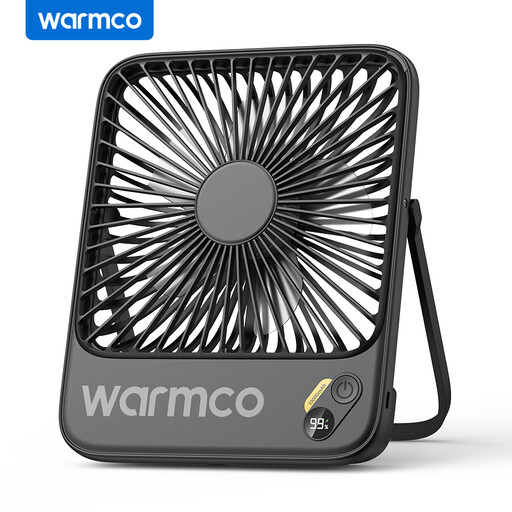
Why it suits this type of user : Its compact design fits neatly on a desk or bedside table, and it’s also handy for camping weekends and trips away. USB-C charging means you don’t always need to rely on a mains socket.
The product details list four speeds, a noise level below 40 dB and up to 24 hours of battery life on low speed. This gives you a clearer idea of what to expect in everyday use.
Advertised 10,000 mAh battery, a 4.1 cm profile, LED indicator and removable front cover.
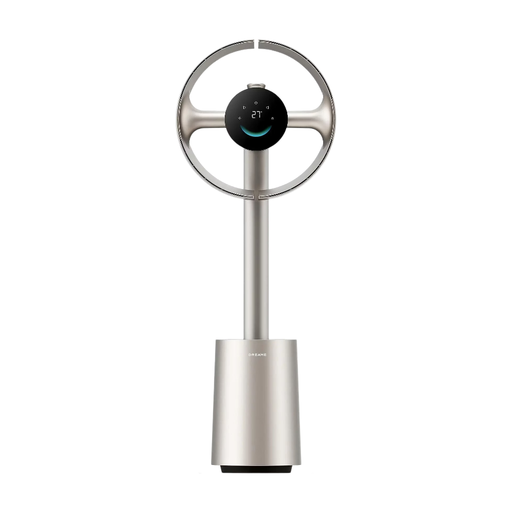
Why it suits this type of user : This bladeless tower fan is designed for anyone looking for more sophisticated air circulation, app control and a fan that blends discreetly into their home.
Oscillation settings, scheduling and remote control are all clearly specified. The removable, washable main filter also makes routine maintenance easier.
Advertised oscillation of up to 180° horizontally and 90° vertically, app controls and a magnetic remote control.
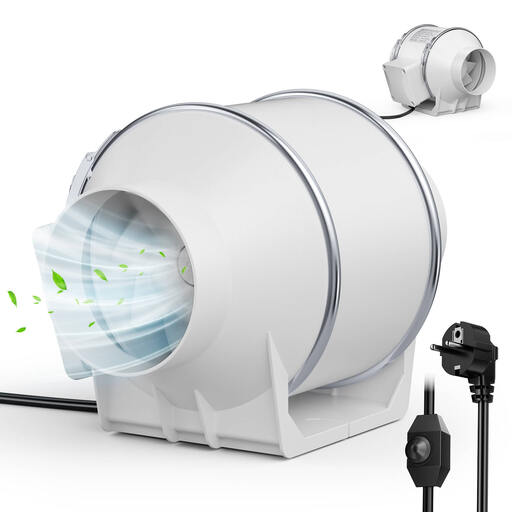
Why it suits this type of user : It’s suitable for extracting air from a kitchen, bathroom, garage or utility room fitted with a 100 mm duct.
The adjustable speed lets you tailor the airflow to the situation. The advertised splash protection doesn’t mean you can ignore the instructions or the need for proper installation.
Advertised airflow rate of 310 m³/h, advertised noise level of 30 dB and removable connectors for easier installation.
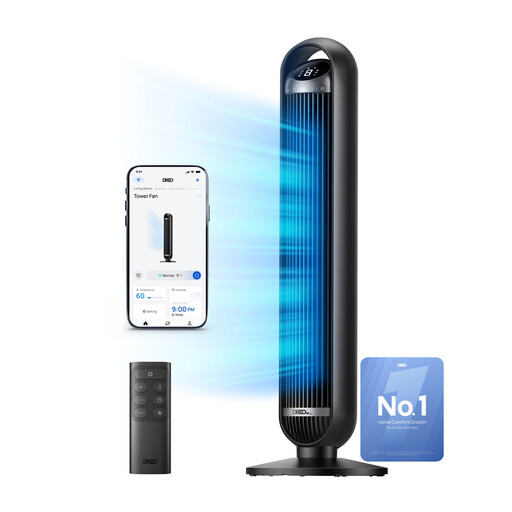
Why it suits this type of user : Its slim, vertical design fits easily into tight spaces. The remote control, app and voice control cover everyday needs, whether you’re using it in a bedroom or home office.
The specifications list eight speeds, four modes, 90° oscillation and an 8-hour timer. The advertised noise level ranges from 25 to 51.5 dB, depending on the setting.
Advertised power of 30 W, maximum advertised air speed of 8.2 m/s and a removable rear grille for easier cleaning.
We’ve put together a full range, updated in real time, of products that meet these exacting criteria and European safety requirements.
A fan circulates the air and speeds up the evaporation of sweat, making you feel cooler. However, it generally won’t lower the room temperature like an air conditioner. To improve air circulation, position it so it can move the air without blocking its inlets or outlets.
For a bedroom, it’s best to choose a quiet model with a night mode, several low-speed settings, a timer and controls that can be switched off. Check the noise level at the speed you’ll actually use, rather than relying only on the advertised minimum.
It depends on the fan’s power rating in watts, how long you use it and the rate set by your electricity tariff. For example, a 30 W fan running for ten hours uses around 0.3 kWh. Check the power rating in the product specifications and set the timer to suit your needs.