
Livraison le jour même ou le lendemain

Qualité garantie

Débloquez vos offres de bienvenue: Livraison GRATUITE | Jusqu'à -80 % | 30 jours d'essai gratuits à JoyPlus
Téléchargez l'application
With summers becoming increasingly sweltering, the portable fan is no longer a gadget but an essential everyday companion. On public transport, at the office, or on holiday, it promises a welcome bubble of cool air. The problem?is that the market is flooded with models making tempting promises, but their performance is often disappointing. To help you see things more clearly and avoid getting ripped off, our guide breaks down the pitfalls to avoid and the criteria that truly matter.
Navigating the jungle of portable fans can quickly become a headache. Many models boast impressive specs on paper that turn out to be disappointing in practice. Here are the three main pitfalls to sidestep to ensure you don't regret your purchase.
This is the number one trap. An advertised battery life of "24 hours"?? Be wary. This figure is almost always achieved at the lowest speed, generating a breeze so light you can barely feel it. Under real-world conditions, expect that runtime to melt away, dropping to just 2 or 3 hours—far too short for a day at the office or a long train journey.
A powerful airflow is great, but not at the cost of a deafening roar. Some models, especially the most compact ones, turn into mini jet engines, with a hum that makes them simply unbearable in an open-plan office or a library. A good quiet fan must be able to move air effectively without becoming a noise nuisance.
A travel fan needs to be robust to survive the rigours of transport. However, many entry-level models are made with cheap plastics that threaten to break at the slightest drop. Also, beware of gimmicky features (gaudy LED lights, token misters, ineffective aroma diffusers...) that only serve to inflate the price and add more points of failure.
To avoid falling into these traps, rely on concrete, verifiable data. Here are the three technical criteria that truly separate a gadget from a good investment.
The only reliable indicator of endurance is the battery capacity, expressed in milliampere-hours (mAh). Don't be fooled by promises in hours. A model with a 4000 to 5000 mAh battery will last much longer than a 2000 mAh equivalent at the same power level. Opt for a long-life battery fan that clearly displays this value. The bonus?? A remaining charge indicator so you never run out of juice.
Here, it's all about balance. The airflow power, sometimes indicated in metres per second (m/s), must be sufficient to cool you down. A good rechargeable mini fan will offer at least three speeds to adjust the breeze to the situation?: a nearly silent whisper for the office, and a turbo mode to tackle a sudden wave of heat. If the noise level in decibels (dB) is specified (a good sign?!), aim for less than 40?dB at medium speed for optimal acoustic comfort.
The best form factor is the one that fits your daily life.
Because everyone's needs are different, we've selected a few models that excel in their category, meeting our criteria for performance and reliability.
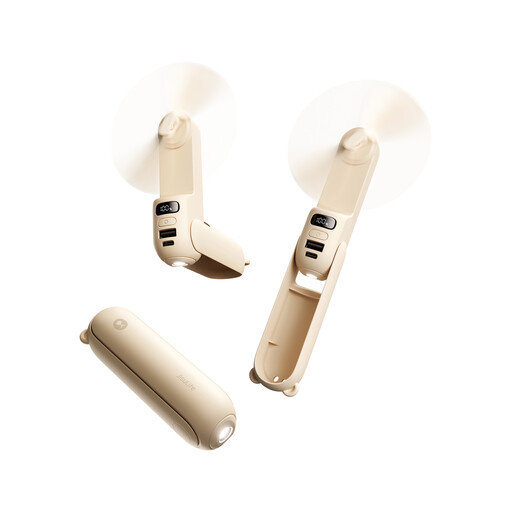
Why it's a perfect match : Perfect for those who are always on the go. Its foldable design and feather-light weight make it ultra-portable. Better yet, its power bank and torch functions make it a true Swiss Army knife for travel, festivals, or even minor power outages.
Its LED screen displays the real-time battery percentage, eliminating the risk of an unexpected dead battery (pitfall #1). Its 3-in-1 design isn't a gimmick : it provides real versatility that justifies its price, far from useless features (pitfall #3).
3-in-1 versatility (fan, power bank, torch). Foldable and compact design. Precise battery indicator.
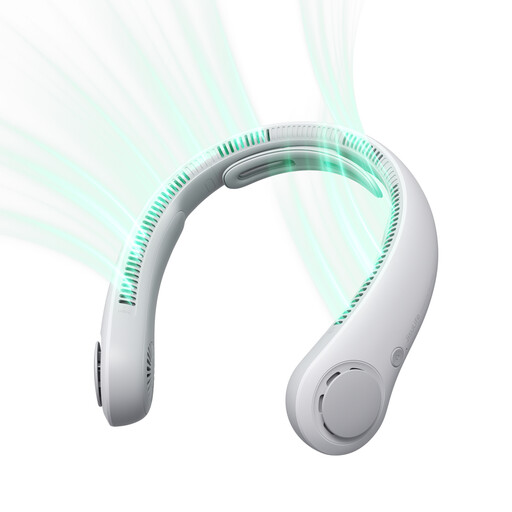
Why it's a perfect match : Designed for anyone who needs to keep their hands free : while cooking, gardening, walking, or at a festival. Its ergonomic design and bladeless technology make it both safe (no risk for long hair!) and comfortable, even when worn for several hours.
Its generous 5000 mAh battery gives it excellent runtime (up to 16.5h advertised), which sidesteps pitfall #1. Its bladeless design is not only safer but also quieter—a crucial point for a device worn so close to the ears (pitfall #2 avoided).
Hands-free and bladeless concept. Very high-capacity battery (5000 mAh). 5 power levels.
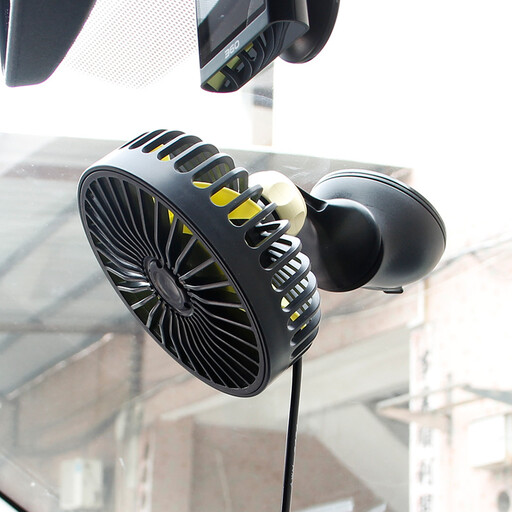
Why it's a perfect match : The solution for drivers and passengers sweltering in their car. It directly tackles the furnace-like heat of the cabin, especially in vehicles without air conditioning or with a weak AC. Its suction cup mount and USB power make it universal and easy to install.
This model plays the specialization card. Its sturdy suction cup ensures a rock-solid mount, even on rough roads, avoiding the fragility trap (pitfall #3). By plugging directly into a USB port, it completely bypasses the battery life problem (pitfall #1).
Very stable suction cup mount. 360° rotation for customised airflow. Ideal USB power for in-car use.
Discover our full selection of fans that meet our quality criteria and European safety standards.
Its longevity rests on two pillars?: the battery and the build quality. A good lithium-ion battery will withstand 300 to 500 full charge cycles before showing signs of degradation. To preserve it, avoid complete discharges and don't leave it in direct sunlight. The sturdiness of the frame and the reliability of the motor are, of course, just as crucial.
Yes, for a targeted, personal cooling sensation. Its key advantage is that it leaves your hands completely free. It delivers a continuous stream of air to the neck and face, strategic areas that help the body thermoregulate. However, it's worth noting that its airflow is often less powerful and more focused than that of a similarly sized handheld fan.
Safety first! Make sure the device is turned off and unplugged. The easiest way to dislodge dust from the grilles and blades is to use a can of compressed air (like the ones for keyboards). For the body of the device, a soft cloth or a very lightly dampened cotton swab will do the trick. Never submerge the fan in water and wait until it is completely dry before turning it back on.