
Livraison le jour même ou le lendemain

Qualité garantie

Débloquez vos offres de bienvenue: Livraison GRATUITE | Jusqu'à -80 % | 30 jours d'essai gratuits à JoyPlus
Téléchargez l'application
A portable fabric cleaner can quickly become an essential household item: a stain on the sofa, marks on a rug, crumbs and dirt in the car, or pet hair clinging to clothes. Yet some models disappoint for reasons that are fairly easy to avoid.
The first pitfall is confusing a device that freshens the surface with a genuine injection-extraction vacuum cleaner. A steam garment steamer or a fabric stain remover can be useful for treating a specific area, but it doesn't necessarily replace a machine capable of spraying water and then vacuuming up the moisture laden with dirt.
The second concerns battery life and tank capacity. A cordless model is handy in a car or a small flat, but a limited battery and a small tank mean it's better suited to occasional spot treatments. For cleaning an entire sofa, several seats or a rug, a corded appliance with larger tanks will avoid having to refill repeatedly.
Accessories and maintenance are also too often overlooked. A hose that's difficult to rinse, an inaccessible filter or a dirty water tank that stays damp can quickly make using the device a chore. Before ordering, check the cleaning instructions and the accessories supplied.
For clothes, a lint remover with rotating blades removes surface fibres but won't clean a liquid stain. On a creased garment, a steam garment steamer works on wrinkles and can freshen the fabric, without vacuuming up residue.
For car seats, mattresses, rugs and sofas, it's better to look for an injection-extraction function. The device sprays a controlled amount of solution, brushes the surface, then vacuums up the water carrying the dirt. This method is more suitable for durable fabrics that can handle moisture.
A simple fabric stain remover or a spray product is still ideal for a small, localised stain. However, test the solution on an inconspicuous area and follow the instructions on the fabric's care label.
Having two separate tanks is a real plus in daily use: one holds the clean water, the other collects the dirty water. Compare their capacity based on your intended use.
The H.Koenig TWT77, for example, has a 1.4 litre clean water tank, a 1.2 litre dirty water tank and a stated flow rate of 350 ml/min. These figures help you anticipate how often you'll need to refill and how much water will be used.
A compact device isn't necessarily easy to carry. Look at its weight, the length of the cable and hose, and whether it has wheels. On a staircase or inside a car, a few kilos less can make a real difference.
Cleaning after use matters just as much: rinse the tanks, empty any residual water and leave the various parts to dry separately. If you're using a detergent solution, follow the manufacturer's recommendations and store products out of reach of children. Some professional formulas, particularly stain-removing powders for fabrics, require extra precautions: wearing gloves or not using them on wool and silk, for example.
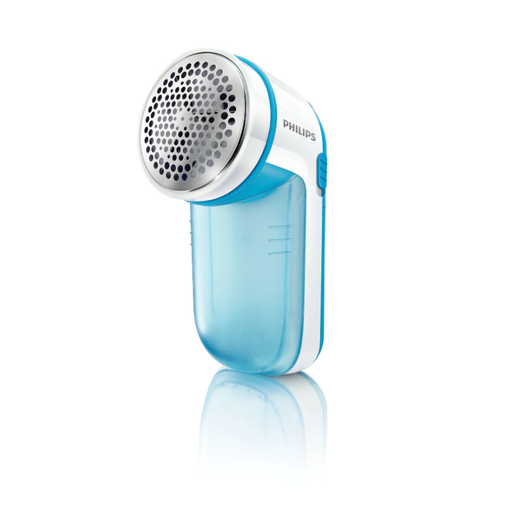
Why this choice suits this profile: Battery-powered, this model is ideal for occasional maintenance of jumpers, coats and clothes that bobble, without needing to buy an injection-extraction machine.
Its function is clearly defined: it removes bobbles but doesn't claim to replace a wet fabric cleaner.
Two height settings, three mesh sizes on the grid, removable and washable tank, powered by two AA batteries.
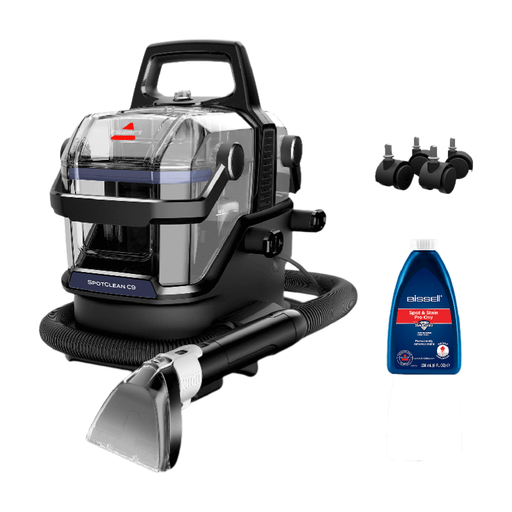
Why this choice suits this profile: Its two cleaning modes and separate tanks are ideal for households that regularly maintain rugs, stairs, sofas and car interiors.
The Clean and Max Clean modes let you tailor the treatment to the level of soiling, rather than always applying an intensive clean.
1.7 L and 1.5 L tanks, 4.6 m cable, HydroRinse self-cleaning tool and motorised brush.
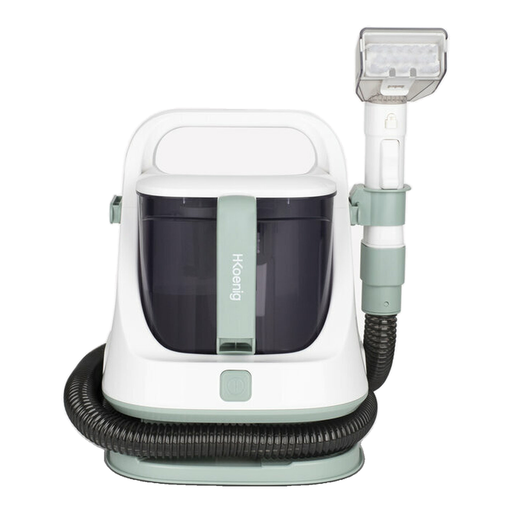
Why this choice suits this profile: Its corded spray-and-vacuum system is ideal for repeated cleaning of fabric surfaces, both at home and in a vehicle.
Its removable tanks and 1.7 m hose make filling, emptying and rinsing after each session straightforward.
Stated power of 650 W, flow rate of 350 ml/min, 3 m cable and replacement nozzle included.
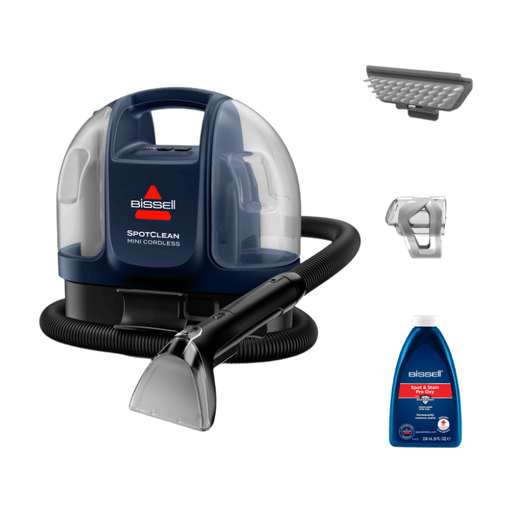
Why this choice suits this profile: At 2.8 kg and with its cordless design, it's easy to carry around for treating seats, stairs, small rugs or furniture that's difficult to move.
With a stated battery life of up to 20 minutes, its purpose is clear: it's designed for touch-ups and small areas, not for cleaning an entire home.
0.5 L and 0.43 L tanks, HydroRinse tool, pet hair accessory and 1.28 m hose.
We've selected a comprehensive, real-time updated list of products that meet these demanding criteria as well as European safety standards.
Before each clean, vacuum up any dust and check the fabric's care label. Then test the water and solution on a hidden area. Avoid fabrics that can't handle moisture and never mix several cleaning products.
After use, empty both tanks, rinse the nozzles and leave the various parts to air dry. For battery-powered devices, use the supplied charger and don't attempt to dismantle the battery. The blades of a lint remover should be handled with care, with the device switched off.
Yes, provided the manufacturer states compatibility with automotive fabrics or interiors. Choose a compact device with a sufficiently long hose and a separate dirty water tank. Work in a well-ventilated area and let the seats dry completely before driving again.
A fabric cleaner is a device capable of spraying, brushing and vacuuming up a solution. A fabric stain remover is a product you apply directly to a stain, before wiping it off or washing the fabric. These two solutions can be complementary, but a chemical product should never be poured into a device unless the instructions allow it.
The cost depends on the electricity consumption, the volume of water and the solution used. A 650 W or 400 W model mainly consumes power during its actual operating time. To keep costs down, follow the dosage stated in the instructions, only treat the areas that need it and rinse the device after each use to maintain its performance.