
Livraison le jour même ou le lendemain

Qualité garantie

Débloquez vos offres de bienvenue: Livraison GRATUITE | Jusqu'à -80 % | 30 jours d'essai gratuits à JoyPlus
Téléchargez l'application
A portable electric heater can quickly warm up a bedroom, home office or small living room. But not all models are designed for the same purpose. A compact unit for a work-from-home desk isn't chosen the same way as a 2000 W electric heater intended for a 20 m² room.
Before you buy, three common mistakes keep cropping up:
For a space of around 10 to 20 m², a 1500 W PTC heater can be sufficient as a supplementary heat source, particularly in a bedroom, home office or studio with decent insulation. 2000 W electric heater models are better suited to larger rooms or those that are harder to warm up. The trade-off is that running them at full power increases instant energy consumption.
PTC ceramic technology heats the air using a ceramic element combined with a fan. It generally provides rapid temperature rise, but several points are worth checking:
The coverage area quoted by the manufacturer is an estimate, not a guarantee of even temperature in every home.
In a bedroom or home office, it's best to go for a quiet portable heater. Spec sheets sometimes list a noise level in decibels, but the actual noise you perceive also depends on the airflow, the type of flooring and how far the heater is from you.
Oscillation helps distribute heat in several directions. An oscillating heater can therefore be practical in a living room or when several people are in the room. Conversely, if you only need to warm your legs under a desk, a fixed-direction heater is often more suitable.
A heater with a remote control lets you adjust the temperature from the sofa or bed. A programmable timer also prevents the heater from running unnecessarily once the room is warm enough or after you've left.
Here are the features to look for:
Always plug the heater directly into a suitable wall socket. With high-wattage appliances, avoid extension leads and multi-socket adaptors. Never cover the air intakes or outlets, and keep the heater away from fabrics, curtains and furniture. Do not use it in a bathroom or near a water source unless the manufacturer explicitly states it is safe to do so.
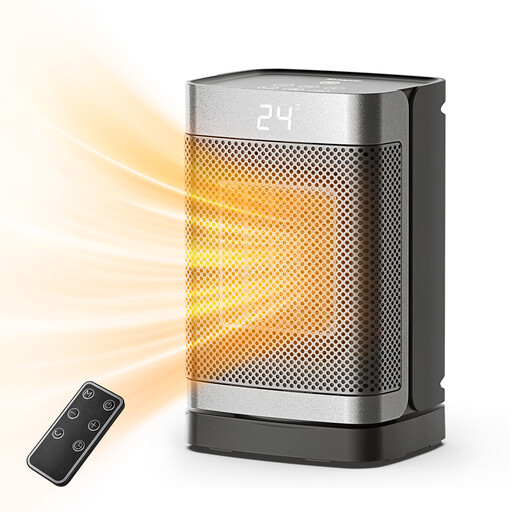
Why this choice suits this profile: Its compact size, two heat settings, remote control and 12-hour timer make it a good option for a student or tenant who wants to heat a bedroom or home office occasionally.
Overheat and tip-over protection cover risks that are often overlooked on entry-level heaters.
Stated power of 1500 W, remote control, LED display and programmable shut-off up to 12 hours.
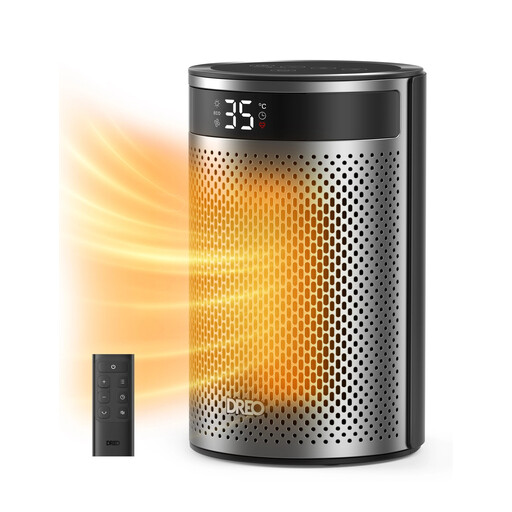
Why this choice suits this profile: This model is aimed at users who want quiet operation and precise settings in a bedroom, reading nook or home office.
The spec sheet states a noise level of 25 to 42 dB, an adjustable thermostat from 5 to 35 °C and multiple safety features.
DC motor, three power levels of 900, 1300 and 1500 W, 12-hour timer and stated CE and CB certifications.
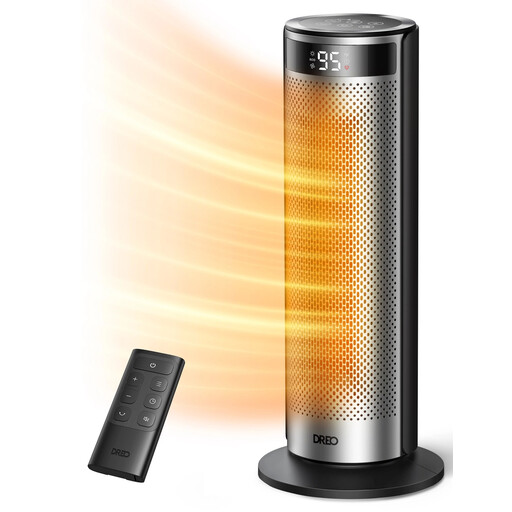
Why this choice suits this profile: Its power and tower design make it suitable for a living room, a room of 15 to 25 m² or regular use during cold spells.
The 5 to 35 °C settings, 70° oscillation and tip-over and overheat protection reduce the trade-offs between power and control.
Maximum power of 2000 W, stated noise level between 25 and 42 dB, remote control, 12-hour timer and child lock.
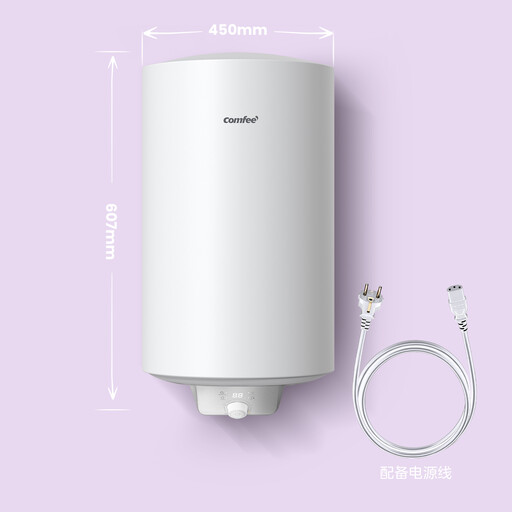
Why this choice suits this profile: Households that want to schedule their hot water from their phone can take advantage of the Wi-Fi, app and voice control compatibility.
The 50 L capacity, scheduling options and heating modes are clearly stated. However, installation should be carried out by a qualified plumber and electrician.
Wi-Fi control, compatibility with Alexa and Google Home, wall or under-sink installation and stated energy efficiency class B.
We've put together a full, real-time updated selection of products that meet these strict criteria as well as European safety requirements.
Energy consumption depends on both how long the heater runs and the power setting used. As a guide, a 1500 W heater running at full power for one hour uses 1.5 kWh. Over the same period, a 2000 W model uses 2 kWh. The thermostat can limit this consumption by temporarily stopping the heating once the set temperature is reached.
To keep usage under even tighter control:
A 1500 W PTC model with an adjustable thermostat, timer and moderate noise level is generally suitable for a small to medium-sized bedroom. However, always check the stated coverage area and the quality of the insulation.
The thermostat doesn't reduce the heater's maximum power. What it can do is cut down the running time by maintaining a set temperature. The result depends on the temperature you choose, the room's insulation and how long you use the heater.
The lifespan depends on build quality, how often it's used, how well it's maintained and whether safety instructions are followed. Unplug the heater before cleaning it, stop using it if it has been dropped or damaged, and consult the manual for any permitted maintenance tasks.