
Livraison le jour même ou le lendemain

Qualité garantie

Débloquez vos offres de bienvenue: Livraison GRATUITE | Jusqu'à -80 % | 30 jours d'essai gratuits à JoyPlus
Téléchargez l'application
Enjoying a rich, smooth espresso on a mountaintop, at a motorway service station, or simply at your desk? The idea is certainly appealing. The promise of a portable electric coffee machine is the promise of freedom. Yet, the market is saturated with models making bold marketing claims that often lead to disappointment: lukewarm coffee, a dead battery after a single espresso, or a machine that leaks after just a few weeks.
As the Head of Product Curation at Joybuy, my role is to guide you through this crowded market to make an informed choice. Before you buy, let's review the most common pitfalls and the technical criteria that truly make a difference.
Too many buyers regret their purchase due to two recurring problems, often masked by slick marketing.
To choose a high-performance, durable machine, focus on these three essential points.
This is the heart of the matter. There are two types of machines:
As we've seen, don't just rely on the maximum bar number. Look for models that guarantee stable extraction and the ability to produce a dense, lasting crema. Versatility is also a key advantage:
A nomadic coffee maker must be robust. Opt for bodies made of metal or high-quality ABS plastic and water tanks made of food-grade stainless steel (guaranteed BPA-free). For outdoor use, an IP rating for water and dust resistance, such as IP67 certification, is a true guarantee of durability.
Rather than an endless list, here are models that meet specific user profiles while avoiding the common pitfalls.
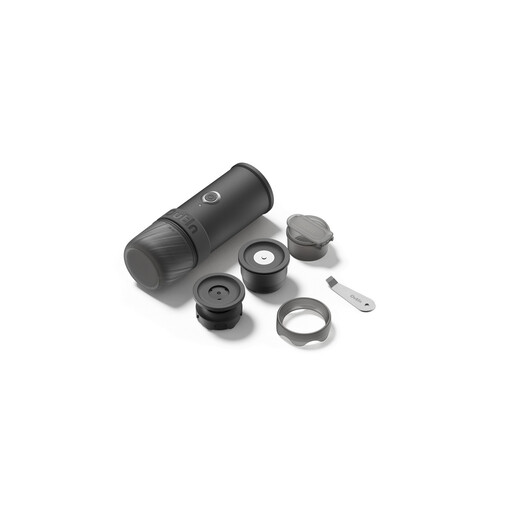
Why it stands out: Designed for camping and extreme conditions, this machine is as robust as it is reliable. Its battery life and ability to heat cold water make it the ideal companion for those who venture far from power outlets.
It tackles the battery life problem head-on by delivering on its promise: up to 6 espressos with cold water, a solid and realistic performance. Its 22-bar pump ensures powerful extraction for a rich *crema*.
IP67 certified (water and dust resistant) and fast heating in about 149 seconds. Compatible with ground coffee and Nespresso Original capsules.
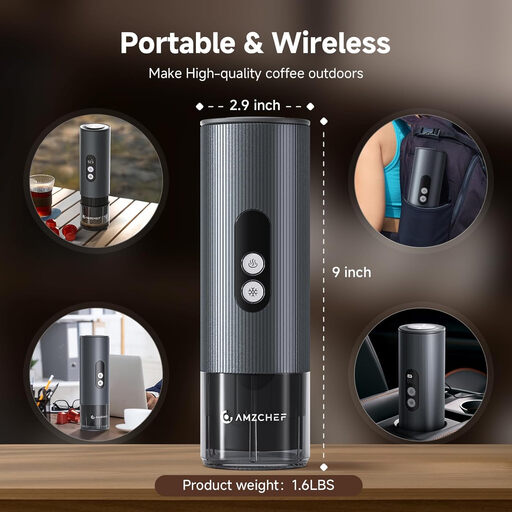
Why it stands out: Its elegant aluminium design, compact size designed for car cup holders, and massive battery make it a perfect choice for the office, daily commutes, or van/RV trips.
With its monster 9000 mAh battery, it outperforms many competitors and delivers on its promise of autonomy. Capable of making 6-7 hot espressos (or over 200 cold brews), it eliminates the frustration of constant recharging.
Very large battery, 20-bar pressure for an authentic *crema*, and 2-in-1 versatility (Nespresso capsules and ground coffee). Aluminium body and stainless steel tank.

Why it stands out: For those who make no compromises on extraction quality. It's aimed at home baristas who demand total control, even on the go. Note: this model requires an external hot water source.
It doesn't try to be an all-in-one gadget. It focuses on one thing: professional-quality extraction. Its visual pressure gauge and adjustable over-pressure valve (OPV) shatter the pressure myth by giving the user total, real-time control.
Professional-grade 58 mm portafilter, built-in pressure gauge, and adjustable over-pressure valve (OPV) for absolute control over extraction. All-metal body.
We have put together a complete and up-to-date selection of machines that meet our strict selection criteria and current safety standards.
Yes, provided you choose a model with sufficient and stable extraction pressure (around 9 effective bars) and, if it's self-heating, a battery capable of maintaining an adequate water temperature (around 92°C / 198°F). The models in our selection are specifically designed to achieve this performance.
It all depends on the model and how you use it. For a self-heating portable electric coffee machine, a good average is between 3 and 7 espressos if you start with cold water. If you use pre-heated water, the battery life can be increased tenfold, as the battery is only used to power the pump.
Generally, no. Most models are designed for quick and easy cleaning. After each use, simply discard the coffee grounds (or capsule) and rinse the few removable parts like the portafilter and cup. Running an occasional cycle with just clean water helps keep the system clean. Crucial point: never submerge the main body of the device in water.