
Livraison le jour même ou le lendemain

Qualité garantie

Débloquez vos offres de bienvenue: Livraison GRATUITE | Jusqu'à -80 % | 30 jours d'essai gratuits à JoyPlus
Téléchargez l'application
For a road trip, a camping weekend or a day out on the boat, a portable electric car cooler can replace ice packs and make it easier to transport drinks and meals. The key is choosing the right model for your needs. A small thermoelectric cooler is suitable for lunch or a few drinks, while a portable compressor fridge is better suited to longer stays and larger loads.
Price alone is therefore not enough to distinguish between models. Pay particular attention to the power supply, usable internal capacity, cooling technology and operating conditions.
A 6- to 10-litre cooler will not necessarily be enough for an entire family. 500 ml bottles, lunch boxes and rigid packaging quickly take up space. Check the internal dimensions rather than relying solely on the litre capacity displayed in the title.
Some product listings also contain contradictory information. The ICEROVER PN-06, for example, is presented as a 6-litre cooler in its name, while its description states a capacity of 9 litres. It is best to confirm this information on the product page before placing your order.
A hot and cold car cooler using thermoelectric technology generally lowers the internal temperature relative to the ambient air temperature. In very hot conditions, it may therefore struggle to reach the desired temperature. It cannot be directly compared with a compressor model, which is designed to deliver colder and more consistent performance.
The heating function also deserves careful consideration. A cooler with a heating function is designed to keep food or drinks warm within the limits specified by the manufacturer. It does not replace a cooking appliance and will not necessarily heat a cold meal quickly.
A 12 V appliance generally connects to the cigarette lighter socket. However, cable length, power consumption and socket protection can vary from one model to another. In a motorhome or on a boat, check compatibility with the auxiliary battery.
For use at home, in a garage or in accommodation, look for a 12 V 220 V portable refrigerator with a mains adapter included or available separately. If the adapter is sold separately, factor it into the total cost.
For a passenger car, 12 V DC is the most common format. Trucks, some boats and many motorhome installations may require 24 V. Never connect an appliance to a voltage other than the one specified in its technical documentation.
A model advertised as compatible with 12 V/220 V does not necessarily include a mains adapter. Check the included accessories, whether a car power cable is supplied and the type of European plug. For safety, prioritise CE marking, clear instructions and the contact details of the manufacturer or its established representative in the European Union.
A thermoelectric cooler is generally compact, lightweight and straightforward to use. It is well suited to picnics, everyday journeys and keeping drinks cool. Its performance nevertheless depends on the outdoor temperature and air circulation around the appliance.
A portable compressor refrigerator is better suited to extended use, storing different types of food and coping with high temperatures. It is usually heavier and may produce noticeable operating noise. The advertised minimum temperature does not mean that every item inside will reach that temperature in all conditions.
For one person or a couple, 6 to 10 litres may be sufficient for a few drinks, sandwiches and snacks. For a family, an extended stay or a motorhome cooler, a capacity of 40 litres or more will be considerably more practical.
Also check for:
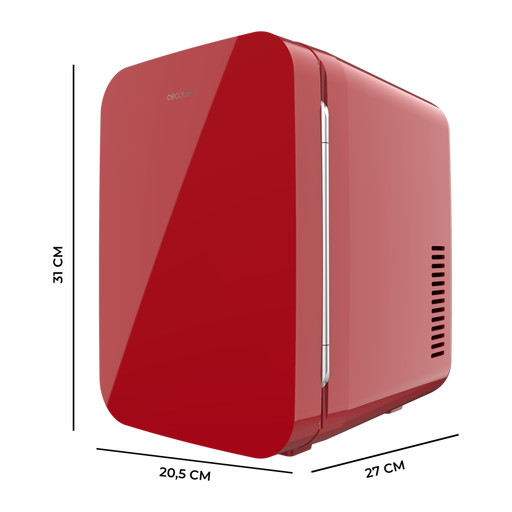
Why this choice suits this profile: Its compact format and 12 V power supply are ideal for everyday journeys, picnics and space-constrained environments, whether in a car or on a desk.
The listing clearly specifies thermoelectric operation and a 6-litre capacity, making it easier to assess its limitations before buying.
Portable design, temperature adjustment, wired power supply and a European Type E/F plug specified in the listing.
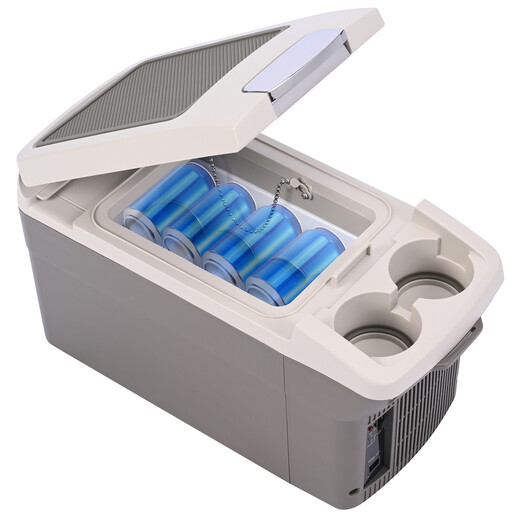
Why this choice suits this profile: Cooling, warming and the carrying strap meet the needs of travellers who regularly transport meals or drinks.
The listing states a cooling temperature of around 4 °C and warming up to 60 °C. Performance nevertheless remains dependent on the ambient temperature.
12 V cable included, stated noise level of approximately 40 dB, cup holders and a seat-belt slot.
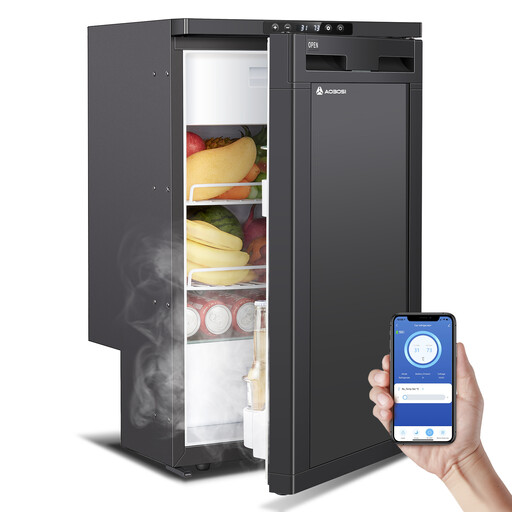
Why this choice suits this profile: Its generous capacity is designed for motorhomes, boats, trucks and trips where several types of food and drinks need to be stored.
The compressor system is fundamentally different from that of a basic thermoelectric cooler. The listing specifies 12/24 V power and a temperature that can reach −20 °C.
83-litre capacity, touchscreen and app control, LED lighting and zone cooling specified by the manufacturer.
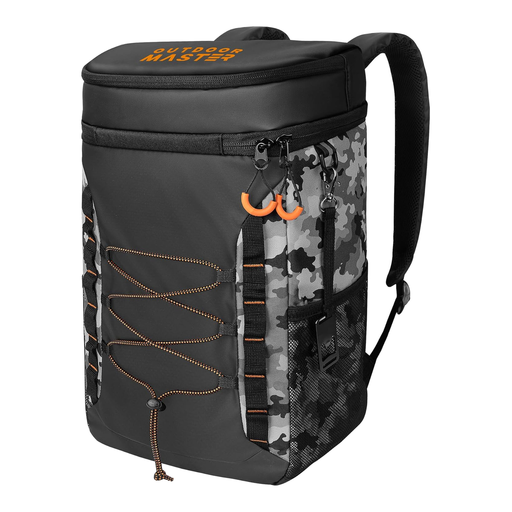
Why this choice suits this profile: For hiking, fishing or a picnic without a power outlet nearby, this insulated cooler backpack is far easier to carry than a rigid model.
It makes no claim of electric cooling. Temperature retention relies on ice and insulation, making it suitable for occasional outdoor use.
Stated 21-litre capacity, waterproof PEVA lining, two compartments and up to 20 hours of insulation with ice, as specified.
We have brought together an updated selection of products that meet these purchasing criteria and the safety requirements applicable in France and the European Union.
Before setting off, pre-chill food and drinks whenever possible. A portable electric car cooler will consume more power if it has to cool very hot products inside a cabin that is already exposed to direct sunlight.
Make sure not to block the ventilation grilles and avoid covering the fan. When the car is parked, monitor the battery to prevent excessive discharge. With a compressor model, check the recommendations regarding tilt during transport and, if necessary, wait before switching it on.
Clean the interior with a damp cloth, dry the seal and inspect the 12 V cable regularly. A pinched cable, damaged plug or unusual smell should prompt you to stop using the appliance and contact the seller.
Yes, provided the socket remains powered and the battery has sufficient charge. However, prolonged use with the engine switched off may prevent the vehicle from restarting. In a motorhome, an auxiliary battery or mains power will generally be more suitable.
Thermoelectric technology is often compact and well suited to short journeys, but its performance varies with the outdoor temperature. A compressor is better suited to extended food storage and larger capacities. The trade-off is that the appliance may be heavier, more expensive and noisier during operation.
The cost depends on the actual power draw, operating time, selected mode and electricity tariff. To estimate it, use the following formula : power in watts × operating time in hours ÷ 1 000 = energy consumption in kWh. When using a battery, also check its capacity in ampere-hours and the voltage supplied.