
Livraison le jour même ou le lendemain

Qualité garantie

Débloquez vos offres de bienvenue: Livraison GRATUITE | Jusqu'à -80 % | 30 jours d'essai gratuits à JoyPlus
Téléchargez l'application
A portable electric air pump can prove incredibly useful for checking tyre pressure before a long journey, dealing with a slow puncture, or setting off on your bike with peace of mind. The trouble is, product listings often mix up maximum pressure, inflation speed and battery life. A device advertised at 150 PSI might turn out to be impractical for a car tyre, while an ultra-compact model could lack the endurance you need.
Before you buy, keep these three common pitfalls in mind:
For a car tyre inflator, the recommended pressure is usually shown on the sticker inside the door frame or in your vehicle’s manual. It’s better to set the pump to this value than to rely on its maximum pressure.
A 150 PSI compressor can suit many uses, but this figure alone won’t help you choose between two products. Also check:
For a car, a model with a larger battery or a 12 V power supply will generally be more suitable than a small electric bike pump, which is designed mainly for top-ups.
A pump with a digital display lets you choose the measurement unit — PSI, BAR or kPa — and monitor the pressure as you inflate. Handy for avoiding guesswork, this feature doesn’t replace a proper connection to the valve or a reasonable degree of confidence in the manufacturer’s stated accuracy.
An inflator with auto shut-off cuts the motor as soon as the selected pressure is reached. This is a real everyday convenience, as it saves you from having to watch the device constantly. It doesn’t replace checking the pressure recommended by your vehicle or equipment manufacturer.
A rechargeable air pump needs to be stored with enough charge to be ready when you need it. Check the charging method, the length of the supplied cable and the stated battery life. For regular use or a family car, a model with a 12 V cable can be a handy backup solution.
Also take a look at the included nozzles. A motorbike inflator or a bike pump may not come with the right nozzle for a ball or a Presta valve. An inflator with an LED light can be useful at night, but this light doesn’t turn the device into road-safety equipment.
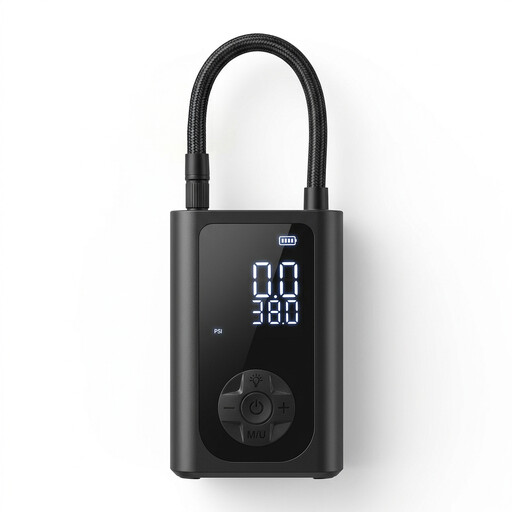
Why this choice suits this profile: Its compact size slips easily into a boot, a bag or a glovebox. It offers five dedicated modes for car, motorbike, bike and balls, plus a custom setting.
The digital display and pre-set pressure shut-off stop you from inflating by guesswork. The stated battery life is 25 minutes.
Stated maximum pressure of 150 PSI, airflow of 26 L/min and LED light with SOS mode.
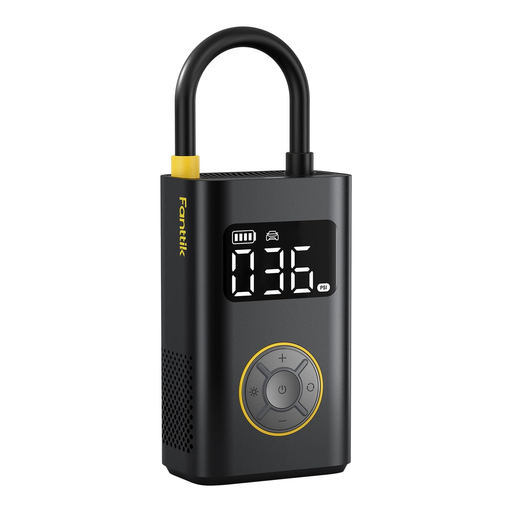
Why this choice suits this profile: This portable air compressor is aimed at drivers who want a well-designed, versatile cordless device that can handle a car, motorbike, bike or balls.
The integrated hose and storage compartment for accessories reduce the risk of losing a nozzle. The screen is said to be readable even in direct sunlight.
Built-in 7.4 V, 2.5 Ah battery, stated maximum pressure of 150 PSI, auto shut-off and up to 23 minutes of use claimed.
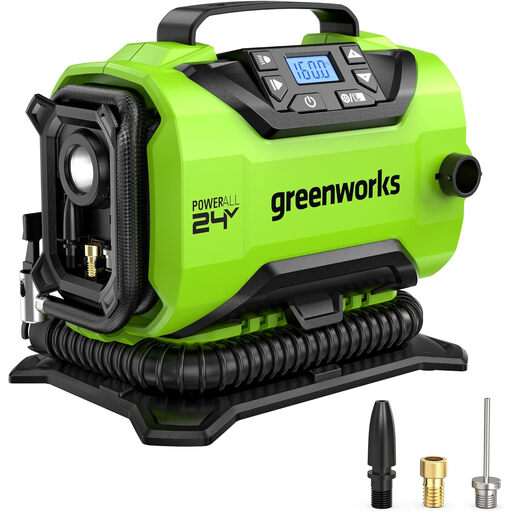
Why this choice suits this profile: Its operation with a Greenworks 24 V battery may appeal to users who already own tools from this range for gardening or DIY.
The dual mode lets you distinguish large items from tyres and also serves for deflation. Please note: the battery and charger are sold separately.
Stated pressure of 11 bar, digital display, auto shut-off, 0.5 m hose and three adapters.
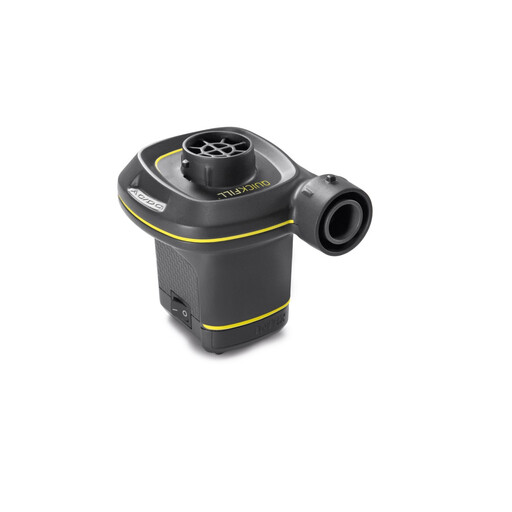
Why this choice suits this profile: Its 12 V and 230 V power options make it easy to use at home, at a campsite or near a car for inflating airbeds and other accessories.
The listing clearly states that this model is not designed for high-pressure tyres or sports equipment. A clearly stated limitation that prevents misuse.
Dual power supply, inflation and deflation functions, multiple nozzles and a compact format for inflatables.
We’ve put together a comprehensive, real-time updated selection of products that meet these strict criteria as well as European safety regulations.
Yes, for topping up or bringing the pressure back to the right level, provided you choose a device with the right pressure, airflow and battery life for your vehicle. For inflating several very flat tyres, a 12 V model or a pump with a high-capacity battery will generally cope better.
It all depends on the tyre’s volume, its starting pressure, the pump’s airflow and the motor temperature. The times stated by manufacturers are only a guide. Follow the recommended breaks in the manual to avoid excessive heat build-up.
Recharging typically uses very little electricity. The main thing to watch is the battery’s lifespan: use the recommended cable, avoid leaving the pump completely discharged for long periods, and store it away from moisture.