
Livraison le jour même ou le lendemain

Qualité garantie

Débloquez vos offres de bienvenue: Livraison GRATUITE | Jusqu'à -80 % | 30 jours d'essai gratuits à JoyPlus
Téléchargez l'application
Whether you want to stop shivering through the night in your camper van, work comfortably in a warm garage, or ensure a cosy truck cabin, the portable diesel heater stands out as a standalone and incredibly effective solution. The problem? The market is flooded with models making tempting promises, which often turn out to be costly disappointments. To avoid falling into this trap and to invest in a reliable and safe unit, it's essential to know how to decode the spec sheets.
As the Head of Product Recommendations at Joybuy, my mission is to help you see things more clearly. Let's analyse the key points to watch out for and the essential criteria for choosing the right equipment.
The appeal of a mobile and budget-friendly heating solution can sometimes make you overlook the essentials. Here are the three most common pitfalls that lead to a bad purchase:
To make an informed choice, focus on objective data. Here are the three technical specifications to examine closely.
The power, expressed in kilowatts (kW), determines the unit's ability to heat a given volume. An 8?kW model will heat a large space faster than a 2?kW model. However, this power comes at a cost: fuel consumption.
A good unit should offer an adjustable operating range. For example, a consumption rate varying from 0.11 to 0.45 L/h for an 8?kW model is an excellent indicator of versatility. This means it can run at full power for a rapid heat-up, then switch to an economy mode to maintain warmth overnight, thus conserving your fuel and battery.
The type of power supply will depend on where you use it.
The most versatile models offer dual compatibility (AC/DC), allowing you to use the same diesel air heater in your vehicle and at home. On the control side, prioritise units with an LCD screen, a remote control, and ideally, a Bluetooth app. These features allow for precise temperature adjustment and remote programming.
A diesel parking heater must be equipped with several safety features:
Ensure the unit is designed for a safe installation, where the combustion air and exhaust gases are completely separate from the warm air blown into the interior.
Every user has specific needs. Here are our recommended options, each tailored for a specific use case.
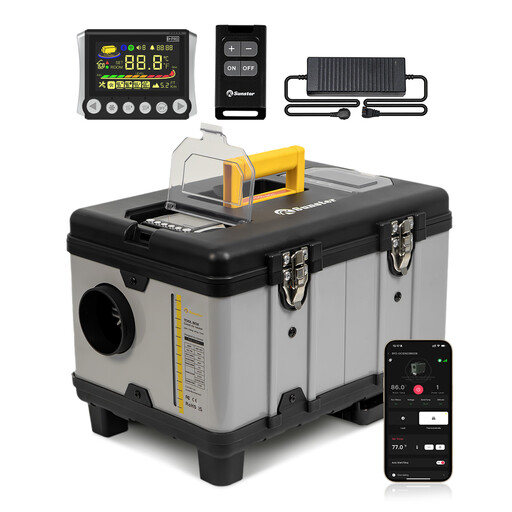
Why it's a good fit: Its all-in-one design and dual power supply (12V/230V) make it perfect for heating a camper van, a garage, or even a large tent. It's self-contained, mobile, and ready to use out of the box.
It clearly displays its consumption (0.11 - 0.45 L/h) and power output, and offers precise control via LCD, remote, and Bluetooth. This helps it avoid the trap of units with overly basic controls.
Dual AC/DC power for maximum versatility; Portable "toolbox" design with a built-in 6L tank.
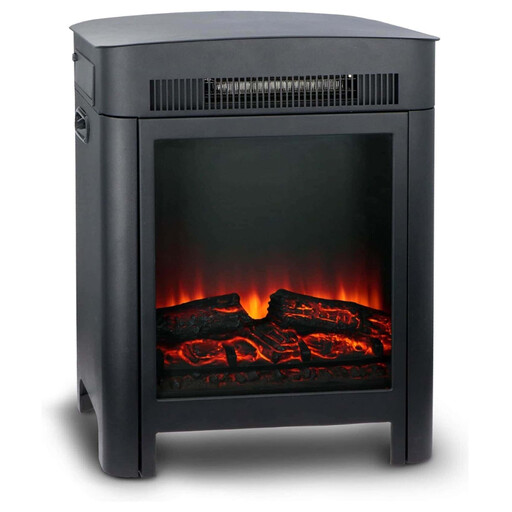
Why it's a good fit: Ideal for an office or living room, it provides supplemental heat without the hassles of fuel (storage, smell, etc.), with the added bonus of a relaxing flame effect for a cosy atmosphere.
As an electric solution, it bypasses the pitfalls associated with fuel. It's a simple alternative for those for whom off-grid autonomy is not a requirement.
Ultra-simple to use (just plug it in); LED flame effect for a warm ambience.
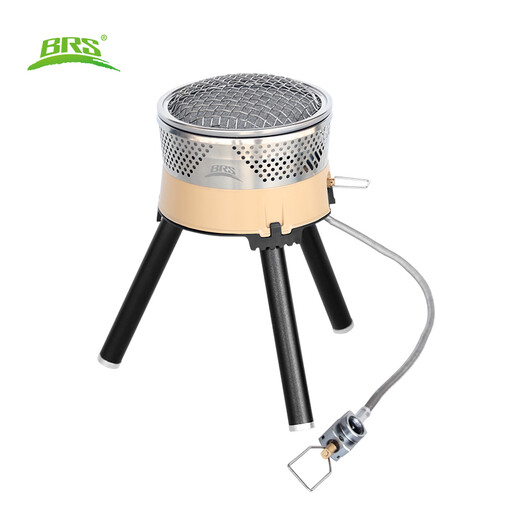
Why it's a good fit: Note, this is not a space heater, but an ultra-lightweight cooking solution. It's perfect for the hiker who prioritises weight and only needs to boil water or cook a quick meal.
It avoids the trap of buying a heavy space heater when all you need is a heat source for cooking at the campsite. It meets a specific need with targeted efficiency.
Feather-light (425 g) and extremely compact; Dual fuel compatibility (butane/propane).
We have curated a complete list of products that meet our demanding criteria for performance and safety.
Consumption depends directly on the power level you're using. For an 8?kW model like the TB10, it ranges from 0.11 L/h on low power to 0.45 L/h at full power. In practice, with a 6-litre tank, you can expect a runtime of 12 to 50 hours, which means one to several nights of heating without refuelling.
Yes, provided the installation is done correctly. It is imperative that the exhaust pipe is properly connected and routed to the outside of the vehicle, far from any openings. Likewise, the air intake for combustion must draw from the outside. Quality models include sensors and automatic shutdown systems that cut power in case of overheating, for complete peace of mind.
For a standard-sized van or a well-insulated single-car garage, a power output of 2 to 5?kW is generally sufficient. For larger spaces (large RV, workshop, double garage) or in very cold conditions, an 8?kW model offers faster heat-up times and more headroom. Never forget the insulation of your space: it's the key to efficient heating.