Joybuy Insights

Portable Cooler Buying Guide: How to Choose the Right One

Whether for a long car ride, a camping weekend, or just a lunch break at the office, the portable cooler has become an essential summer accessory. The problem is, the market is flooded with models whose marketing promises rarely hold up, and picking the right one can quickly become a headache. As the Head of the Equipment section, my mission is to demystify this market for you and guide you toward a choice that truly fits your needs.

Before you pull out your credit card, here are the 3 common pitfalls to avoid disappointment:

  1. The Capacity Illusion: A volume in litres doesn't tell the whole story. A 10-litre cooler might seem large on paper, but its internal layout could prevent you from storing a simple 1.5-litre bottle upright. The usable capacity is often much lower than the advertised gross volume.
  2. The Phantom Insulation Promise: Be wary of passive coolers that promise "48 hours of cold or more." This performance is often measured under unrealistic lab conditions, with the cooler filled to the brim with ice packs... leaving almost no room for your actual picnic.
  3. The Noise and Power Drain of Electric Models: An electric car cooler is a great convenience, but entry-level models are often noisy and power-hungry, risking a dead car battery if left running while parked.

Key Criteria for Making the Right Choice

To make the right choice, forget the marketing jargon. Focus on these three essential points.

1. Technology: Passive, Thermoelectric, or Compressor?

The type of cooling technology determines how you'll use it.

  • Passive (or insulated) Cooler: This is the traditional insulated box. It doesn't generate cold; it simply retains it using its insulation and ice packs. It's perfect for a picnic, a day at the beach, or as a secondary camping cooler. Its effectiveness depends entirely on the quality of its insulation and the amount of ice you put inside.
  • Thermoelectric Cooler: This is the most common type of portable mini-fridge. Plugged into a car's cigarette lighter (12V) and sometimes a mains socket (220V), it doesn't cool like a kitchen fridge but instead lowers the internal temperature by 15 to 20°C relative to the ambient air. Most models are reversible and can also keep food warm. It's the ultimate versatile solution for car travel.
  • Compressor Cooler: Now we're in the big leagues. This is a true portable refrigerator or freezer. More expensive and heavier, this technology delivers powerful, consistent cooling regardless of the outside temperature, and can even freeze its contents. It's indispensable for long trips in a van or boat, or for professional use.

2. Insulation and Materials: The Secret to a Stable Temperature

A cooler's ability to retain cold is directly linked to its materials.

  • For hard-sided coolers, the gold standard for insulation is polyurethane (PU) foam injected between the walls. The thicker and denser this layer, the longer the cold will be retained.
  • For individual containers like an insulated bottle or a food jar, nothing beats double-wall vacuum insulation made of stainless steel. It's the most effective technology available.
  • For an insulated lunch bag or an insulated lunch box, inspect the lining (ideally PEVA or aluminium, which are easy to clean) and the thickness of the insulating foam.

3. Capacity and Ergonomics: Beyond the Advertised Litres

Everyday ergonomics are just as crucial as raw performance. Think about your real-world use:
  • Internal Dimensions: Does the internal height allow you to store your favourite bottles upright?
  • Portability: The empty weight, sturdy handles, or a shoulder strap are details that make all the difference when it's time to carry it.
  • Additional Features: Cup holders, dividers, or a seatbelt pass-through can dramatically improve the in-car experience.

Our Portable Cooler Recommendations

IDEAL FOR: THE ROAD TRIPPER
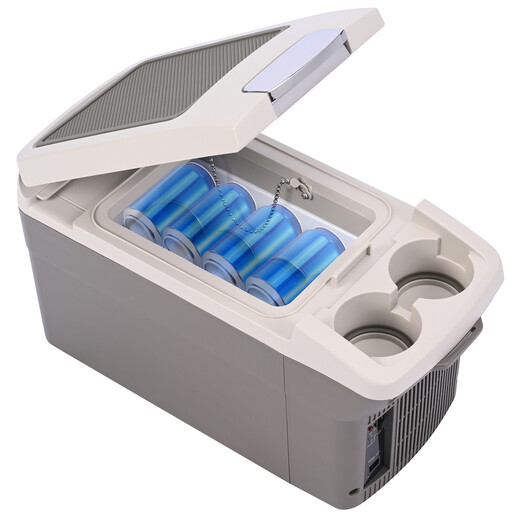
ICEROVER PN-06 6L Portable Car Fridge, Cooler & Warmer

ICEROVER PN-06 6L Portable Car Fridge, Cooler & Warmer

Why it's a great choice: Built for long journeys, this thermoelectric model plugs directly into a car's cigarette lighter (12V). Its compact size allows it to fit on a seat or between passengers, and its reversible hot/cold function makes it as useful for drinks in the summer as it is for keeping a meal warm in the winter.

How This Model Avoids the Pitfalls

This model avoids the power-drain pitfall with an optimised and quiet thermoelectric module (around 40 dB). Its 6L capacity is clearly designed for solo or duo use, preventing any unpleasant surprises about its actual volume.

The Pros

Dual hot/cold function, direct 12V power, carrying strap, and a seatbelt pass-through for perfect stability in the car.
IDEAL FOR: THE WEEKEND ADVENTURER
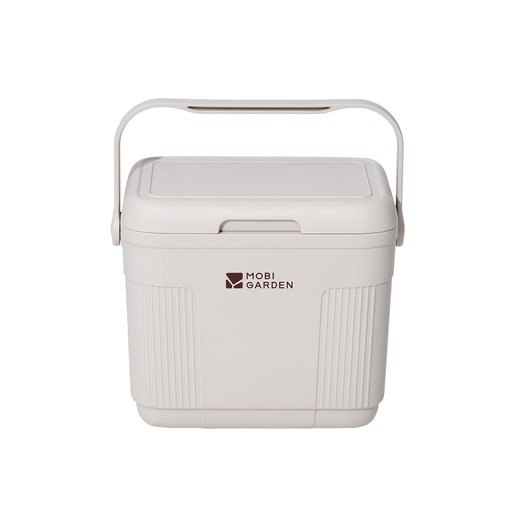
Mobi Garden, Portable Insulated Cooler, 22L

Mobi Garden, Portable Insulated Cooler, 22L

Why it's a great choice: Designed for camping and group outings, this 22L passive cooler offers a comfortable volume for supplies for 4 to 6 people. Its rugged construction and reinforced corners are built to withstand the rigours of the outdoors.

How This Model Avoids the Pitfalls

It avoids the "phantom insulation promise" pitfall thanks to a thick layer of high-density PU foam insulation and a silicone gasket that ensures a perfectly airtight seal. The manufacturer provides clear tips for optimising cold retention, a welcome sign of transparency.

The Pros

Generous 22L capacity, high-performance insulation, food-grade plastic (PP) construction for direct contact with food. Comes with two ice packs.
IDEAL FOR: LUNCH AT THE OFFICE
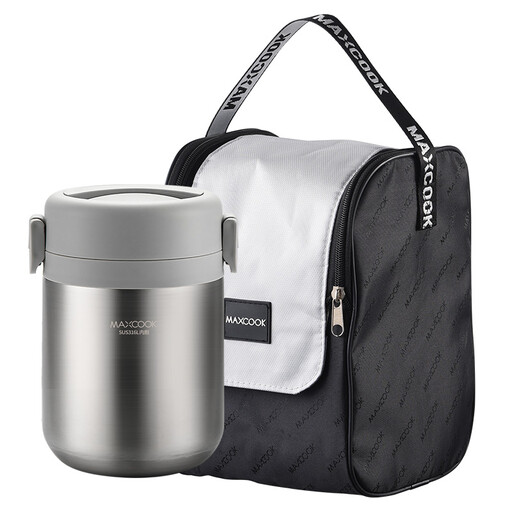
Maxcook 316 Stainless steel Insulated Food Jar with Lunch bag

Maxcook 316 Stainless steel Insulated Food Jar with Lunch bag

Why it's a great choice: Perfect for bringing soup or a hot meal to the office. This food jar is the ultimate individual solution. With a compact design, a wide mouth for eating directly from it, and a dedicated carrying bag, it's the ideal kit for your lunch break.

How This Model Avoids the Pitfalls

This ultra-specialised product avoids the pitfall of buying an oversized cooler for a single meal. The choice of 316 stainless steel (surgical grade) and vacuum insulation are quality markers that justify its excellent thermal performance.

The Pros

Highly effective thermal retention (hot or cold), 100% leak-proof design, practical wide opening, and an included insulated carrying bag.

Need More Options?

Explore our full selection of products that meet our rigorous selection criteria and European safety standards.

Frequently Asked Questions (FAQ)

Can an electric cooler drain my car battery?

Absolutely, if you leave it plugged in for several hours with the engine off. A thermoelectric model constantly draws power. The golden rule to avoid a dead battery is to only use it when the engine is running. Fortunately, some more sophisticated models include a protection feature that cuts off power before the battery voltage becomes critical.

How can I maximise how long a passive cooler stays cold?

A few simple steps can significantly improve its performance:

  • Pre-cool your cooler: Place ice packs inside for several hours before filling it with your food.
  • Freeze what you can: Water bottles, meals... They will act as additional cold packs.
  • Eliminate air: Air is the enemy of cold. Fill every empty space with ice packs, frozen bottles, or even newspaper.
  • Open it as little as possible: Every time you open it, warm air gets in. Organise your contents so you can find what you're looking for in a flash.
  • Keep it in the shade: Never leave it in direct sunlight, whether at the beach or in the car.

What's the difference between a thermoelectric and a compressor cooler?

The difference is significant. A thermoelectric model lowers the internal temperature by about 15 to 20°C relative to the ambient temperature. If it's 30°C outside, it will keep your food around 10-15°C. In contrast, a compressor cooler works like a real fridge: you set a target temperature (e.g., 4°C), and it will maintain it whether it's 20°C or 40°C outside. It can even go below zero to freeze. The choice, therefore, depends on your performance requirements and, of course, your budget.