
Livraison le jour même ou le lendemain

Qualité garantie

Débloquez vos offres de bienvenue: Livraison GRATUITE | Jusqu'à -80 % | 30 jours d'essai gratuits à JoyPlus
Téléchargez l'application
A sunny day, a family picnic, a fishing trip with friends... Precious moments that can be quickly ruined by lukewarm drinks and spoiled potato salad. Choosing the right portable cooler seems simple, but the market is a minefield, saturated with marketing promises that melt faster than ice in the sun.
Our mission? To help you cut through the noise. Let's forget the technical jargon and advertising claims and focus on what really matters. Here are the pitfalls to avoid and the foolproof criteria for making the right choice.
On paper, all coolers look appealing. In practice, it's a different story. Here are the points to check to avoid buyer's remorse.
To sidestep these pitfalls, focus on three technical points that make all the difference.
The core of an insulated cooler is its insulation. Truly high-performance models use high-density injected polyurethane (PU) foam. Forget the simple polystyrene (EPS) found in low-end coolers: PU foam fills every gap between the walls, eliminating thermal bridges. The result is incomparably more effective and long-lasting cold (or heat) retention.
A quality food-grade insulated box must use safe and sturdy plastics. Insist on an inner liner made of food-grade polypropylene (PP). This guarantees risk-free contact with your food, easy cleaning, and a cooler that won't retain the smell of last summer's melon. On the outside, a thick shell and reinforced corners are the hallmark of a camping cooler that's ready for adventure.
The main enemy of cold is air. An effective lid must therefore have a silicone gasket seal that fits perfectly against the cooler's body. Paired with robust latches, this power duo prevents warm air from getting in and cold air from getting out. It's the key to maximising ice retention.
No random laundry list here. We've selected models that meet specific needs, strictly applying the performance and durability criteria we've just covered.
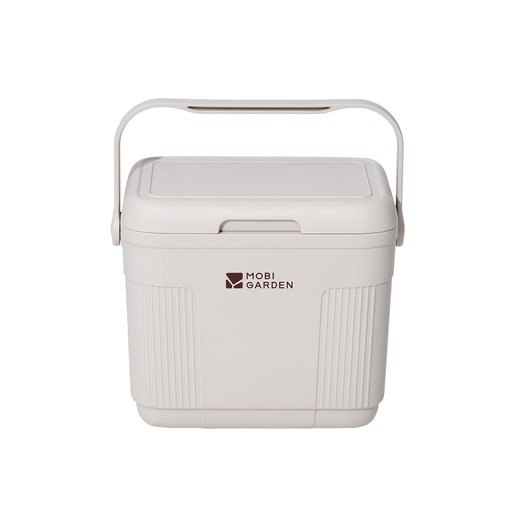
Why it's a match: With its 22-litre capacity, it offers generous space for drinks and a meal for a family of 4 to 6, making it ideal for a picnic or a day at the beach. Its cubic shape optimises packing.
Its full high-density PU foam insulation and thick silicone gasket ensure realistic and reliable cold retention, far surpassing basic polystyrene models.
Food-grade PP shell for direct, safe contact with food. Sturdy rotating handle and dedicated slots for ice packs.
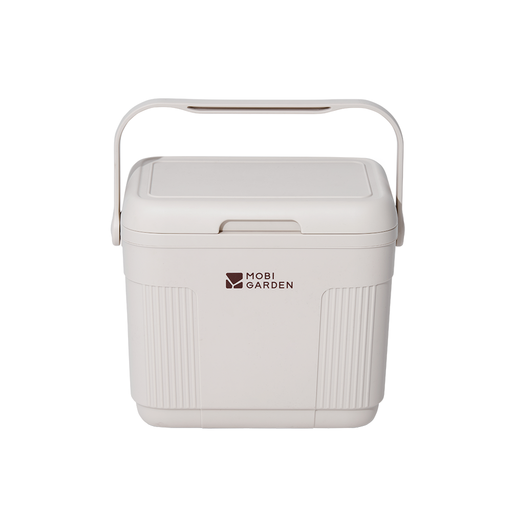
Why it's a match: Compact and lightweight (around 1.35 kg), it's effortless to carry, whether you're alone or with a partner. Perfect for a day of fishing, a short hike, or keeping your lunch cool on a job site.
Despite its small size, it makes no compromises on quality. It features the same construction (PU insulation, silicone gasket) as larger models, avoiding the trap of underperforming small coolers.
Excellent portability thanks to its single-piece moulded handle. The lid includes a slot for an ice pack, optimising interior space.
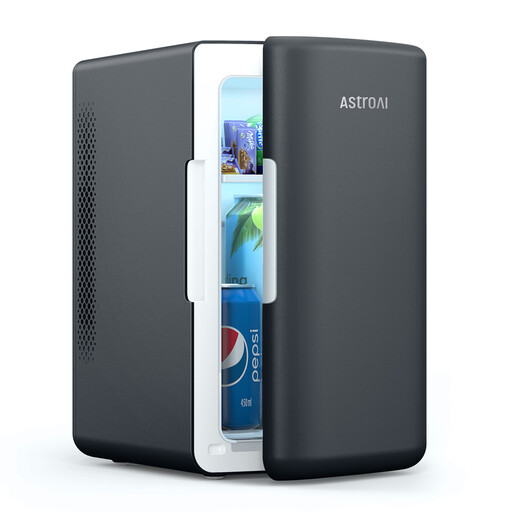
Why it's a match: This is a thermoelectric cooler that plugs into your vehicle's 12V cigarette lighter socket. It's perfect for long journeys, road trips, or keeping drinks cool at the office without relying on ice packs.
As an active cooler, it bypasses the problem of melting ice. It maintains a constant temperature (up to 18-22°C below ambient temperature) as long as it's powered.
Ultimate versatility: it has both a cool and a warm mode. It comes with both adapters: a mains plug (AC 220-240V) and a cigarette lighter plug (DC 12V).
Explore our full selection of coolers, all of which meet our standards for quality and safety.
A few common-sense tips can make all the difference:
Absolutely not! It's extremely dangerous. As dry ice turns into gas (sublimation), it generates enormous pressure that can cause an airtight cooler to explode. Unless explicitly stated otherwise by the manufacturer, don't even think about it.
A passive cooler (or insulated cooler) is self-sufficient. It retains cold using its insulation and ice packs. It's perfect for day trips or a weekend away. An electric cooler (thermoelectric) plugs into a power source (car, mains) to actively generate cold. It's ideal for long car journeys but depends on a power source.