People who prepare their own portion
You compare the quantities available and can fill a small container before you leave, rather than taking a large jar with you.


For lunch on the go, first decide whether to prepare a portion before you leave or choose an individual format that suits what you’ll have with you. A large jar can work if you can portion it out; a small pack doesn’t necessarily mean you can eat it without bread or a utensil. Then compare the price per kilo when you shop, along with the sugars, ingredients and allergens in your chosen product.
You compare the quantities available and can fill a small container before you leave, rather than taking a large jar with you.
You’re looking for a product you can enjoy there and then without a knife. Check whether the pack includes something to eat the spread with or to scoop it out: a small portion on its own may not be enough.
You compare sugars and ingredients, or need to check allergens and recipe-specific warnings. If displayed, the Nutri-Score doesn’t replace this information.
For lunch away from home, first think about how you’ll eat the spread, then check that the pack suits your budget and the product label meets your needs.
| Criteria | What to check | Who it matters to |
|---|---|---|
| Quantity and budget | Compare the price per kilo when you shop and choose a quantity that suits how much you use. | I can prepare my portion at home and don’t want to choose a large jar just because of its size. Around 36% of consumers would put quantity and budget first. |
| Eating away from home | Check whether you can eat the product with what you’ll have with you: something to eat it with, a spoon or a knife. | At lunchtime, I won’t have anything to spread it with and want to keep preparation to a minimum. Convenience would be the top priority for around 29% of consumers. |
| Sugars and nutrition | Compare the sugars per 100 g across recipes, then check how much is in the portion you’ll eat. | I want to know what’s in my portion rather than judging by the jar alone. Around 21% of consumers would make nutritional information their main consideration. |
| Allergens and recipe | Read the ingredients list, highlighted allergens and any warnings about possible traces. | Before choosing a plant-based recipe or a format with sticks, I need to check it’s suitable for my dietary requirements. This would be the main concern for around 14% of consumers. |
This claim alone doesn’t tell you how much sugar or fat the product contains. For example, Carrefour’s product page for Poulain chocolate spread with no palm oil lists 524 kcal and 29 g of fat per 100 g.
Compare the nutritional information of products in the same category, and consider the portion you plan to eat too.
A jar may be easy to store at home, but not convenient for a break if you don’t have bread, cutlery or a container with you.
Prepare a portion before you leave, or check exactly what’s included in an individual format.
According to Santé publique France, displaying the Nutri-Score is voluntary. It doesn’t replace the ingredients list, allergen information or nutritional values.
Check the label on the exact product you choose, especially if its ingredients affect your decision to buy it.
Nutella France states that Nutella Plant-Based may contain milk and isn’t suitable for people with a milk protein allergy.
If this allergen is a concern for you, check the warning on the exact pack you’re buying.
The range includes a classic jar, Nutella & GO! and Nutella Plant-Based. Each format and recipe suits a different need.
SIMPL and Carrefour Classic’ chocolate spreads are two jar options you can compare by size.
This E.Leclerc range includes jars in several sizes, making it easier to choose an amount that suits how you’ll use it.
Auchan offers Pouce cocoa and hazelnut spread in a 750 g jar.
Tartichoc features in Aldi’s range of hazelnut spreads, including a 750 g jar.
These products include a large jar to portion out before you leave, a small portion to take with you and a plant-based recipe in a jar. If you want a lunch you can enjoy without any preparation, check separately what comes with the spread.
 Image unavailable
This large jar is a good choice if you can prepare a portion before you leave.
Compare the price per kilo when you shop, and check the ingredients and allergens on the jar you choose.
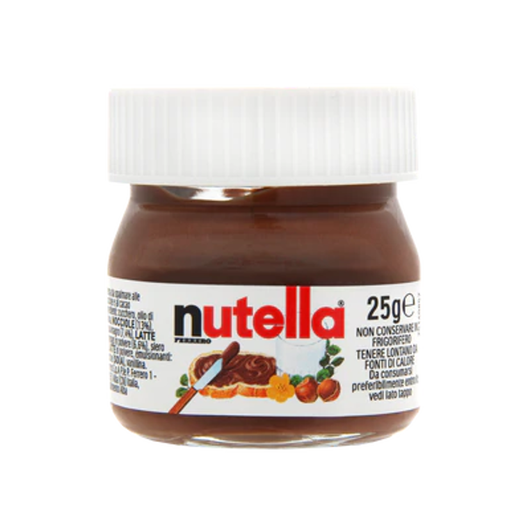 Image unavailable
This 25 g portion is easier to carry than a large jar, as long as you have something to eat it with.
Check whether a utensil or something to eat it with is included, then read the ingredients, allergens and nutritional information for the pack you choose. Don’t confuse it with Nutella & GO!, which pairs spread with breadsticks.
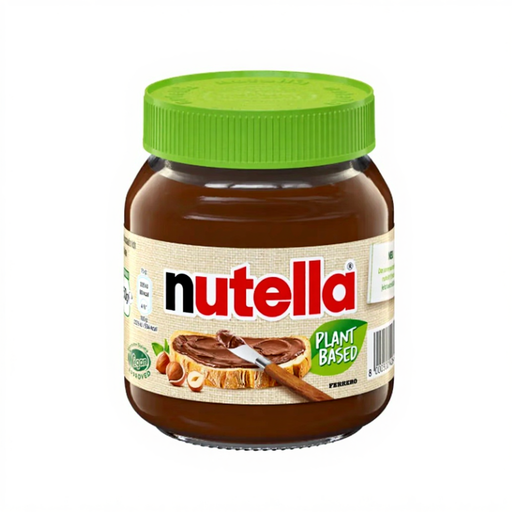 Image unavailable
This 350 g jar of plant-based spread means you’ll need to prepare a portion to enjoy it away from home.
Nutella France warns that Plant-Based may contain milk and isn’t suitable for people with a milk protein allergy. Check the ingredients, warnings and nutritional information on the jar you choose.
No. According to Santé publique France, displaying it is voluntary in France. Whether or not it appears on the pack, check the ingredients list and nutritional values to compare products.
Read the allergens highlighted on the label of the exact product, including those in anything it comes with. Nutella France lists hazelnut- and milk-based ingredients in the products featured here; a format with sticks may also contain cereal ingredients. Check for warnings about possible traces too.
Follow the instructions on the jar you buy, as they can vary depending on the recipe. Auchan’s product page for Pouce spread says to keep it away from heat and moisture and not to refrigerate it.