
Livraison le jour même ou le lendemain

Qualité garantie

Débloquez vos offres de bienvenue: Livraison GRATUITE | Jusqu'à -80 % | 30 jours d'essai gratuits à JoyPlus
Téléchargez l'application
A portable charger – also called a power bank, battery pack or travel charger – can save you from running out of battery on the train, at uni or during a business trip. But a flashy spec sheet doesn’t always guarantee a pleasant everyday experience. Advertised capacity, the power you can actually use, and cable compatibility are three factors that can turn a great deal into an accessory that just doesn’t suit your needs.
Here are the criteria to consider before choosing a portable charger for your smartphone, tablet, wireless earphones or laptop.
A 10,000 mAh or 20,000 mAh portable charger won’t deliver all of that capacity directly to your devices. Some energy is lost during voltage conversion and recharging. The actual battery life you get also depends on your phone’s battery capacity, the cable you use, the temperature and the charge level.
A 10,000 mAh capacity is usually enough to get you through a day with a smartphone, while still being relatively easy to carry. A 20,000 mAh model gives you a more comfortable reserve for multiple devices, but it’s also heavier and bulkier.
The words “fast charging” or “45 W” refer to the maximum power achieved under certain conditions. They don’t mean all your devices will charge at that speed. Your phone or laptop needs to support the right protocols, such as USB Power Delivery, and the cable must also be able to handle the stated power.
When the power bank is charging several devices at once, the available power may be shared between the different ports. So check the total power as well as the power of each output, rather than just relying on the highest figure.
A high-capacity portable charger can quickly become awkward to carry in a small bag. On the other hand, a compact model with a built-in cable is often more practical for daily use – as long as its connector is compatible with your devices.
For regular use, check that it has protection against overcharging, overheating and short circuits. If a battery swells, gives off an unusual smell or becomes abnormally hot, unplug it and take it out of service immediately. Lithium-ion batteries must then be disposed of at a suitable collection point, never in household waste.
Capacity alone, however, doesn’t determine what the power bank is best suited for. For a laptop, look for a laptop power bank that’s compatible with your machine’s power requirements and charging profile. A 20,000 mAh power bank limited to 15 W may be fine for a phone, but not necessarily for a USB-C laptop.
A USB-C power bank with Power Delivery support can fast-charge many compatible smartphones, tablets and accessories. A power output between 15 and 20 W already covers most mobile uses. For some Samsung devices or certain tablets, a higher power output can reduce charging time – provided the device is compatible.
A 45 W power bank can also power some compact laptops. However, you need to check the minimum power required by the manufacturer. The Samsung Power Bank P4520, for example, offers up to 45 W via USB-C and includes a 5 A USB-C to USB-C cable designed for that power level. This figure applies to compatible devices and can’t be assumed for all smartphones.
Three ports can be very handy for charging a phone, earphones and a tablet at the same time. But you also need to look at the type: USB-C, USB-A or a built-in cable. Older accessories still often use USB-A, while newer devices are increasingly adopting USB-C.
A Qi2 power bank or MagSafe power bank can be a good fit for iPhone users who support magnetic alignment. Wireless charging is convenient, but it’s less useful when you need a fast wired charge. Also check the wireless charging power, whether a stand is included, and whether you can charge a second device at the same time.
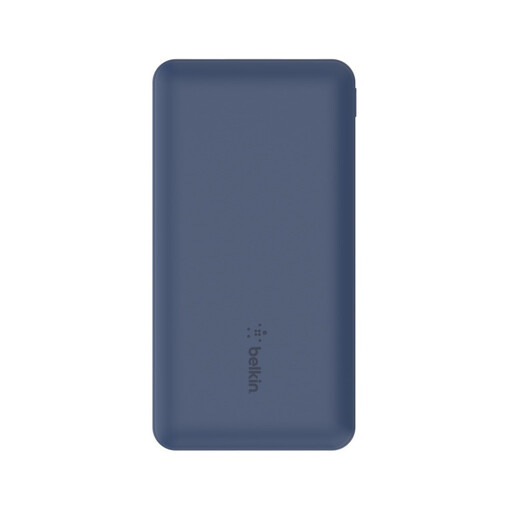
Why this choice suits this profile: At 215 g and with a built-in USB-C cable, it saves you from carrying extra accessories on your daily commute.
The 10,000 mAh capacity is clearly stated, as is the maximum power of 20 W. When using two ports, the total power drops to 15 W.
A built-in USB-C port, a second USB-C port, a four-level indicator and the ability to charge the power bank and a device at the same time.
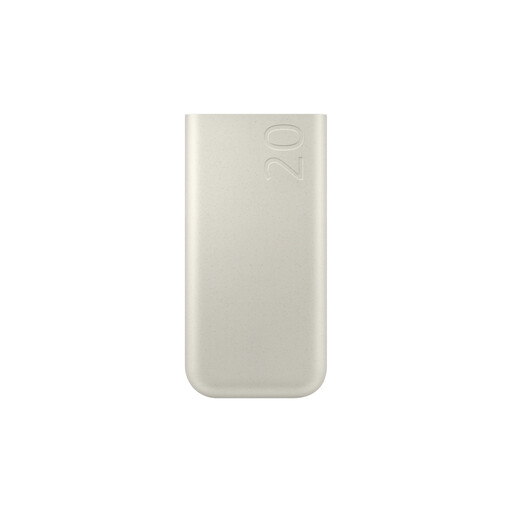
Why this choice suits this profile: Its 20,000 mAh capacity and three USB-C ports make it ideal for travelling with several compatible devices.
The spec sheet clearly distinguishes the 20,000 mAh capacity from the maximum 45 W power and states that this speed depends on compatible devices.
Three USB-C outputs, simultaneous charging of three devices and a 5 A USB-C to USB-C cable included.
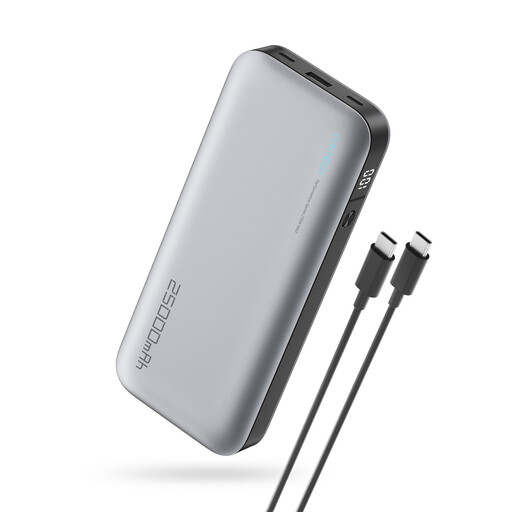
Why this choice suits this profile: With its 25,000 mAh and stated 120 W power, it’s aimed at users who carry a laptop and several devices.
Its two USB-C ports and one USB-A port make it easy to connect a variety of devices. It’s still essential to check the power each one accepts.
A 25,000 mAh capacity, a stated 120 W power and a 2C1A configuration compatible with different cables.
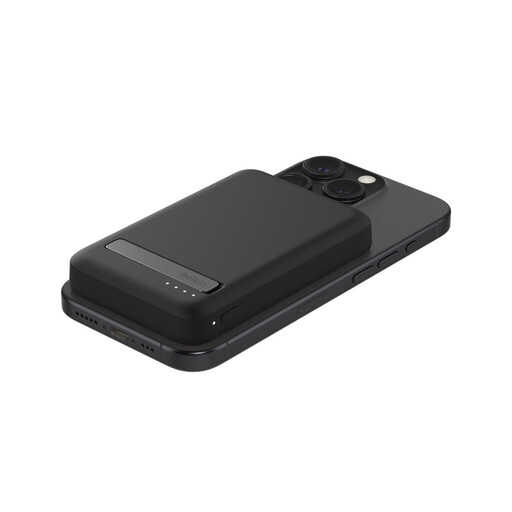
Why this choice suits this profile: Its Qi2 magnetic alignment is ideal for compatible iPhone users who want to go cable-free for a quick top-up.
The spec sheet clearly distinguishes the 15 W Qi2 charging from the 20 W USB-C output. Wireless charging requires a Qi2 or MagSafe compatible device.
An 8,000 mAh capacity, 15 W Qi2 charging, 20 W USB-C Power Delivery and simultaneous wired and wireless charging.
We’ve put together a comprehensive, real-time updated list of products that meet these demanding criteria as well as European safety standards.
A 10,000 mAh portable charger is fine for daily commutes and helps keep the weight down in your bag. If you need several full charges or want to power a tablet and multiple devices, a 20,000 mAh model gives you a more comfortable reserve. Always compare the capacity, weight and output power.
Lithium batteries are generally allowed in hand luggage, but rules can vary depending on the airline and the battery’s energy capacity. Check your carrier’s conditions before you travel, protect the ports against short circuits, and don’t put the battery in checked baggage without prior confirmation.
Its lifespan depends on the number of charge cycles, heat, storage conditions and the quality of the chargers you use. Avoid extreme temperatures, knocks and moisture. If the casing swells, gets unusually hot or shows signs of damage, stop using it and take it to a suitable collection point.