
Livraison le jour même ou le lendemain

Qualité garantie

Débloquez vos offres de bienvenue: Livraison GRATUITE | Jusqu'à -80 % | 30 jours d'essai gratuits à JoyPlus
Téléchargez l'application
A coffee stain on the carpet, marks left by a pet, or a soiled car seat can quickly become difficult to remove. A portable carpet cleaner lets you tackle the affected areas directly, without having to drag out or move a bulky machine. The problem is that product listings often mix up electrical power, suction pressure and promises of versatility.
Before you head to the checkout, it’s worth separating the genuinely useful features from the marketing hype.
A 600 W cleaning machine uses more power than a less powerful model, but this figure alone isn’t enough to judge extraction quality. The design of the nozzle, water flow rate, suction capacity and filtration all matter just as much.
A figure like 15 kPa refers to the stated vacuum pressure. On its own, it doesn’t guarantee that every stain will disappear on the first pass. What you really need to check is whether the machine sprays the solution, sucks up dirty water, and is genuinely suitable for cleaning fabrics.
A steam cleaner can loosen certain dirt on compatible surfaces, but it doesn’t necessarily replace a portable extractor vacuum. Steam dampens and loosens residue; injection-extraction adds a proper suction phase to remove water and dirt.
For a carpet, sofa or car seat, check the cleaning method used. A listing that only mentions steam doesn’t mean the machine recovers moisture from the fabric.
A poorly rinsed tank, a still-damp hose or a clogged filter can quickly cause odours and reduce performance. A good spot cleaner should be easy to empty and rinse.
Cable length, access to the tanks and storage of accessories also matter, especially in a flat, a home with pets or a garage.
For targeted stains, choose a machine that combines:
A model advertised at 600 W and 15 kPa can be suitable for occasional use on a carpet, sofa or car seats. It’s still essential to follow the instructions in the manual and to check that the cleaning product is compatible with the fabric.
A corded portable cleaner avoids the hassle of recharging a battery, but you need a nearby socket. At home, measure the distance between the socket and the surfaces you want to treat. In a car, you may need an extension lead if the machine runs on mains power.
A compact format is easy to store, but small tanks may mean several refills during a larger cleaning job. For tackling a few targeted stains, their capacity is usually sufficient.
Before first use, check the label on your carpet, sofa or seat. Some delicate fabrics don’t cope well with moisture, heat or repeated rubbing.
Always test on an inconspicuous area. Use a reasonable amount of liquid, then let the surface dry completely. If there’s pet hair, a quick pass with a brush or a dry vacuum beforehand reduces the risk of clogging.

Why this choice suits this profile: its corded handheld format is ideal for small jobs on carpets, sofas, fabrics and car interiors, without needing to buy a bulky machine.
The listing clearly states a power of 600 W and a stated suction of 15 kPa, rather than relying on a vague promise of versatility.
Handheld format, corded power supply and stated uses on damp fabrics, sofas, pet hair and car interiors.
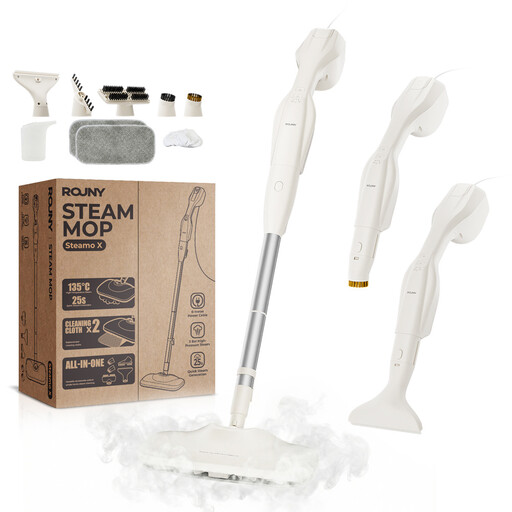
Why this choice suits this profile: this model is aimed at households that want to tackle multiple surfaces with a single device, from floors to windows, including walls, the kitchen and nooks and crannies.
Its primary function is steam. So don’t buy it thinking you’re getting an extractor capable of treating very damp carpets.
Stated power of 1,050 to 1,250 W, heats up in around 25 seconds, 6 m cable and five accessories.

Why this choice suits this profile: motorists who regularly remove dust, sand and pet hair from seats or nooks in their vehicle can use it as a compact dry vacuum, alongside a spot cleaner.
The listing specifies that it’s a compact device intended for small tasks. So it doesn’t claim to replace an injection-extraction machine for liquids.
Stated suction up to 19 kPa, two modes, dedicated pet hair accessories and USB-C charging.
To avoid water marks and make your machine last:
Also check for the CE marking, the contact details of the responsible party established in the European Union, the presence of a manual in English and the warranty conditions. These checks don’t replace reading the specific instructions for your model carefully.
We’ve put together a comprehensive, real-time updated selection of products that meet these demanding selection criteria and European safety regulations.
Yes, provided the manual states it’s suitable for use on fabrics, seats or upholstered surfaces. Check the cable length, nozzle size and water recovery system. In a car, work in small areas and ventilate the cabin well after cleaning.
It all depends on how often you use it, how well you maintain it and whether you follow the instructions. Rinsing the hoses, drying the accessories and replacing filters when recommended will help preserve performance. Before buying, also check the warranty conditions and the availability of spare parts.
For a corded model, the electricity consumption depends on its power and how long you use it. A 600 W machine theoretically uses 0.6 kWh per hour of operation. The total cost also includes water, cleaning solution and any filters. For a few stains a week, the bill is usually modest. However, avoid running the machine unnecessarily or without water if the manual says not to.