
Livraison le jour même ou le lendemain

Qualité garantie

Débloquez vos offres de bienvenue: Livraison GRATUITE | Jusqu'à -80 % | 30 jours d'essai gratuits à JoyPlus
Téléchargez l'application
A coffee stain on the carpet, a mark left by a pet or a sofa in need of an occasional refresh does not necessarily mean hiring a bulky machine. A portable carpet cleaner can quickly tackle small areas, provided you choose a model suited to your fabrics and how often you plan to use it.
Not all appliances are created equal. Some focus on high power but have to make do with small tanks. Others include a steam function that is not suitable for every fabric. Here are the key factors to consider before buying, along with a selection of models suited to different uses in France.
Power, expressed in watts, indicates how much energy the motor uses, but it is not enough to assess an appliance’s effectiveness. Suction pressure, generally expressed in kPa, provides a more useful indication of its ability to extract dirty water from fibres.
A very powerful spray-extraction upholstery cleaner can therefore prove impractical if its suction is limited or its nozzle leaves too much moisture behind. For thick carpets, rugs and car seats, compare the stated suction pressure, nozzle shape and extraction system.
A clean-water tank that is too small means repeated refills. Conversely, a dirty-water tank that is difficult to remove can quickly make you reluctant to clean the appliance after every use. Separate tanks are generally more practical: they prevent clean water and extracted water from mixing.
After every session, empty and rinse the tanks, hose and nozzle, then leave them to dry. A hose-rinsing or self-cleaning function can help limit deposits, but it does not replace regular manual maintenance.
Steam, hot water and stain-removing products are not compatible with every material. Before cleaning a sofa, mattress or armchair, check its care label and test the product on an inconspicuous area. Avoid using water on fabrics that cannot withstand moisture, leather, silk and surfaces for which the manufacturer advises against wet cleaning.
For domestic use, pay particular attention to the following:
Effective suction reduces drying time, but the result also depends on the amount of water used and the ventilation in the room.
A compact appliance is easy to store in a cupboard, but it may need emptying more often. For occasional stain removal on a sofa or car seats, a small capacity may be perfectly adequate. For cleaning several rooms, a clean-water tank of around 1 to 2 litres provides greater operating autonomy.
Also consider the weight, handle, stability and whether the appliance can be stored upright. For a portable spot cleaner used regularly, these details are almost as important as the stated performance.
Choose a model designed for the local electricity supply and only use the solutions recommended in the instructions. The motor unit, plug and cable must never be immersed. Also check for the CE marking, warnings in French and the contact details of the manufacturer or importer established in the European Union.
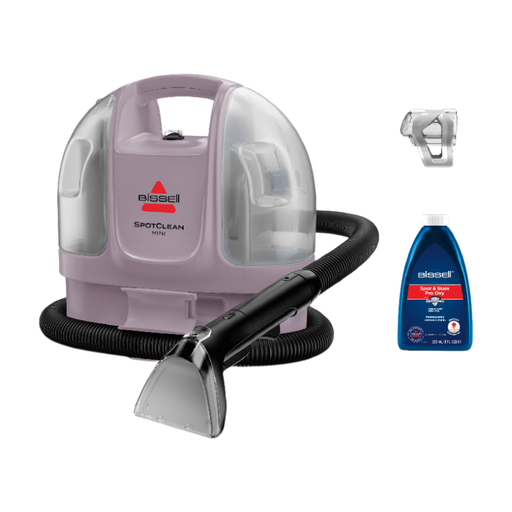
Why this choice suits this profile : Weighing 3.4 kg and featuring a self-contained design, it is suitable for small stains, marks on a sofa and occasional car-seat cleaning.
Its 0.5 l and 0.43 l tanks are suited to targeted cleaning, without imposing unnecessary capacity for simple stain removal.
330 W motor, stated suction power of 12 kPa, 1.35 m hose and hose-rinsing tool included.
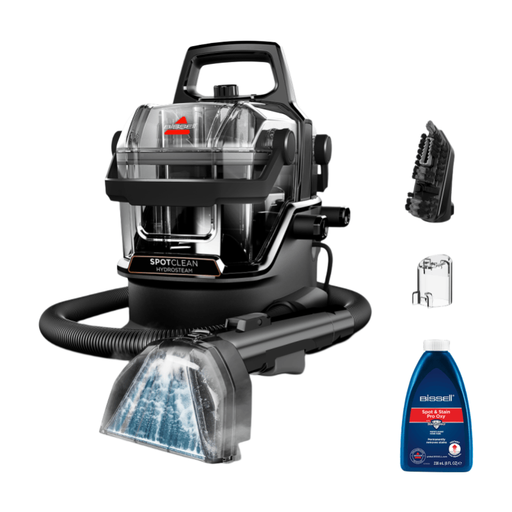
Why this choice suits this profile : Its three cleaning modes offer greater flexibility for households that regularly tackle a range of stains on compatible fabrics and surfaces.
The selected mode lets you adjust the amount of steam or solution to suit the level of dirt, rather than applying the same treatment to every fabric.
1.9 l and 1.5 l tanks, 1,000 W motor, 1.5 m hose and rinsing tool included. The hot steam function does, however, require careful use.
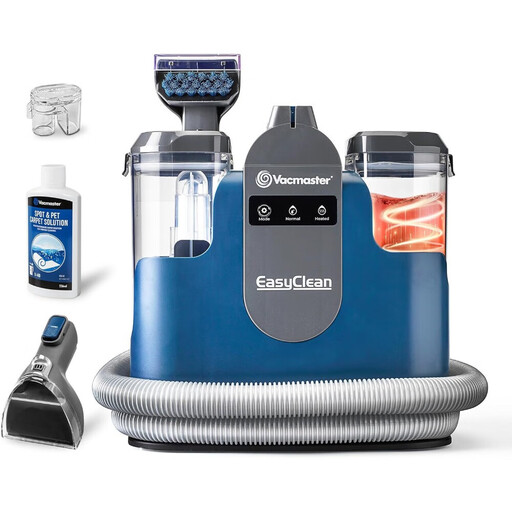
Why this choice suits this profile : With a stated 5 m reach, a 1.8 m hose and two tanks, it is suitable for maintaining several areas during the same session.
The specifications detail the tank capacities and stated suction pressure, allowing you to compare appliances on more than just their wattage.
500 W motor, stated suction power of 17 kPa, 1.6 l and 0.95 l tanks, with a hot-water function depending on the selected mode.
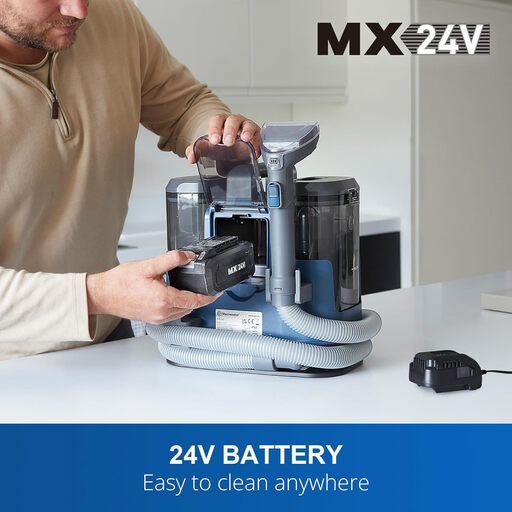
Why this choice suits this profile : With no cable to worry about, it makes it easier to clean a car, staircase or room located away from a power socket.
Cordless operation removes the constraints of setting up the appliance, but the stated battery life should be considered alongside the actual length of your cleaning sessions.
24 V MAX battery, stated suction power of 15 kPa and cordless design. At 6.8 kg, however, the appliance is worth handling before you buy.
We have put together a complete, real-time updated selection of products that meet these demanding criteria and European safety requirements.
Before cleaning a sofa or armchair, vacuum it thoroughly to remove dust and debris. Pre-treat the stain only with a product compatible with the fabric. Work in small areas without saturating the material, then go over it several times using suction-only mode.
Ventilate the room thoroughly and do not put cushions or rugs back in place straight away. In a car, leave the doors open in a safe location to speed up drying. If odours persist or the fabric is delicate, ask the manufacturer or a professional cleaner for advice.
Yes, provided the sofa’s care label permits wet cleaning. Use a small nozzle, reduce the amount of solution and always test the appliance on an inconspicuous area. Delicate fabrics, leather and materials that cannot withstand water require a different method.
A sofa shampooer generally refers to an appliance that sprays a solution, brushes the fibres and then extracts the dirty water. The term spray-extraction cleaner describes this injection and extraction cycle more precisely. When comparing two models, focus on the tanks, suction pressure, water flow and accessories rather than the commercial name alone.
The cost depends on electricity consumption, the amount of solution and the volume of water used. A 330 W model will use less per hour than a 1,300 W appliance, but the session length and number of passes also make a difference. Follow the dosage indicated on the product and regularly maintain the filters, tanks and hose to preserve performance over time.