
Livraison le jour même ou le lendemain

Qualité garantie

Débloquez vos offres de bienvenue: Livraison GRATUITE | Jusqu'à -80 % | 30 jours d'essai gratuits à JoyPlus
Téléchargez l'application
A coffee stain on the sofa, a muddy mark in the hallway or a pet accident on the rug does not necessarily mean hiring a bulky machine. A portable carpet cleaner lets you deal with small fabric areas quickly, provided you choose an appliance suited to your habits.
The models available on the market vary considerably in terms of capacity, suction, reach and maintenance. Here are the key criteria to consider to avoid an impractical purchase and find a cleaner suited to rugs, carpets, sofas, mattresses or car seats.
A high motor power rating, expressed in watts, is not enough to assess an appliance’s ability to recover dirty water. Suction power, sometimes stated in kPa, provides a more directly relevant indication of extraction performance.
The brush width, water flow rate and hose design also play a part. A 650 W portable spray-extraction cleaner will not necessarily perform in the same way as a model rated at 18 kPa.
A small tank may be suitable for dealing with a localised stain, but become inconvenient when cleaning several car seats or a large sofa. Check the capacity of the clean-water tank and dirty-water tank separately.
The presence of two separate tanks prevents used water from mixing with clean water. After each session, both tanks should be emptied and rinsed to minimise residue and unpleasant odours.
A fabric cleaner left damp at the back of a cupboard can quickly become unpleasant to use again. The hose length, filter access, removable brush and ability to rinse the hose are therefore far from minor details.
A compact appliance is only truly practical if storing and maintaining it remains simple.
For occasional use, a stated suction power of between 12 and 15 kPa can be a useful benchmark when comparing appliances, although it does not guarantee the same results on every type of fibre. Models that combine spraying, brushing and suction allow you to dampen the stain, work on it and recover some of the water in a single pass.
Some appliances offer hot water or steam. These functions can be useful in certain situations, but are not suitable for every fabric. Always check the care label for your sofa, rug or car seat, and test the appliance on a discreet area first.
For a quick job, a clean-water tank with a capacity of 0.5 to 0.9 litres helps keep the appliance compact. When cleaning several surfaces, a capacity of more than 1 litre reduces the number of refills required.
Corded appliances eliminate the need to recharge and maintain consistent power. A cordless model is nevertheless more convenient in a car or on a staircase. In this case, compare the stated battery life, weight and charging time carefully.
A hose of at least 1.3 m and a cable measuring 3 m or more provide greater freedom of movement around a sofa or inside a car. Weight also matters: at between 3 and 4 kg, an appliance is generally easy to move from one room to another.
For a pet hair cleaner, look for a suitable brush and easy access to the hose. For car seats, a narrow nozzle and a sufficiently long cable may prove more useful than a large tank.
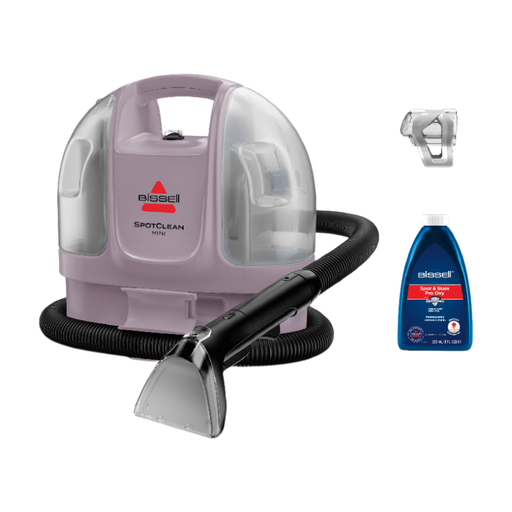
Why this choice suits this type of user : Weighing 3.4 kg, this spot cleaner is designed for small jobs on rugs, sofas or car seats. Its upright design makes it easy to store in a cupboard.
The 0.5 l and 0.43 l capacities are suited to targeted cleaning, without suggesting that this is a machine designed for cleaning large areas.
330 W motor, stated suction power of 12 kPa, 1.35 m hose, 3.6 m cable and HydroRinse tool included.
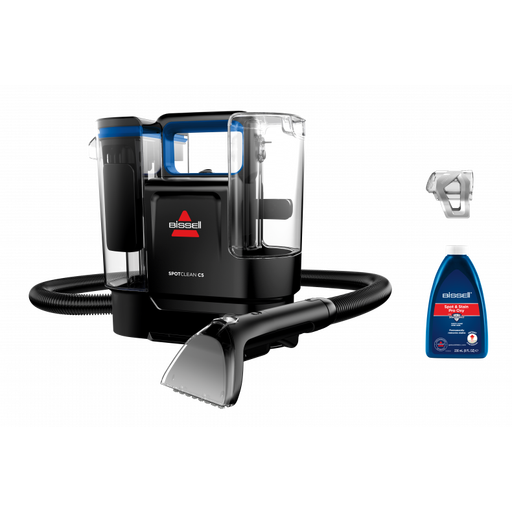
Why this choice suits this type of user : This model is aimed at those looking for a versatile appliance for rugs, stairs, upholstery and car interiors.
Its two modes and 0.9 l and 0.8 l tanks offer a clear balance between versatility and a compact design.
400 W motor, 1.7 m hose, 4.3 m cable, weight of 3.72 kg and stated compatibility with several surfaces.
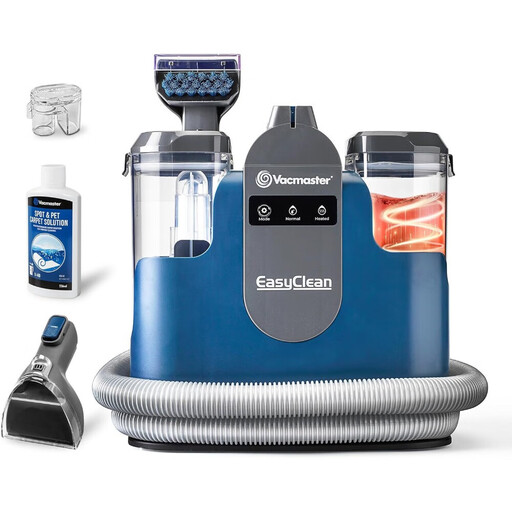
Why this choice suits this type of user : Its capacity and hot-water function are designed for households that regularly clean sofas, rugs, stairs or car seats.
The product specification clearly states the tank capacities, maximum pressure and hose length, so these criteria can be checked before purchase.
500 W power, stated maximum suction pressure of 17 kPa, 1.6 l and 0.95 l tanks, and a 1.8 m hose.
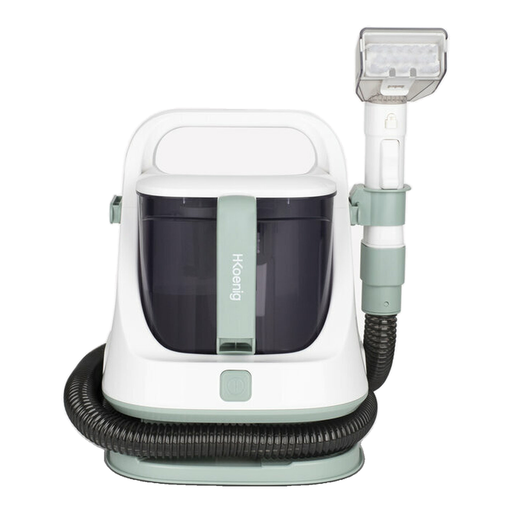
Why this choice suits this type of user : Its large-capacity tanks make repeated cleaning of household fabrics easier, particularly rugs, mattresses and sofas.
The two removable tanks and detachable brush address the maintenance issue, which is often overlooked when buying.
650 W power, water flow rate of 350 ml/min, 1.4 l clean-water tank, 1.2 l dirty-water tank and a 1.7 m hose.
We have put together a complete, real-time updated list of products that meet these demanding selection criteria and European safety standards.
For a light stain, a spray carpet spot cleaner may be sufficient. For ingrained dirt, an upholstery cleaner or fabric washer-dryer vacuum will provide mechanical action and recover the water, although it requires more preparation and a longer drying time.
No. Water resistance varies according to the fibres, dyes and surface treatments. Check the furniture’s care label, test the appliance on a discreet area and follow the instructions supplied with it. Leather, silk, wool and certain delicate fabrics may require a different method.
The time required depends on the amount of water used, the rug’s thickness, ventilation and the room’s humidity level. Work in small areas, vacuum up the dirty water thoroughly and ventilate the room. Avoid putting the furniture back immediately or allowing pets onto a surface that is still damp.
You need to take electricity consumption, cleaning solution and water into account. A compact appliance generally takes less time for each job, but its smaller tanks may require several refills. To keep costs under control, compare the recommended amount of solution, how easy the appliance is to rinse and how often you actually clean.