
Livraison le jour même ou le lendemain

Qualité garantie

Débloquez vos offres de bienvenue: Livraison GRATUITE | Jusqu'à -80 % | 30 jours d'essai gratuits à JoyPlus
Téléchargez l'application
An underinflated tire isn't just a minor hassle: it's a genuine safety risk and a drain on your fuel economy. So, getting a portable car air compressor seems like a no-brainer. The problem: the market is flooded with models making dazzling promises that, once in your hands, deflate faster than a flat tire. To avoid throwing your money away, you need to know the common traps that turn a good deal into a regrettable purchase.
This guide will arm you to sidestep these pitfalls by focusing on the technical specifications that truly make a difference.
To make a smart choice, ignore the marketing speak and focus on three crucial technical points.
The type of power supply completely dictates how you'll use your compressor.
Don't fall for the trap of the maximum advertised pressure.
This is what separates a quickly forgotten gadget from a truly reliable tool.
To put theory into practice, here are a few models that tick the right boxes, suited for different needs.
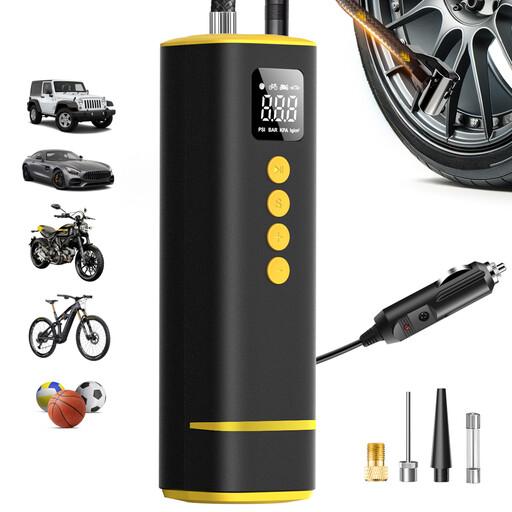
Why we chose it: Ideal for the driver looking for a simple, reliable solution to keep in the trunk for emergencies or routine maintenance. No battery to charge, just plug it in.
As a 12V compressor, it eliminates the risk of a dead battery. Its design is straightforward: inflate. A simple and robust solution for the essentials.
Reliable power from the cigarette lighter socket. The power cord is long enough to reach all tires without any hassle.
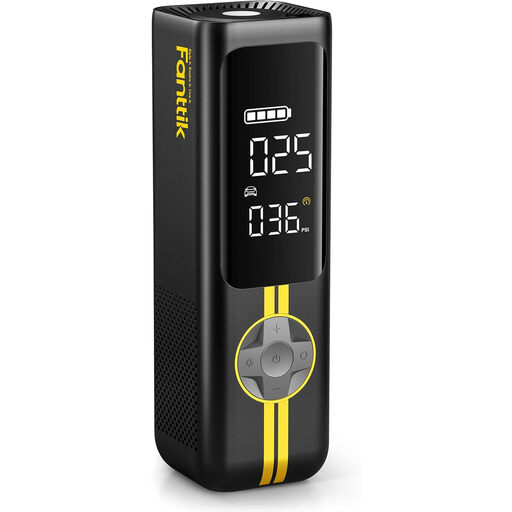
Why we chose it: For those who want a high-performance, hassle-free device. Its cordless design, preset modes, and additional features (power bank, light) make it a true Swiss Army knife for the road and recreation.
It sidesteps the slowness trap with fast inflation and a good cooling system. Its digital screen and automatic shut-off ensure accurate pressure, ending the headache of an unreliable gauge.
4 preset modes for simplified use. 4-in-1 function: compressor, light, power bank, and can even serve as a backup air source for a small pneumatic nailer (nails ≤ 30 mm).
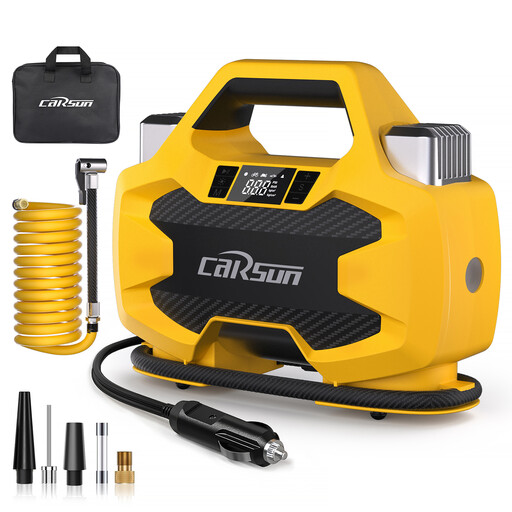
Why we chose it: SUV and RV tires require a larger volume of air. This model is designed to deliver superior air flow, reducing inflation time and motor strain.
Its dual-cylinder design is the direct answer to the trap of underpowered compressors that burn out or overheat on large tires.
Inflation power suitable for heavy vehicles. Robust design for intensive use without overheating.
We have selected a full range of products that meet our specifications and current safety standards.
Absolutely, if the engine is off. A compressor is quite power-hungry. The best practice is to always start the engine before plugging in and using a 12V compressor. The alternator will then take over to compensate for the power consumption.
The lifespan of a battery-powered compressor depends mainly on the quality of its lithium-ion battery and how it's maintained. Generally, you can expect several hundred charge/discharge cycles. To preserve it, follow a few simple steps: avoid complete discharges and don't store it in extreme temperatures (like in a car in direct sunlight or in freezing cold).
Yes, most portable compressors are versatile. They usually come with a set of nozzles, including an adapter for Presta valves, which are common on road bikes and mountain bikes. Car valves (and most city bike valves) are Schrader-type, which are directly compatible. The only precaution is to set the target pressure correctly: it's often much higher for a road bike tire than for a car tire.