
Livraison le jour même ou le lendemain

Qualité garantie

Débloquez vos offres de bienvenue: Livraison GRATUITE | Jusqu'à -80 % | 30 jours d'essai gratuits à JoyPlus
Téléchargez l'application
Driving on underinflated tires isn't just unpleasant: it's a safety hazard and a drain on your fuel. While you can always use the air pumps at a gas station, their gauges are often unreliable. Investing in your own portable car air compressor buys you genuine peace of mind. The catch? The market is flooded with models making tempting promises that, all too often, don't hold up.
To avoid nasty surprises and buyer's remorse, here are the marketing traps you absolutely need to know.
To make the right choice, rely on concrete technical data rather than marketing hype. Here are the three points to scrutinise.
It all depends on how you plan to use it.
Maximum pressure (PSI) isn't everything. The real performance indicator is airflow, measured in litres per minute (L/min). This is what dictates inflation speed. With a low flow rate (under 15 L/min), you'll be waiting a while, especially if your tire is very flat. For a car tire, an airflow rate above 20 L/min is a real game-changer in terms of convenience.
A good portable compressor should be more than just a pump.
To help you see things more clearly, here is our selection of reliable, high-performance models, categorised by user profile.
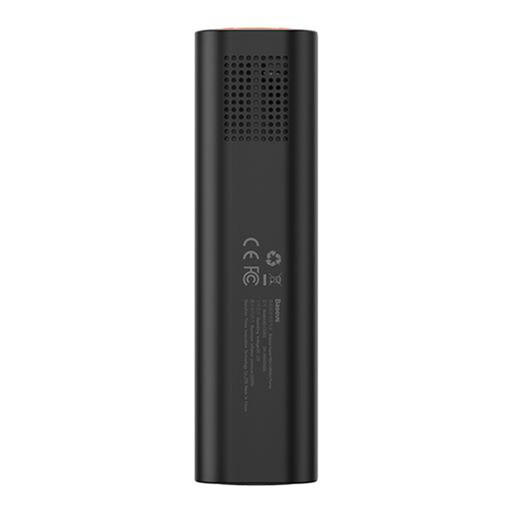
Why this one? It's the perfect solution for the driver who wants a reliable, compact, and hassle-free device to leave in their glove box. No battery to charge: just plug it into the 12V socket, and it's ready to go in a pinch.
As a corded model, it immediately sidesteps the "unrealistic battery life" trap. Its power is constant as long as it's plugged in, ensuring you can reinflate several tires in a row if needed.
Its ultra-compact size and 12V power make it the ultimate "ready-to-go" emergency tool that you can forget about in a corner of your trunk or glove box.
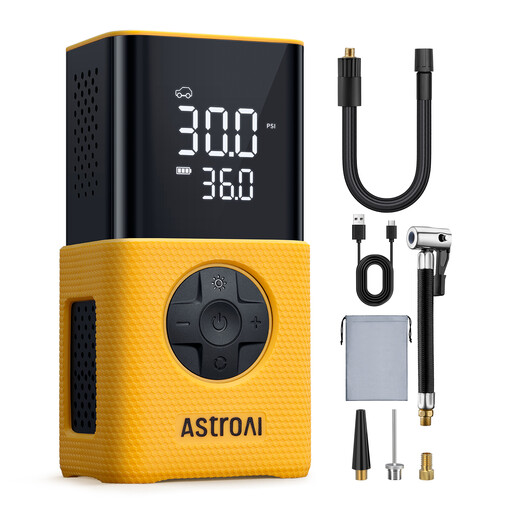
Why this one? The ideal choice for anyone looking for a high-performance cordless device for regular maintenance of the car, motorcycle, and family bikes. It checks all the boxes: power, battery life, and modern features for total versatility.
With its 4000 mAh battery and an airflow of 17 L/min, it delivers on the two most common weak points: battery life and speed. Its spec sheet promises the ability to reinflate up to 8 car tires (from 30 to 36 PSI) on a single charge—a solid performance.
Its precise digital screen, 5 preset modes (car, motorcycle, bike, etc.), and power bank function make it a true Swiss Army knife for on-the-go maintenance.
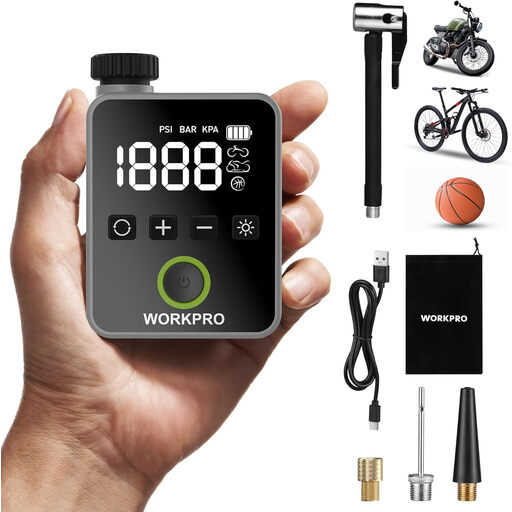
Why this one? Designed for cyclists, motorcyclists, and adventurers for whom every gram counts. Its ultra-compact size allows it to slip discreetly into a backpack or saddlebag.
It doesn't pretend to be a powerhouse for a 4x4 tire, but it excels where it's expected to. By focusing on portability (270 g) and precision for smaller volumes (bikes, motorcycles), it avoids the trap of over-promising.
Its feather-light weight and carrying case make it the ideal travel companion. Its emergency light modes (SOS, strobe) and power bank function are real safety bonuses for your outings.
Discover our complete, up-to-date selection of compressors that meet our criteria for performance and reliability.
Its longevity will depend on its build quality and how often you use it. For a battery-powered model, battery maintenance is crucial: remember to recharge it at least once every three months, even when not in use, to preserve its health. A well-maintained device can last for many years.
The risk is minimal on one condition: always run your car's engine while the compressor is operating. The alternator will then take over and supply the necessary power without drawing from the battery. However, prolonged use with the engine off is strongly discouraged.
Absolutely. Most portable compressors come with a set of nozzles, including adapters for both Presta (road bikes) and Schrader (mountain bikes, cars) valves. The auto-shutoff feature at the desired pressure is particularly valuable for bicycle tires, which require high precision and inflate much faster than a car tire.