
Livraison le jour même ou le lendemain

Qualité garantie

Débloquez vos offres de bienvenue: Livraison GRATUITE | Jusqu'à -80 % | 30 jours d'essai gratuits à JoyPlus
Téléchargez l'application
An underinflated tyre is a double threat: a genuine safety risk and a major fuel guzzler. The portable car air compressor has therefore become an essential accessory to always keep in your boot. The problem is, the market is flooded with models making marketing claims that are often exaggerated, or even misleading. Our editorial mission: to help you navigate this jungle.
Between the technical jargon and sales pitches, it's hard to know where to start. Some devices, which look perfect on paper, prove disappointing in practice. Let's break down the pitfalls to avoid so you can make the right choice.
To avoid making a mistake, forget the marketing and focus on the numbers that truly matter. This is where the performance and reliability of your tyre inflator are decided.
Maximum pressure, expressed in PSI or bar, indicates the force the compressor can achieve. Most models go up to 150?PSI (about 10.3?bar), which is far more than needed for a car tyre (which requires around 2.5?bar).
But be careful, this number alone means nothing. The air flow rate, measured in litres per minute (L/min), is the real game-changer. It's what determines the inflation speed. A high flow rate (over 20?L/min) ensures fast inflation and protects the device's motor, especially if you have large tyres. A low-flow 12V mini-compressor, on the other hand, will take an eternity.
The choice will depend on your needs:
If a multi-function model catches your eye, scrutinise the specifications of each feature. For the jump starter function, the peak current (in amps, A) is the only number that matters. Count on a minimum of 1,500?A for a mid-sized petrol engine. For large diesel engines, aim for 3,000?A or more. As for the power bank feature, ensure it has fast-charging USB ports.
Here are three models that stand out from the crowd, each meeting a specific need without falling into the traps we've discussed.

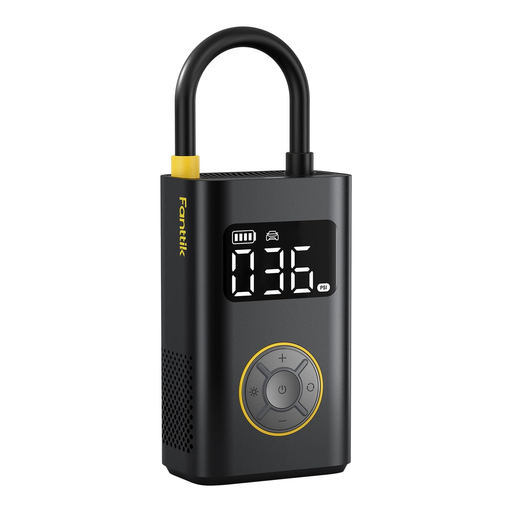
Why we love it: It's the ultimate simple and effective solution for tyre maintenance. Compact enough to fit in the glove box, it's always ready for a quick top-up before a long trip or as soon as the pressure warning light comes on.
It doesn't spread itself thin: its sole mission is to inflate, and it does it well. It avoids the mediocre multi-function trap by ensuring reliable performance for its size, thanks to its 4,000 mAh battery.
Its ultra-compact format and disarming simplicity: 5 smart modes and an automatic shut-off when the target pressure is reached.
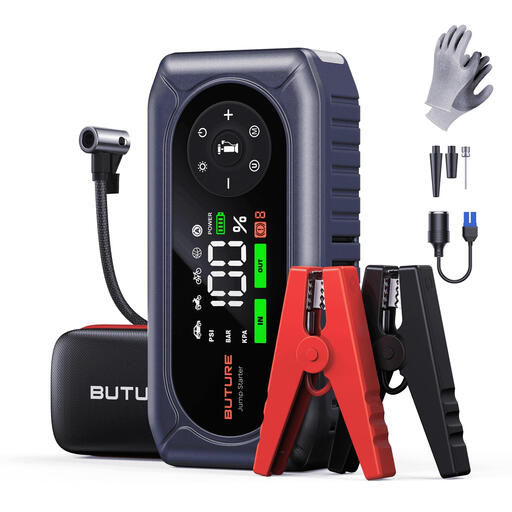
Why we love it: This is the Swiss Army knife for high-mileage drivers and owners of large engines (up to 9.0L petrol / 8.0L diesel). It tackles the two most common breakdowns: a flat tyre and a dead battery.
Here, multi-function doesn't mean compromise. With a peak current of 4,500 A, this is a real jump starter, not a gimmick. The compressor component is just as serious, making it a genuine emergency tool.
Its colossal starting power, capable of reviving the largest petrol and diesel engines, combined with an efficient 150 PSI compressor.
Why we love it: Its clever design, with integrated storage for the hose and nozzles, makes it the perfect travel companion for motorcyclists and cyclists. Small enough for a backpack, it's still robust enough for the tyres of a city car.
It puts an end to the headache of losing accessories. Unlike models where the hose and nozzles are loose, its all-in-one design makes it truly "ready to use" and incredibly easy to carry.
Its ultra-compact and well-thought-out design, with preset modes for two-wheelers and balls, in addition to the car mode.
Explore our full selection of compressors that meet our criteria for performance and reliability, as well as current safety standards.
It all depends on your use case. The cordless model is the king of versatility: car, motorbike, bicycle, air mattress... it goes everywhere with you. The 12V corded model offers absolute peace of mind: as long as the car has power, it works. If you only plan to use it for your car, it's a simple and reliable choice.
Yes, but patience will be your best friend. The inflation time will heavily depend on the air flow rate (L/min) and the size of the tyre. A good model will manage it in 5 to 10 minutes. An entry-level device will take much longer and may require breaks to avoid overheating.
A lithium-ion battery needs maintenance! The golden rule: never let it discharge completely. Remember to recharge it every 3 to 6 months, even if you don't use it. By following this simple advice, it will serve you faithfully for several years.